Agriculture is one of the key activities that underpins human life. It’s behind the food we eat, the clothing we wear and the raw materials that go into all sorts of products we use every day. It’s not just about growing crops either, it’s also about livestock, soil, horticulture and all the other things that go into the production of food and natural resources.
But what is agriculture and why is it so important to individuals, to communities and to the global economy? Understanding what agriculture is and what it does enables us to appreciate the contribution that farmers make to food security, to employment, to economic development and to the environment.
In this blog we look at what agriculture is, the main types of agriculture and how it underpins our daily lives.
What Is Agriculture?
Agriculture is the practice of growing crops and raising animals on soil in order to produce food and other useful resources for human consumption and for industry. It’s essentially about planting the seed, looking after the crop through the growing season (which includes irrigation, pest control etc), harvesting the crop and then processing it. It also includes animal husbandry (the rearing of animals).
Agriculture is the integration of traditional farming knowledge with modern science in order to increase production and manage the natural resources more efficiently.
For instance farmers grow wheat, rice, vegetables and fruit for consumption and livestock farmers provide the milk, eggs and other animal products.
Why is agriculture important in everyday life?
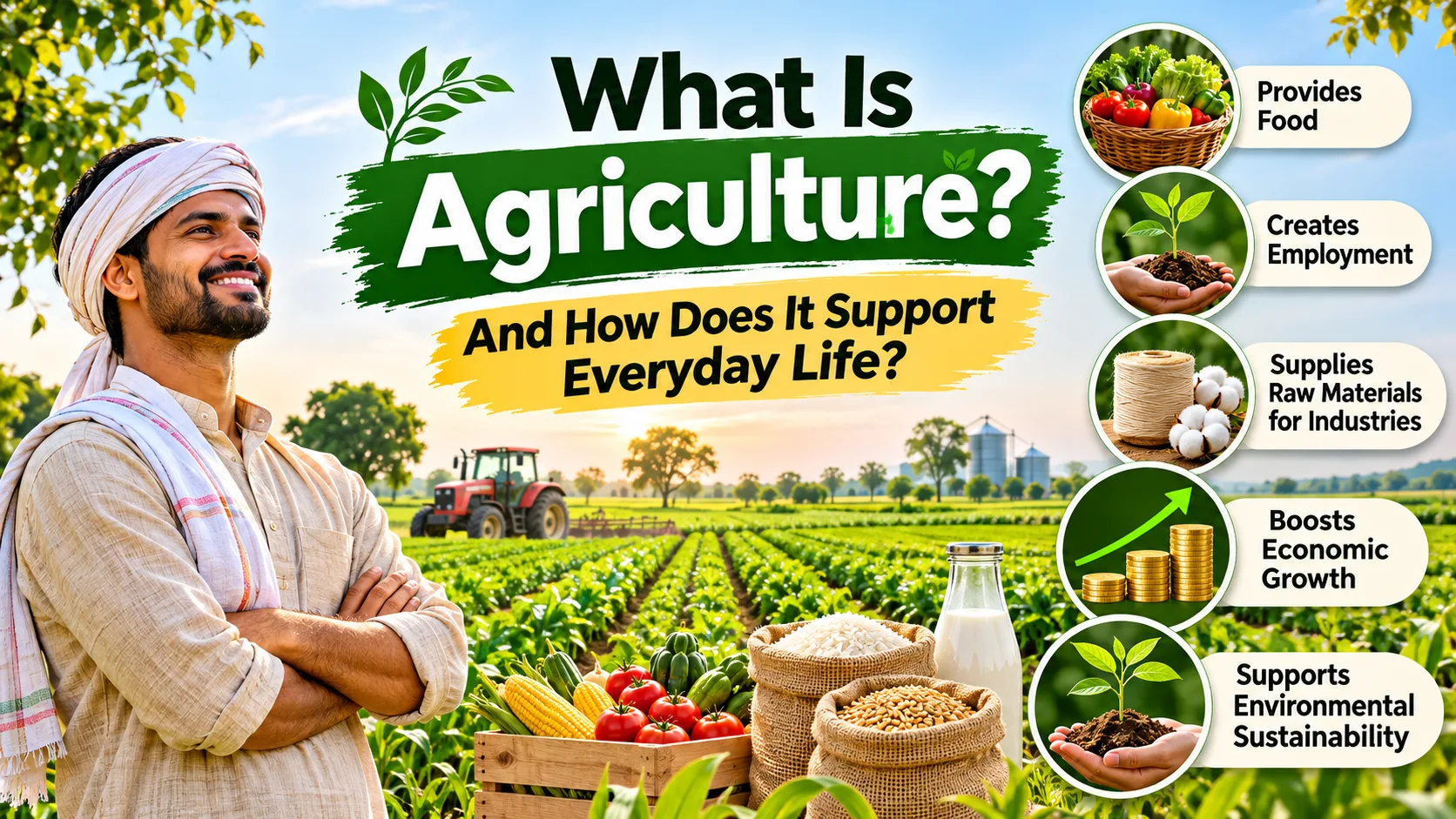
Agriculture underpins our daily lives in a number of ways. Its contribution extends far beyond the provision of food and has an impact on industry, employment, economic growth and the supply of a range of other essential commodities.
1. Provides Food for Daily Consumption
Food production is by far the most fundamental contribution of agriculture. Crops (rice, wheat, maize, fruits and vegetables) provide the bulk of the food that we eat.
Livestock farming also provides milk, eggs and other animal based food products. You simply couldn’t maintain a reliable food supply for a growing population without some form of agriculture.
2. Supports Employment and Livelihoods
Agriculture provides jobs for farmers, agricultural workers, food processors, transporters, traders and all the other people involved.
Farming is a major source of income in rural areas. There are also a number of other activities that provide income opportunities in the form of dairy farming, poultry farming, horticulture and food processing.
3. Provides Raw Materials for Industries
Lots of industries are agriculture dependent in terms of their raw materials.
For example:
- Cotton is used in the textile industry.
- Sugarcane is processed to make sugar.
- Jute is used to make bags and all sorts of other products.
- Oilseeds are processed to make edible oils.
- Agricultural crops provide the raw materials for a number of food and pharmaceutical products.
This link between agriculture and industry underpins manufacturing and is a major contributor to economic development.
4. Contributes to Economic Development
Agriculture is a contributor to national income, to international trade and to rural development. Agricultural products are traded in both domestic and international markets and this in turn provides business opportunities right through the chain.
A productive agricultural sector also underpins the related processing industries (food processing, agricultural machinery, transport, storage and packaging).
5. Supports Environmental Sustainability
Responsible farming practices can go a long way to protect the natural resources and maintain the balance of the ecosystem.
Crop rotation, organic farming, composting, mulching and efficient irrigation are all practices which will improve soil management and reduce the amount of resources that are being used unnecessarily.
However unsustainable farming practices can lead to soil degradation, water pollution and loss of biodiversity. Responsible farming therefore has to be the norm.
What are the main types of agriculture?
Agriculture is a broad term which encompasses a range of farming systems depending on the production objective, the resources available, the climate and the methods of cultivation.
1. Subsistence Farming
Subsistence farming is about growing crops and rearing animals to feed the farmer’s own family. It’s not primarily about producing for commercial sale, the output is generally consumed locally.
2. Commercial Farming
Commercial farming is farming where the primary objective is to grow crops and/or rear livestock for sale and profit. It’s typically characterised by the use of machinery, improved seed varieties, irrigation and a range of other inputs to boost output.
3. Organic Farming
Organic farming is all about maintaining soil health and growing crops in accordance with approved organic production practices. It’s based on the use of compost and organic manures, crop rotation and biological pest control and so on in accordance with the relevant organic standards.
4. Sustainable Farming
Sustainable farming is about maintaining the productivity of farming systems whilst at the same time protecting the soil, water, biodiversity and other natural resources. It’s about meeting the needs of the present without compromising the ability of future generations to meet their own needs. It’s about balancing the environmental, economic and social aspects.
5. Mixed Farming
Mixed farming is farming which involves both crop growing and livestock rearing on the same farm. A typical example would be a farmer growing crops and keeping dairy animals. It can be a good way of diversifying farm income and can also provide for resource recycling.
How Does Agriculture Support the Future?
Agriculture will remain a major factor as populations grow and our food requirements evolve. The farmer is going to be looking for more and more solutions that will enable them to increase productivity in the face of all the problems we’re going to be confronted with in the future (climate change, water stress, soil degradation, rising input costs etc).
Modern agriculture (precision farming, drip irrigation, better crop varieties etc) can all play a part in tackling these issues.
Combining ag knowledge with responsible resource management can underpin a more productive and resilient food system.
Frequently Asked Questions (FAQs)
1. What is agriculture in simple terms?
Agriculture is the growing of crops, cultivation of land and rearing of animals for the production of food, raw materials and other useful products.
2. Why is agriculture so important in our day to day lives?
Agriculture provides food, employment, raw materials for industry and economic opportunity. It underpins rural communities and is an important part of the management of our environmental resources.
3. What are the five main types of agriculture?
Five of the most common types are subsistence farming, commercial farming, organic farming, sustainable farming and mixed farming.
4. How does agriculture contribute to the economy?
Agriculture provides employment, creates income, underpins the food processing and manufacturing industries and is a major contributor to both domestic and international trade.
5. What is the difference between agriculture and farming?
Agriculture is a broader field that includes crop production, livestock management, horticulture, and related activities. Farming is one of the main activities within agriculture, focusing on cultivating crops and raising animals.
Conclusion
Agriculture is much more than the process of growing crops. It is a foundation of everyday life that provides food, supports livelihoods, supplies industrial raw materials, and contributes to economic development.
Understanding what agriculture is helps us appreciate the importance of farmers and responsible agricultural practices. As the world faces changing environmental and food production challenges, adopting sustainable farming methods and improving agricultural technology will be essential for building a more secure and productive future.