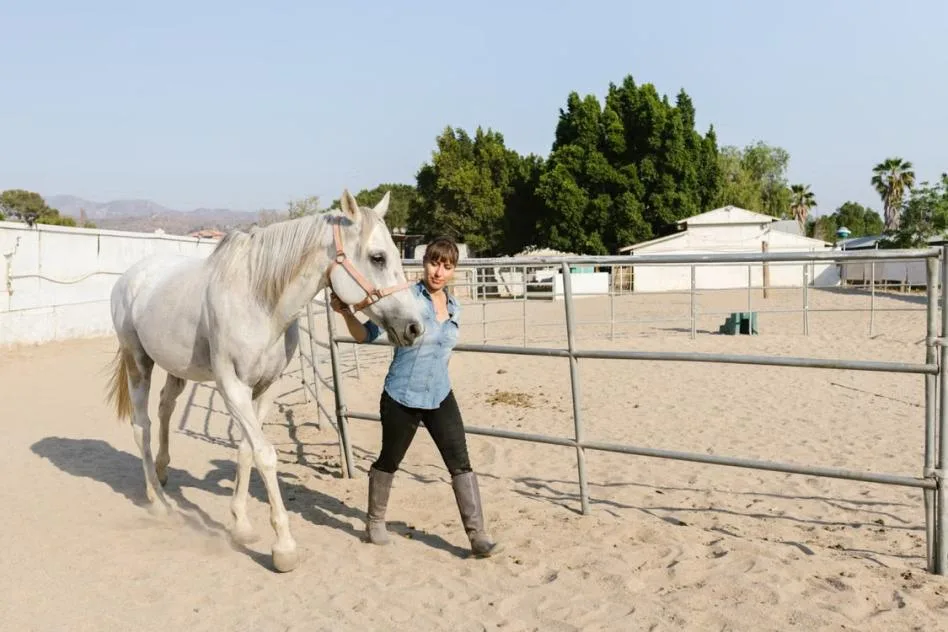
A dusty arena affects more than visibility. Penn State Extension describes a perfect riding surface as one that is cushioned, offers traction, and is not too slick or dusty, which is a tall order for any footing.
Dust and loose, shifting material usually trace back to the same few factors: what the footing is made of, how much moisture it holds, and how it is maintained. Regular grooming with a riding arena groomer will not replace watering or good footing selection, but it can change how material is distributed across the surface.
What Causes Dust in the First Place?
The University of Georgia's Elevated Equine program notes that as the primary component of arena footing breaks down, dust often increases. It also points out that different footing types wear differently, and that surfaces keep changing with use and maintenance. That is why a routine that suits one arena may not suit another.
Materials matter too. Penn State Extension adds that an indoor footing mixture that holds moisture longer reduces the need for frequent watering. Sand, dirt, stone dust, and wood each behave differently once they dry out, so the first step in managing dust is knowing what the arena is actually made of.
Why Does Moisture Matter So Much?
A guide to controlling horse arena dust explains that water is an effective dust suppressant, but only when it is applied deeply, at least two inches into the footing. The same article warns that stone dust and wood are dust producers as well, and that stone dust is made of extremely fine particles that need moisture to stay out of the air. It also notes that frequent exposure to dust may pose significant health risks for horses and riders.
A light sprinkle can settle the surface for a short time while leaving the layer beneath dry. Because grooming changes how footing is spread and loosened, planning it around the moisture level is worth the effort.
How Does Grooming Help With Loose Footing?
Hoof traffic pushes footing toward the rail and corners, leaving deep, loose patches in some places and hard spots in others. A horse arena drag with tines can break up compacted areas, redistribute material, and level high and low spots, so the surface stays closer to the same depth from one end of the arena to the other. For large outdoor rings, arena drags for tractors can cover the whole surface in fewer passes, so the footing is worked more evenly. A more even surface tends to hold moisture more evenly, and fewer loose pockets mean fewer places for fine particles to lift into the air.
Grooming at a consistent depth matters as well. Working too shallow may leave compaction in place, while working too aggressively on very dry footing may stir up fines that the surface was holding down.
Which Equipment Suits Which Arena?
Size and power decide most of the choice. An ATV arena groomer is a practical fit for smaller rings and indoor arenas where maneuverability matters, and many owners already have the vehicle. Larger outdoor arenas often call for arena drags for tractors, which carry wider working widths and more pulling power. In both cases, the hitch, the working width, and the depth adjustment should match the vehicle and the footing.
A riding arena groomer that fits the arena's size also saves time, since fewer passes may mean less disturbance of the surface. A horse arena drag with adjustable depth gives owners room to adapt as the footing dries out or is freshly watered. An ATV arena groomer can also make frequent light passes easy to fit into a daily schedule.
What Does a Dust-Conscious Grooming Routine Look Like?
There is no single schedule, but a few habits help:
● Check moisture before grooming, since very dry footing may release more dust when worked.
● Keep the working depth consistent from pass to pass.
● Change the pattern now and then so material does not migrate to the same spots.
● Move at a steady, moderate pace instead of rushing the passes.
● Inspect tines, tips, tires, and bearings regularly, because worn parts change how the groomer works.
Owners who want a deeper look at what consistent footing does for riders can read about how groomed arenas improve rider control.
Keeping Dust Down Over the Long Term
Dust control rarely comes from one fix. Footing selection, watering, and grooming each carry part of the load, and the groomer needs to stay in good working order to do its share.
Owners looking for an ATV arena drag in Molalla, OR can turn to EZ Groomer, a veteran, family-owned company, which offers ATV and tractor models along with factory-direct replacement parts such as S-tines, reversible tips, tires, and roller bearings. Anyone sizing a groomer for a specific arena can start with a guide on choosing the right groomer width and then contact their team for help.