
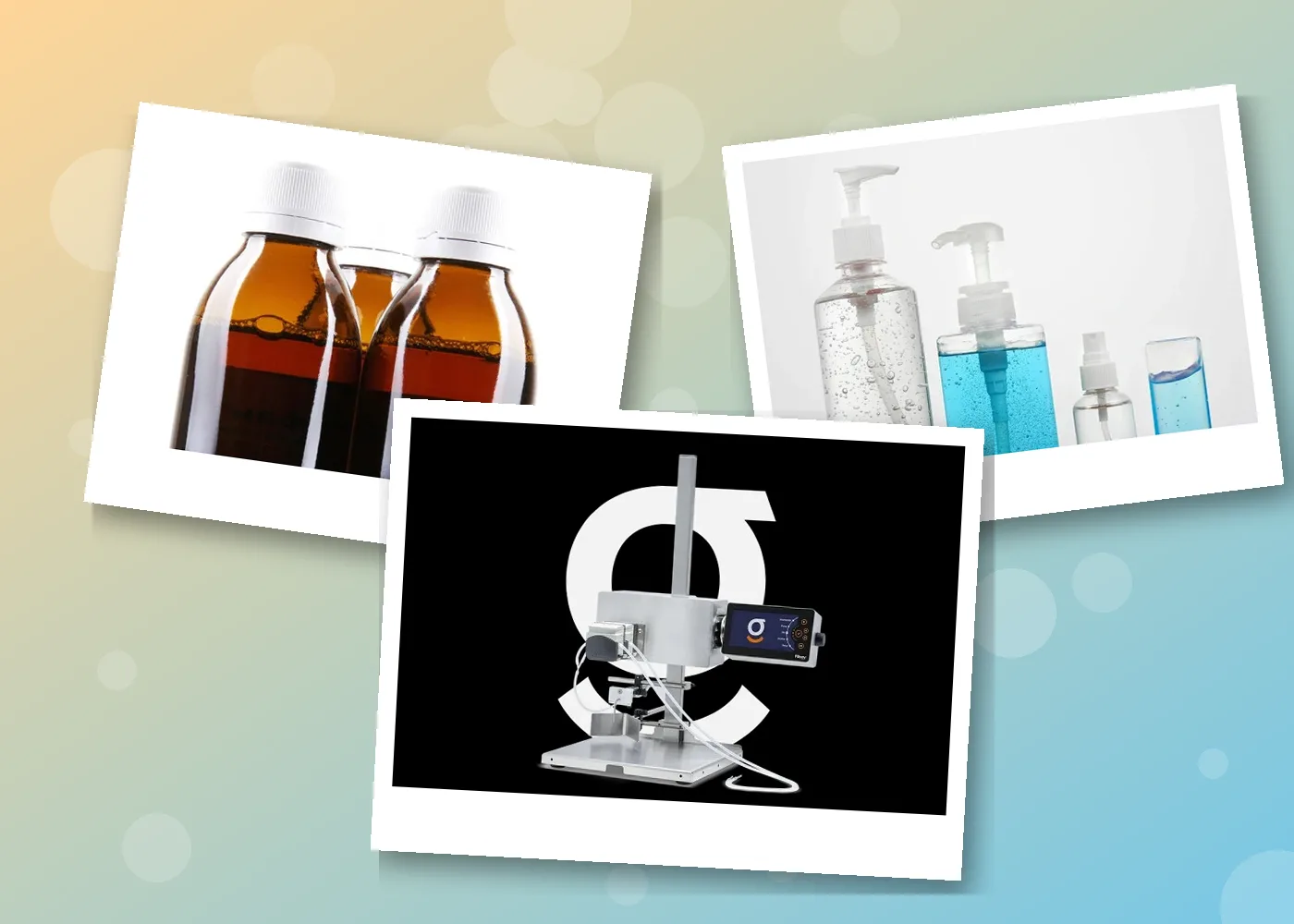
Pharmaceutical manufacturing depends on accuracy, consistency, and strict control at every stage of production. One important part of this process is filling the correct quantity of a drug product into its container. A pharmaceutical filling machine is designed to carry out this task with repeatable accuracy while helping manufacturers maintain reliable fill volumes, production efficiency, and hygienic processing.
Modern filling equipment can handle different product types, container formats, and production requirements. However, selecting the right system depends on the formulation, dosage, container, required output, and applicable manufacturing controls. Semi-automatic systems such as the Fillogy® are developed primarily for small and medium-sized companies.
What Is a Pharmaceutical Filling Machine?
A pharmaceutical filling machine is industrial equipment used to dispense a measured quantity of pharmaceutical product into containers such as bottles, jars, tubes, or other suitable packaging.
Depending on the application, the machine may use a pump-based technology such as a gearwheel, impeller, peristaltic, or rotary lobe pump. The Fillogy® uses exchangeable pump heads. It is not a piston or vacuum filler and has no piston systems or pressure controls. The objective is simple: deliver a consistent quantity of product into each container while reducing manual handling and production variation.
For pharmaceutical manufacturers, equipment design is especially important because product-contact surfaces should not adversely affect the drug's safety, quality, strength, or purity.
How Does a Pharma Filling Machine Work?
The exact process varies according to the machine and pharmaceutical formulation, but a typical filling cycle includes several steps:
1. Container positioning: An operator places each empty container at the filling station.
2. Product dosing: The machine measures a predetermined quantity of the formulation.
3. Filling: The measured product is transferred into each container.
4. Verification: Operators check fill volumes or weights against the target, and the dosing setup is adjusted if needed.
5. Container transfer: Filled containers are passed on to separate capping, sealing, inspection, or labeling steps.
A controlled dosing pump can make the process more repeatable and reduce unnecessary manual intervention. The Fillogy® fills one container at a time and has no integrated capping, sealing, or visual inspection stations.
What Types of Products Can Pharmaceutical Filling Machines Handle?
A suitable pharma filling machine can be configured for different pharmaceutical products, including certain liquid products such as tinctures and aqueous solutions, as well as creams and ointments. With the Fillogy®, different viscosities are handled through the replacement and expansion of components such as the pump head, motor, and filling set. See the Fillogy® filling machine range for the available configurations. It is not designed for powders, granules, or carbonated products.
For sterile products, additional controls are required. Sterile manufacturing involves specific requirements for contamination prevention, equipment sterilization, aseptic processing, and validation. The Fillogy® is not positioned as an aseptic or sterile filling line, so these requirements should be assessed separately.
What Should Manufacturers Consider When Choosing a Pharmaceutical Filling Machine?
Choosing equipment should begin with the production process rather than simply focusing on machine speed. Important factors include:
- Product viscosity and formulation characteristics
- Required fill volume and accuracy
- Container size and shape
- Production capacity
- Cleaning and changeover requirements
- Product-contact materials
- Level of automation (manual, semi-automatic, or fully automatic)
- Maintenance and calibration requirements
- Separate capping, sealing, and inspection steps
- Applicable quality and regulatory requirements
Equipment should also be practical to clean and maintain. Proper cleaning and maintenance help reduce contamination risks and support consistent manufacturing performance.
Why Is Modern Pharma Filling Equipment Important?
Modern pharmaceutical filling systems can help manufacturers improve process consistency, reduce repetitive manual work, and support efficient production. Fillogy® is optimised for efficient single-station operation, which suits small to medium batch sizes. As demand grows, output can be increased by adding units or expanding workstations. The machines run on a simple household power connection, with no compressed air or high-voltage supply. More importantly, the machine needs to fit the overall manufacturing process and quality system.
Final Thoughts
A pharmaceutical filling machine is more than a device for transferring product into containers. It is an important part of a controlled manufacturing process where accuracy, hygiene, repeatability, cleaning, and equipment suitability all matter.
For manufacturers evaluating a pharma filling machine, the best choice depends on the product, dosage requirements, container type, production volume, and applicable manufacturing standards. A well-matched filling system can provide a strong foundation for reliable and efficient pharmaceutical production. To discuss your product with an experienced filling machine manufacturer, you can arrange a consultation.