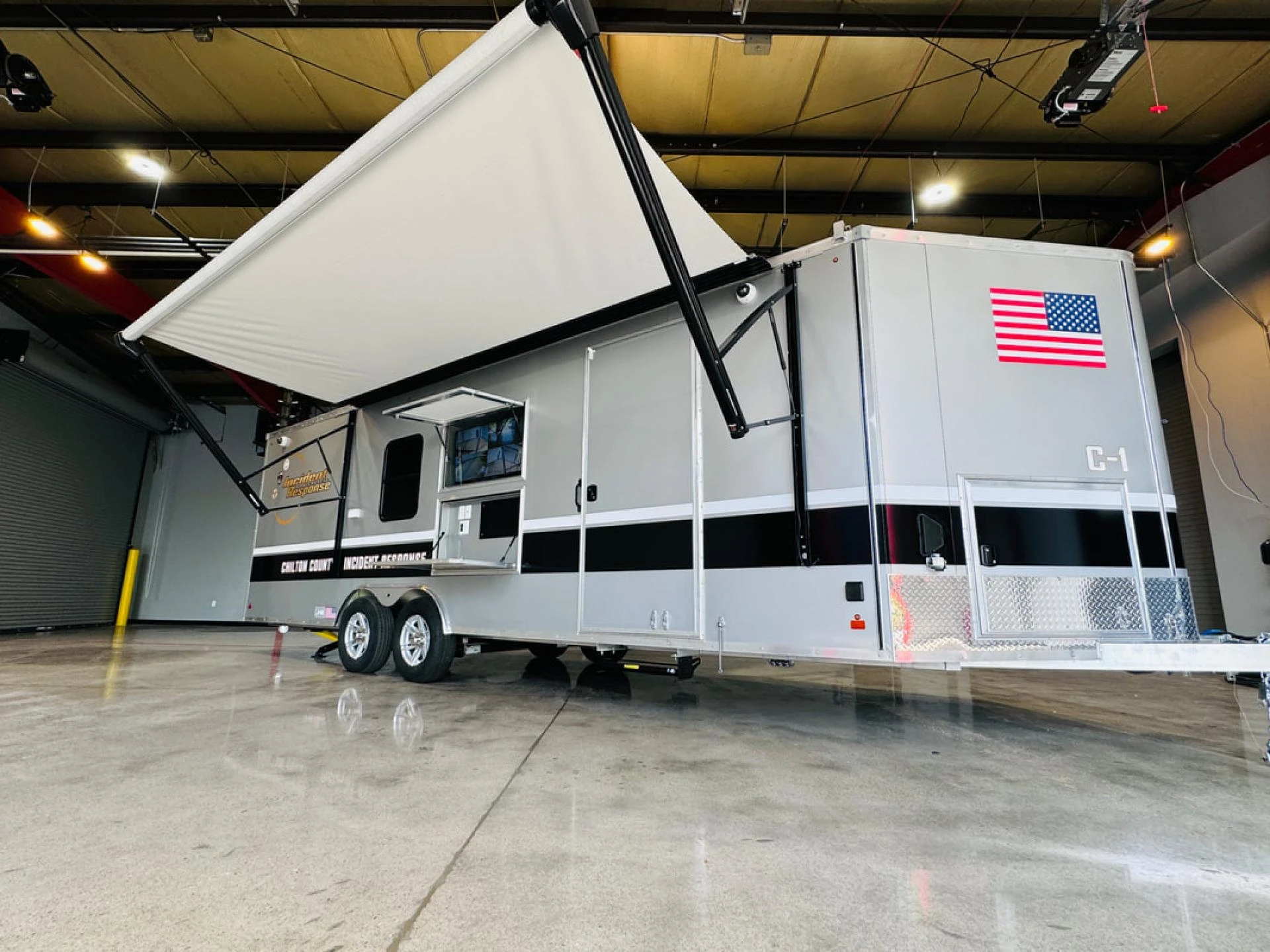
In large emergencies, strong leadership and clear communication are very important. A mobile command trailer is a special vehicle designed to support teams during critical situations. It acts as a moving control centre that can travel directly to the scene. With built-in technology and workspaces, it helps leaders manage operations quickly, safely, and in an organized way.
Understanding a Mobile Command Trailer in Simple Terms
A mobile command trailer is a towable unit that works like a small office on wheels. It is used by police, fire departments, medical teams, disaster response units, and even event organizers. Instead of managing an emergency from a far office, leaders can work close to the incident location.
The trailer provides a safe and controlled space where decisions can be made without outside noise and confusion. This helps teams stay focused and organized during stressful situations.
How It Is Designed for Emergency Use
The design of a mobile command trailer is practical and strong. The outer body is built with durable materials to handle rough weather and long travel distances. Stabilizing legs are used when parked, so the trailer stays steady during operations.
Inside, the layout is planned carefully. There are separate areas for communication, planning, and equipment storage. Wide doors and steps allow quick entry and exit, which is important during urgent situations.
Communication Systems Inside the Trailer
Communication is the most important part of emergency response. A mobile command trailer is fitted with advanced tools to keep everyone connected.
These may include:
· Two-way radios with long-range signals
· Satellite communication systems
· Internet routers and secure networks
· Telephone lines and voice-over systems
These systems allow teams on the ground to send updates directly to leaders inside the trailer. Even if local mobile networks fail, satellite systems help maintain contact.
Real-Time Monitoring and Data Management
Modern emergencies require quick access to information. Inside a mobile command trailer, you will find computer workstations and large display screens. These screens can show live camera feeds, maps, weather reports, and team locations.
GPS tracking tools help leaders see where field units are positioned. This makes coordination easier and reduces confusion. When everyone shares the same real-time information, decisions become faster and more accurate.
Power Supply for Continuous Operation
A mobile command trailer does not depend only on local electricity. It has its own power system to run all equipment.
Common power features include:
· Built-in generators
· Battery backup systems
· External power connection ports
If one power source stops working, backup systems keep everything running. This ensures there is no interruption during critical moments.
Climate Control and Comfort
Emergencies can last many hours or even days. The trailer includes heating and air conditioning systems to keep the inside environment comfortable. This protects both people and electronic equipment.
Good lighting is also installed inside and outside the trailer. Exterior floodlights help improve visibility at night and increase safety around the area.
Step-by-Step Working Process
The working process of a mobile command trailer is simple but organized.
1. The trailer is transported to the incident site.
2. Stabilising supports are lowered to secure it.
3. Power systems are activated.
4. Communication and monitoring equipment are turned on.
5. Command staff begin coordinating operations.
Once set up, the trailer becomes the main control point. All information flows in and out through this centre.
Used in Many Types of Situations
A mobile command trailer is not limited to one type of emergency. It is used in:
· Natural disasters like floods or storms
· Large public events for crowd control
· Search and rescue missions
· Industrial accidents
Its flexibility makes it useful for both planned events and sudden crises.
Supporting Better Team Coordination
When many agencies work together, coordination becomes challenging. The trailer provides a central meeting space where leaders from different teams can plan and share updates. This reduces misunderstandings and improves teamwork.
Clear communication and shared planning lead to faster and safer operations.
Final Thoughts
A mobile command trailer is a powerful tool that brings leadership, technology, and communication directly to the emergency scene. It works as a moving control centre that supports real-time decisions and smooth coordination. By using a mobile command trailer, response teams can act quickly, stay organized, and manage incidents more effectively. This makes it an essential part of modern emergency management systems worldwide.