
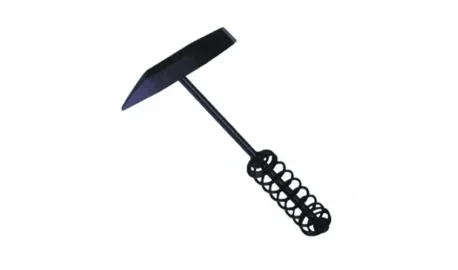
In the world of construction, welding, and heavy-duty maintenance, a chipping hammer is a popular striking tool used to remove slag, spatter, and unwanted residue from metal surfaces, particularly after welding. Unlike regular hammers, chipping hammers are uniquely designed with pointed and chisel ends to provide precision and power where it’s needed most.
Whether you're a seasoned welder or a workshop beginner, understanding how to use and maintain your chipping hammer can enhance safety, performance, and tool life.
Functions and Uses of a Chipping Hammer
Chipping hammers are primarily used in:
- Welding operations – to chip away slag after arc welding.
- Surface preparation – removing scale, rust, or hardened material.
- Concrete and masonry work – light chipping or cleaning work.
Their pointed tip helps focus force in a small area, while the flat chisel side allows broader material removal.
Types of Chipping Hammers
Like most types of hammer, chipping hammers come in various designs depending on the task:
1. Spring-Handled Chipping Hammer
- Features a coil handle to absorb vibration and reduce user fatigue.
2. Straight Chisel Hammer
- Has a flat blade on one end and a pointed tip on the other; ideal for slag removal.
3. Cross Chisel Hammer
- Designed with a chisel perpendicular to the handle, great for accessing tight corners.
Choosing the right type depends on your work environment and required precision.
How to Use a Chipping Hammer Safely
Using a hammer might seem straightforward, but proper handling is crucial for safety and efficiency. Here are some essential tips to use a hammer safely:
- Wear protective gear, especially eye protection, as flying slag or metal shards can cause injury.
- Hold the hammer with a firm grip and strike at controlled angles.
- Avoid excessive force; let the tool’s design do the work.
- Inspect the handle and head for any damage before each use.
How to Maintain Your Chipping Hammer for Longevity
A well-maintained chipping hammer not only lasts longer but also ensures safe and effective use. Here’s how to care for it:
- Clean after every use – Remove dust, slag, and debris.
- Lubricate moving parts – Especially if it has a spring handle.
- Check for rust – Keep it dry and store in a moisture-free toolbox.
- Inspect regularly – Look for cracks, handle wear, or loose heads.
Proper maintenance is the simplest way to preserve your investment and avoid accidents.
Final Thoughts
The chipping hammer may be a small tool, but its importance in welding and construction can't be overstated. Whether you’re selecting your first one or improving tool care habits, always aim to use a hammer safely and prioritize routine checks to maintain your chipping hammer for longevity.
At JCBL Hand Tools, we manufacture and supply premium-quality striking tools and hand tools globally. Our focus is on durability, comfort, and safety—ensuring that professionals across industries get tools they can trust.