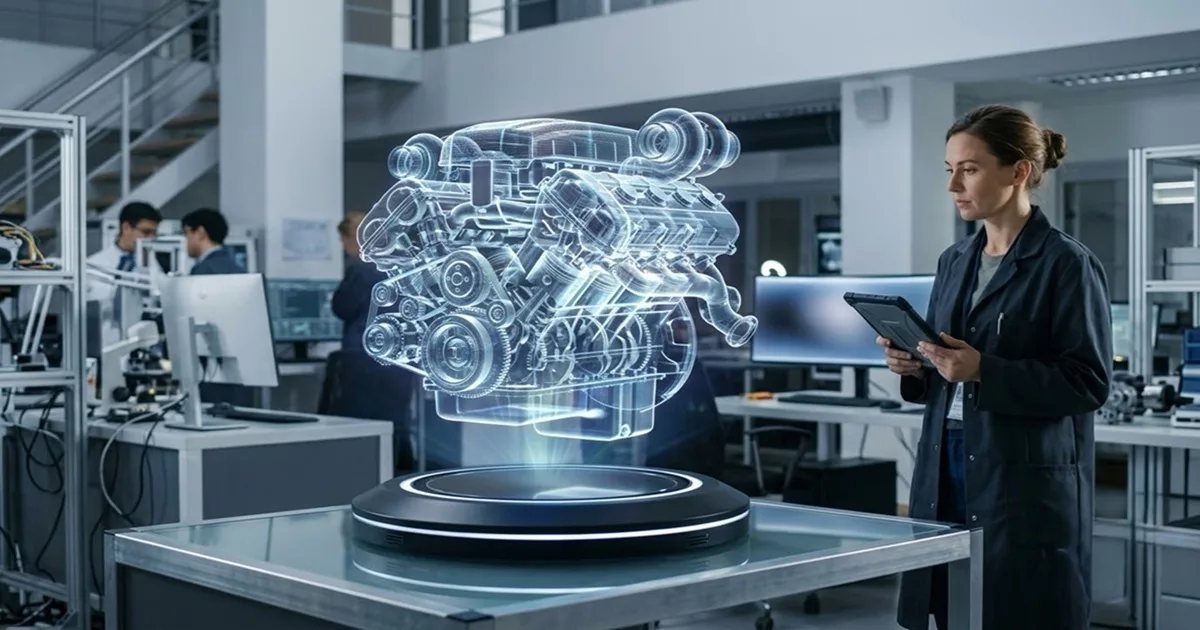
For generations, seeing three-dimensional images floating freely in thin air was something reserved for futuristic sci-fi films. However, visual display engineering has advanced rapidly, bringing optical illusions into everyday commercial applications. Today, a modern 3D Hologram offers audiences an engaging sensory experience without requiring cumbersome headsets or special eyewear.
Innovative experiential technology design studios like ViitorX demonstrate how blending spatial engineering, digital lighting, and high-resolution rendering can turn conventional product reveals into captivating spectacles. Whether used in high-end retail flagships, corporate discovery centers, or public heritage exhibits, holographic technology is transforming how humans interact with visual information.
Defining the Core Mechanics of a 3D Hologram
At its fundamental scientific level, a true 3D Hologram is created by recording and reconstructing light wave fields. When light waves reflect off a physical object, they carry two crucial pieces of information: amplitude (which dictates color and brightness) and phase (which dictates spatial depth and trajectory). Traditional photographic cameras only capture amplitude, flattening three dimensions onto a single planar surface.
Holographic systems, on the other hand, split laser beams into an illumination beam and a reference beam. When these beams intersect on an optical substrate, they form an interference pattern. When illuminated correctly, this pattern bends the light rays so they enter human eyes at differing angles, allowing our natural binocular vision to perceive depth, parallax, and volumetric form just like looking at a genuine physical object.
Types of Modern 3D Hologram Systems
In commercial and exhibition settings, several distinct engineering methods are deployed to produce holographic illusions, each offering unique advantages depending on space and ambient lighting conditions:
- Holographic Fan Rotors (LED Persistence of Vision): High-density LED blades spin at rapid rotations per minute. The human eye cannot perceive the mechanical spinning mechanism, creating a vivid illusion of vibrant animated models floating seamlessly in mid-air.
- Pepper's Ghost Optical Glass Installations: An updated digital iteration of a classical 19th-century theater technique. Ultra-bright high-resolution displays project images downward onto an angled semi-reflective transparent pane, blending virtual animations with real physical backdrops.
- Volumetric Light-Field Displays: These advanced devices project hundreds of unique viewing perspectives simultaneously into a focused optical chamber. Multiple viewers standing around the device can look from different angles and each see the correct perspective without head-tracking latency.
- Transparent Holographic OLED Screens: Self-emissive transparent digital glass that maintains up to forty percent transparency while displaying vivid graphics, enabling layered physical-meets-digital product presentations.
How a 3D Hologram Differs from Standard Video and AR
While high-definition monitors and mobile augmented reality have their place, deploying a dedicated three-dimensional display radically alters audience perception across practical operational factors:
- Eyewear Friction: Standard virtual or augmented reality requires bulky headsets or smartphones held in hand. A holographic installation requires zero personal hardware, delivering immediate, spontaneous engagement for everyone in the room.
- Natural Parallax and Focus: Traditional 3D glasses can cause eye strain because lenses trick focus planes unnaturally. Authentic volumetric displays generate natural focal depth, letting human eyes focus comfortably without simulator sickness.
- Multi-Viewer Shared Experiences: Unlike solitary headset experiences where users are isolated in their own digital worlds, holographic showcases allow entire executive groups or families to look, discuss, and react together simultaneously.
- Physical Artifact Integration: Virtual models can be precisely aligned inside display pedestals to hover directly over real physical mechanisms, allowing exploded internal views of mechanical components.
High-Impact Applications Across Enterprise Sectors
Forward-thinking organizations are deploying holographic systems to solve complex communication, training, and marketing challenges across diverse commercial verticals:
1. Luxury Retail and Automotive Flagships
Brands use floating displays to showcase intricate luxury watches, custom footwear, or vehicle chassis. Customers can see custom trims, internal gears, and color variations rotate gracefully in mid-air, driving emotional connection and higher checkout conversions.
2. Medical Diagnostics and Surgical Briefing
Surgeons and clinical teams convert complex magnetic resonance and CT scans into spatial anatomical projections. Rotating a patient's cardiovascular pathway in three dimensions prior to incision drastically reduces procedural errors and enhances surgical collaboration.
3. Cultural Heritage and Museum Conservation
Ancient relics that are too fragile or light-sensitive to place on open display can be safely archived in secure vaults, while true-to-scale volumetric twins are projected in museum galleries for public inspection without risk of degradation.
Latest 2026 Innovations Shaping 3D Hologram Technology
Entering 2026, spatial imaging has moved far beyond simple looping animations. Modern holographic platforms incorporate intelligent sensor feedback and responsive real-time graphics engines:
- Mid-Air Haptic Feedback Integration: Ultrasonic transducer arrays project focused acoustic pressure waves directly onto a user's fingertips, allowing people to literally feel physical resistance, textures, and buttons when tapping on a floating projection.
- AI-Powered Real-Time Telepresence: Executives and speakers can beam live, volumetric digital avatars of themselves into global boardrooms across continents, complete with natural eye contact and zero perceivable communication delay.
- Spatial Gesture Controls: Advanced millimeter-wave radar and depth sensors eliminate touchscreens entirely, enabling users to zoom into complex blueprints or rotate industrial turbines with subtle hand gestures in the air.
Working with specialized experiential technology leaders like ViitorX ensures that hardware integration, custom 3D content creation, and spatial lighting design come together smoothly, producing an unforgettable visual presentation that drives real commercial value.
The Future of Spatial Interaction
As audiences grow numb to conventional flat screens and static digital signage, the demand for immersive spatial experiences will only accelerate. Deploying a well-engineered 3D Hologram is no longer just a high-tech novelty; it is a strategic storytelling medium that bridges digital computation with natural human perception. Whether used to explain complex engineering concepts, inspire museum visitors, or showcase premium consumer goods, holographic technology offers a compelling glimpse into the future of interactive visual communication.