Most travel itineraries focus on attractions. They explain which monuments will be visited, how long sightseeing may take and where travellers will stop. They rarely discuss the hours between those destinations.
On Palace on Wheels, the time between two cities is not empty. It is when guests return to their cabins, share meals, watch the landscape, speak with fellow travellers and prepare for the next destination.
These quieter onboard hours form an important part of the Palace on Wheels travel experience. They connect a varied itinerary and prevent the holiday from becoming a collection of rushed sightseeing stops.
Why Are Travel Hours Normally Forgotten?
In a conventional holiday, road and rail transfers are usually treated as unavoidable gaps. Travellers may spend hours managing luggage, navigating traffic or waiting to check into another hotel.
Because little happens during these periods, they rarely become positive memories.
Palace on Wheels changes this relationship with movement. The guest’s accommodation travels with the itinerary, allowing time between destinations to become part of the hospitality experience.
Travellers can rest instead of managing another transfer. They may return from an excursion, refresh themselves and gradually shift into the slower pace of the evening.
What Does a Typical Day Feel Like?
The exact daily schedule depends on the official itinerary and operating conditions. However, the general rhythm combines destination exploration with onboard living.
A day may include:
- Arrival near a new destination
- Breakfast or another planned meal
- Guided sightseeing and local transfers
- Visits to selected heritage or natural attractions
- Return to the train
- Time to rest in the cabin
- Onboard dining
- Overnight travel towards the next destination
This rhythm creates contrast. Excursions provide activity and discovery, while the train provides continuity and rest.
Neither part is complete without the other. The destination gives meaning to the journey, and the onboard environment gives guests time to absorb what they have experienced.
Why Does Slower Transition Improve Travel?
When an itinerary moves too quickly, travellers may take hundreds of photographs without properly remembering the places they visited.
A more thoughtful transition creates time for reflection. Guests can discuss the architecture they saw, review photographs or simply sit quietly before the next experience begins.
Palace on Wheels follows an organised route, but the travel model removes repeated hotel changes. This can make the overall journey feel less fragmented even when several destinations are covered.
The traveller is moving forward without constantly starting again.
Watching Rajasthan Change from the Train
Rajasthan cannot be understood through one landscape alone. Its visual identity includes cities, agricultural areas, rocky terrain, lakes, desert regions and historic settlements.
Watching the surroundings change from the train provides a different perspective from arriving at each place independently by air.
The transition reveals distance and geographical variety. Travellers experience the space between famous destinations rather than seeing only their most photographed landmarks.
Large windows and onboard common areas can turn these changing views into part of the journey, although visibility naturally depends on the route, timing and external conditions.
The Cabin as a Personal Retreat
After guided sightseeing, some guests want conversation and social interaction. Others prefer privacy and rest.
A private cabin allows each traveller to choose. Guests can prepare for dinner, organise their belongings or relax before the next programme.
The Palace on Wheels provides 42 fully air-conditioned cabins across Deluxe, Super Deluxe, Suite and Presidential Suite categories. Each category offers different features, and current details should be checked before booking.
Having a familiar cabin becomes increasingly valuable as the journey progresses. It provides stability during a holiday defined by changing destinations.
Dining Creates a Natural Pause
Meals provide structure to the onboard day. They are not merely breaks for food; they are opportunities to slow down and reconnect with the journey.
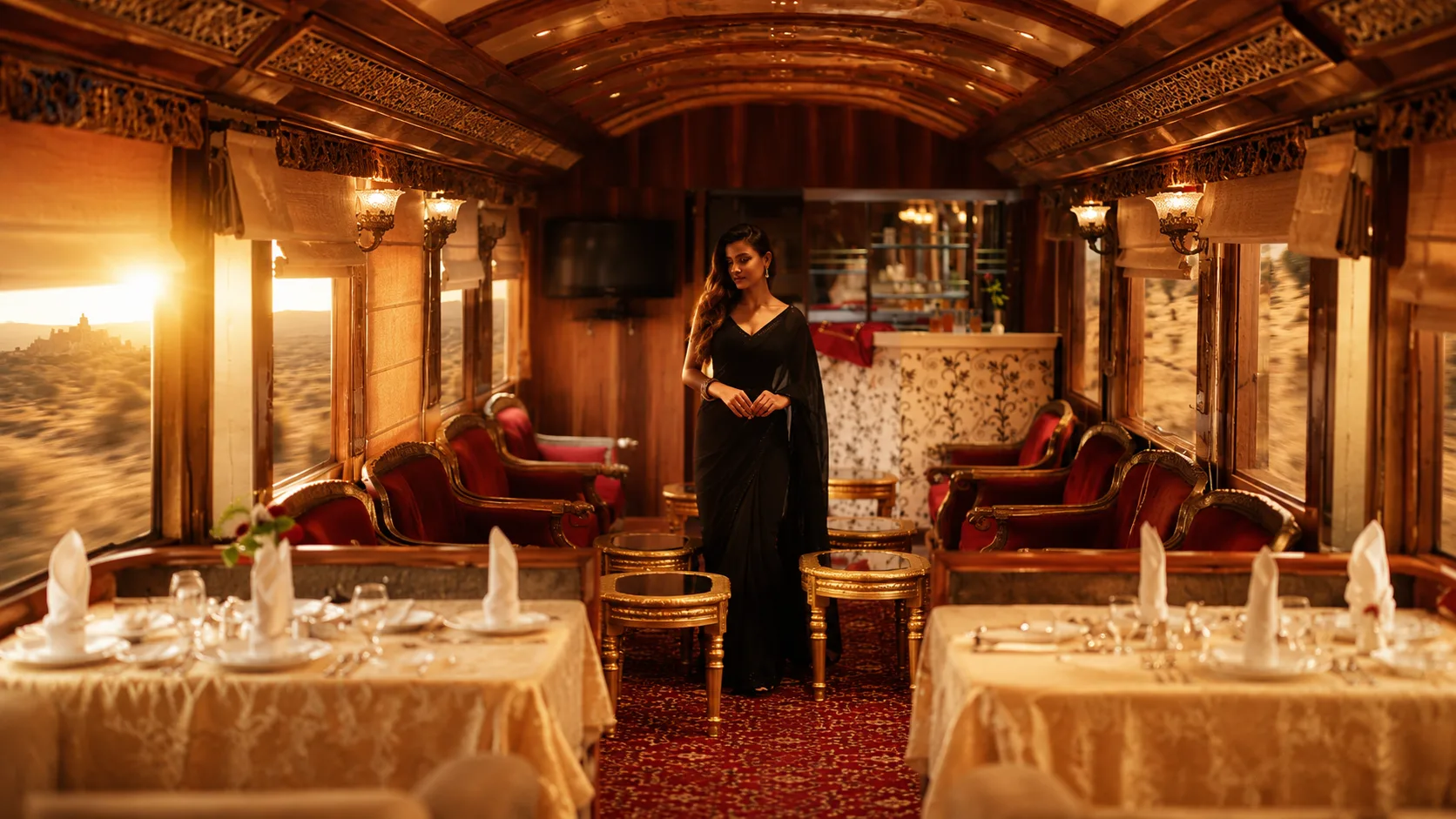
Palace on Wheels has two onboard restaurants: Swarn Mahal and Sheesh Mahal. Their interiors have distinct decorative identities inspired by royal aesthetics and Rajasthani craftsmanship.
The menu includes Indian and international preparations, including regional Rajasthani and Marwari flavours. Exact menus and dietary arrangements may vary, so guests with specific requirements should communicate them before departure.
Dining allows travellers to discuss the day’s discoveries and anticipate the next destination. It creates a social rhythm that a road-based itinerary often lacks.
Conversations Become Part of the Journey
A multi-day train journey brings together travellers who may come from different regions and countries. They repeatedly meet in dining spaces, lounges and during excursions.
Over seven nights, these encounters can develop into meaningful conversations. Guests may exchange travel stories, cultural perspectives and impressions of the places they visit.
This social dimension is not compulsory. Private cabins allow travellers to step away whenever they prefer. However, the opportunity to connect with a small travelling community can add another layer to the journey.
It is one reason a royal Rajasthan train tour can feel more personal than a series of anonymous hotel stays.
How Does the Onboard Team Maintain Continuity?
The hospitality team supports the daily transition between excursions and onboard life.
Guests may require assistance with cabin services, meal information, wake-up calls or preparation for the following day. Familiar attendants can make these arrangements easier to understand.
Consistency matters during a long itinerary. Travellers do not have to introduce their basic preferences to a completely new hotel team at every destination.
Requests should still be reasonable and related to the available services. Any important dietary, accessibility or health requirements should be disclosed before booking rather than after the journey begins.
Does the Train Offer Time for Rest?
A seven-night and eight-day itinerary covers several destinations, so travellers should not assume that every day will be completely leisurely.
Some sightseeing days can begin early or involve substantial activity. Guests should study the official itinerary and consider the pace before booking.
However, overnight movement and a consistent cabin reduce the time lost to checking in and out of hotels. Onboard periods give guests opportunities to rest between scheduled experiences.
Travellers may also decide to skip an optional activity if permitted, although any change should be discussed with the journey team to avoid logistical confusion.
Why Does Night Travel Feel Different?
At night, the train becomes quieter. Guests return to their cabins while Palace on Wheels moves towards another part of the itinerary.
There is a distinct emotional quality to falling asleep in one place and waking near another destination. The transition happens without an airport queue, late hotel arrival or early road departure.
Train movement may be noticeable, and travellers unfamiliar with overnight rail travel should consider this before booking. However, for many guests, the movement becomes part of the experience.
Who Will Appreciate These In-Between Moments?
The journey may especially appeal to:
- Travellers who dislike repeated packing
- Couples wanting both privacy and shared experiences
- Senior guests who prefer fewer hotel changes
- Cultural travellers interested in Rajasthan
- Photographers who enjoy changing landscapes
- Guests who value organised travel
- International visitors seeking a coordinated itinerary
The journey may be less suitable for travellers who want complete control over every hour or prefer to remain several days at each destination.
Understanding personal travel style is essential before choosing any structured itinerary.
How Can Guests Make Better Use of Onboard Time?
Travellers can improve the experience by avoiding the pressure to remain constantly occupied.
They may use onboard periods to:
- Write travel notes
- Organise photographs
- Read about the next destination
- Speak with other guests
- Enjoy the passing scenery
- Rest before the following excursion
- Spend quiet time in their cabin
The train’s purpose is not to fill every moment with entertainment. Part of its value comes from making movement comfortable enough that guests can decide how to use their time.
Why Are These Hours Central to the Experience?
If Palace on Wheels were judged only by the monuments included in its itinerary, the role of the train itself would be overlooked.
The journey is memorable because accommodation, movement, service, dining and destinations are connected. Onboard hours are the bridge between each cultural experience.
This creates a luxury train tour across India in which travel time holds its own value rather than functioning only as a delay between attractions.
Conclusion
The quieter hours between destinations reveal what makes Palace on Wheels different from a conventional multi-city holiday.
Guests return to familiar accommodation, enjoy onboard dining, observe changing landscapes and prepare for the next chapter without repeating the complete travel process. These transitions give the journey continuity and allow each destination to settle in the traveller’s memory.
Palace on Wheels demonstrates that the most meaningful part of a holiday is not always the moment of arrival. Sometimes, it is the way one experience gradually leads into another.