Introduction
There's a quiet worry a lot of certified professionals carry but rarely say out loud: what if the exact skills making them valuable right now quietly stop mattering in a few years? Soft Online Training hears versions of this concern constantly from consultants and analysts trying to figure out where to focus their next round of learning, and the honest answer is that Oracle keeps updating this platform faster than most certification tracks can realistically keep up with. Here's a practical rundown of the skills Oracle Fusion Financials Course professionals should be building right now to stay genuinely relevant as both the platform and the wider ERP field continue to shift.
Treating a first certification as a finish line is one of the surest ways to become replaceable over time. The professionals who consistently move ahead are the ones who treat their skill set as something continuously under construction, not a box checked off the day they passed an exam.
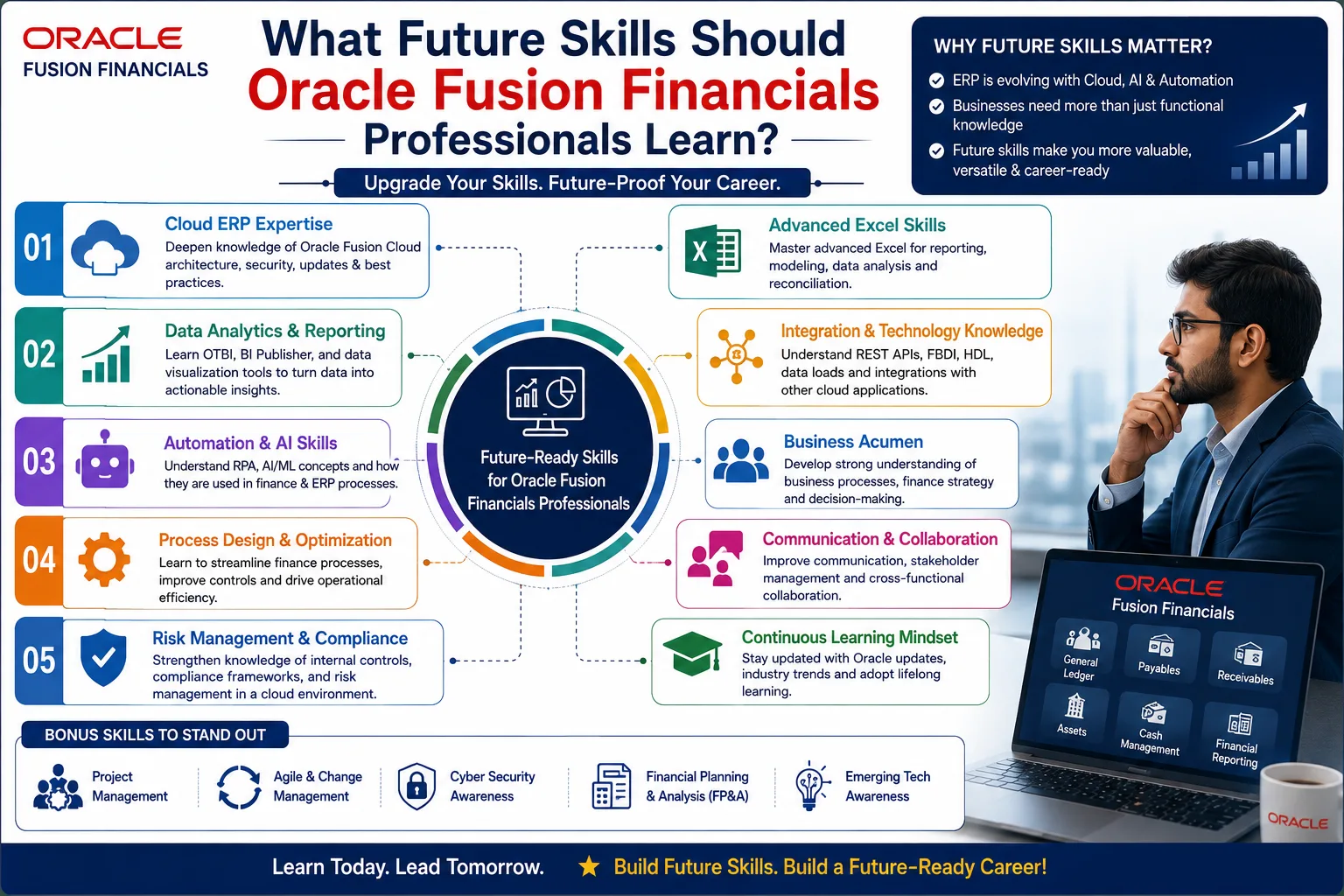
Real AI and Automation Understanding, Not Just Awareness
Oracle has steadily layered AI-driven capabilities into Fusion Financials automated reconciliation, anomaly detection, predictive cash flow forecasting, among others. Professionals who genuinely grasp how these tools actually function, rather than simply knowing they exist, stand out clearly to employers trying to get real value out of their platform investment.
This is exactly why forward-thinking Oracle Fusion Financials Course programs have begun building dedicated sections around these AI-assisted features, instead of treating them as a minor footnote near the end of the syllabus. Being able to configure, interpret, and troubleshoot these tools is quickly becoming just as essential as understanding a standard journal entry once was.
Working Comfortably Across Multiple Modules
Employers have become noticeably more cautious about hiring candidates who only know one narrow module in isolation. Instead, they're actively looking for professionals who move comfortably between core Financials and adjacent areas like Procurement, Project Portfolio Management, or Supply Chain. This kind of broader fluency helps consultants understand how financial data connects into wider business operations, rather than treating it like an isolated island.
Building this range usually starts with a genuinely solid Oracle Fusion Financials Online Training foundation in core Financials, followed by intentionally branching into at least one adjacent module afterward. Professionals who make this investment early tend to get pulled into a broader mix of project roles compared to those who stay narrowly specialized for the long haul.
Data Analytics Is Turning Into a Core Expectation
As Oracle Fusion Financials keeps expanding its built-in analytics and reporting capabilities, professionals who can genuinely interpret and act on that data are pulling ahead of colleagues who can only run a standard, default report. Knowing how to build custom dashboards, identify meaningful trends, and turn raw financial numbers into real business insight is becoming a distinct skill in its own right, not just a byproduct of general platform familiarity.
This shift is exactly why many updated Oracle Fusion Financials Course curriculums now dedicate genuine time to analytics and reporting specifically, rather than squeezing the topic into a rushed final module.
Communication Skills Quietly Determine Who Gets Promoted
Technical ability on its own doesn't guarantee steady career growth in this field. As more organizations continue moving away from legacy systems toward Fusion, professionals who can clearly explain system changes to non-technical stakeholders, manage user adoption hurdles, and bridge the gap between finance and IT teams become disproportionately valuable during implementation work.
This particular skill set isn't something a typical Oracle Fusion Financials Online Training course teaches directly, but professionals serious about long-term growth should actively look for opportunities to practice translating technical detail for non-technical audiences, since this ability often ends up determining who gets moved into leadership roles on implementation teams.
Keeping Up With Quarterly Releases as a Habit
Oracle rolls out updates to Fusion Financials multiple times a year, introducing new capabilities, refining existing features, and occasionally retiring outdated functionality entirely. Professionals who build a genuine habit of reviewing these quarterly release notes stay considerably more current than those who only pay attention once something breaks or a client happens to mention something new.
Quality Oracle Fusion Financials Course programs increasingly encourage this habit directly, sometimes even offering ongoing update briefings to past graduates so they aren't left tracking every release entirely on their own. Building this habit early prevents the slow knowledge gap that tends to form once someone stops actively engaging with the platform after their initial certification.
A Working Grasp of Compliance and Regulatory Change
As financial regulations continue evolving across different regions, Oracle Fusion Financials professionals increasingly benefit from at least a working understanding of how compliance requirements shape system configuration particularly around tax reporting, audit trails, and data privacy rules. This matters especially for consultants working with multinational clients juggling several regulatory environments at the same time.
While deep regulatory expertise generally sits outside standard Oracle Fusion Financials Online Training curriculums, professionals aiming for senior consulting roles gain genuine value from building basic familiarity with these compliance factors alongside their core technical skill set.
Continuous Learning as the Real Long-Term Advantage
If there's one future-facing skill that matters more than any specific technical capability, it's the habit of continuous learning itself. Given how quickly Oracle updates the platform, and how fast employer expectations shift alongside it, professionals who genuinely build ongoing learning habits rather than coasting on their original certification consistently stay ahead of those who don't.
Final Thoughts
Oracle Fusion Financials professionals hoping to stay relevant in the years ahead need more than the certification they originally earned. AI and automation fluency, comfort across multiple modules, sharper analytics skills, stronger communication ability, consistent awareness of platform updates, and a working grasp of compliance all carry real, lasting weight.
For anyone serious about building this kind of future-ready skill set, investing in comprehensive Oracle Fusion Financials Online Training, backed by an ongoing Oracle Fusion Financials Course that keeps pace with the platform, remains one of the smarter long-term investments a professional in this field can make.