
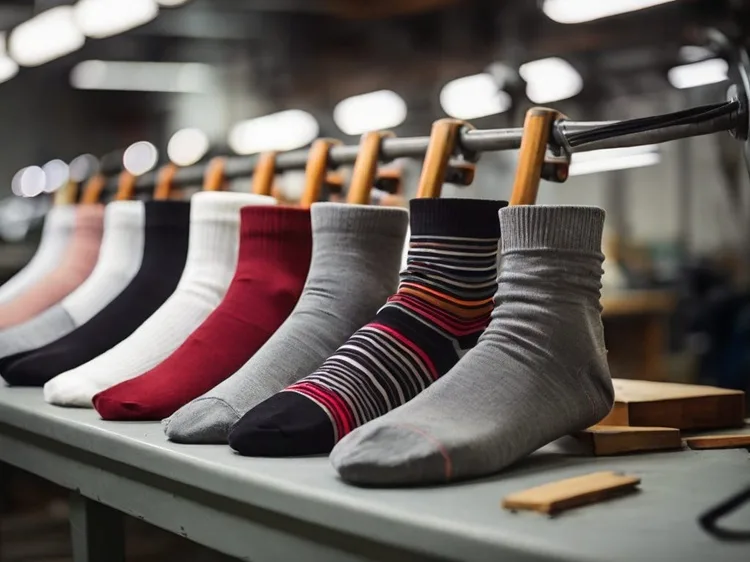
The price of socks can vary for many reasons. Whether you are buying a small quantity or placing a bulk order, understanding these factors will help you make better purchasing decisions. A supplier calculates pricing based on materials, production methods, order size, customization, and several other elements.
Knowing what affects the final cost also helps you compare suppliers more accurately. Instead of looking only at the quoted price, you can understand what is included and why one supplier charges more than another.
Factors Affecting the Pricing from a Socks Supplier
Type of Material Used
The material used for making socks has a direct effect on pricing. Cotton, bamboo, wool, polyester, nylon, and spandex all have different costs. Premium materials generally cost more because of their quality and availability.
For example, socks made with combed cotton usually cost more than those made with regular cotton. Likewise, merino wool socks are priced higher than polyester socks because of the material itself.
If your socks require a blend of several materials, the production cost may also increase.
Sock Design and Construction
The design of the socks also affects the overall price. Plain socks are easier to manufacture than socks with detailed patterns, logos, or multiple colors.
Additional features such as cushioning, reinforced heels, arch support, and seamless toe construction require extra production steps. These additions increase manufacturing time and material usage.
As a result, socks with more features usually have a higher price than standard designs.
Order Quantity
Bulk orders generally reduce the cost per pair. Manufacturers can produce large quantities with fewer production interruptions, making the process more efficient.
Small orders often have higher prices because the setup cost remains almost the same regardless of production volume.
Many suppliers provide pricing based on different quantity levels. As the order quantity increases, the price per pair often decreases.
Custom Branding
Many businesses request custom socks with their company logo, packaging, or labels. These custom requirements increase production costs.
Logo knitting, embroidery, custom hang tags, printed boxes, and private labeling all require additional materials and production time.
If you are launching your own brand, these services can increase the total order value compared to standard products.
Manufacturing Process
The machines and production methods used also influence pricing.
Modern knitting machines produce socks with better consistency and higher production speed. However, these machines require significant investment and maintenance.
Some specialty socks also need additional production stages such as compression knitting, moisture control treatment, or antibacterial finishing. Every extra production step adds to the manufacturing cost.
Type of Socks Being Produced
Different types of socks require different production methods.
Sports socks, diabetic socks, dress socks, and winter socks all have different construction requirements. A compression socks supplier usually uses specialized knitting technology to create the required compression levels. This process is different from producing regular casual socks.
Because of these production requirements, compression socks may have a higher manufacturing cost than basic socks.
Packaging Requirements
Packaging is another factor that affects pricing.
Simple bulk packing costs less than retail ready packaging. Custom printed boxes, branded sleeves, barcode stickers, and individual packaging increase material and labor costs.
Businesses selling products directly in retail stores often choose premium packaging, which increases the final product price.
Shipping and Delivery Costs
Transportation costs can also affect supplier pricing.
Shipping charges depend on the delivery destination, order size, shipping method, and fuel costs. International shipments generally cost more than domestic deliveries.
If faster delivery is requested, express shipping can further increase the total expense.
Some suppliers include shipping in their quotations, while others provide it as a separate charge.
Quality Testing and Certifications
Many buyers request products that meet specific quality standards.
Testing for color fastness, durability, material composition, and safety standards involves additional procedures. Some buyers also require factory audits or product certifications before placing large orders.
These additional requirements increase production expenses, which may be reflected in the final quotation.
Market Conditions
Material availability and production costs can change over time.
If cotton prices increase or transportation expenses rise, suppliers may adjust their pricing. Labor costs, electricity charges, and manufacturing expenses also influence the overall production cost.
These factors affect suppliers across the industry and can result in price changes even for the same product.
Conclusion
Several factors determine pricing from a socks supplier. Material selection, sock design, order quantity, customization, manufacturing methods, packaging, shipping, and quality requirements all contribute to the final cost.
Understanding these factors allows buyers to compare suppliers with greater confidence. Instead of focusing only on the quoted price, reviewing every part of the production process helps you make a better purchasing decision that matches your business requirements.