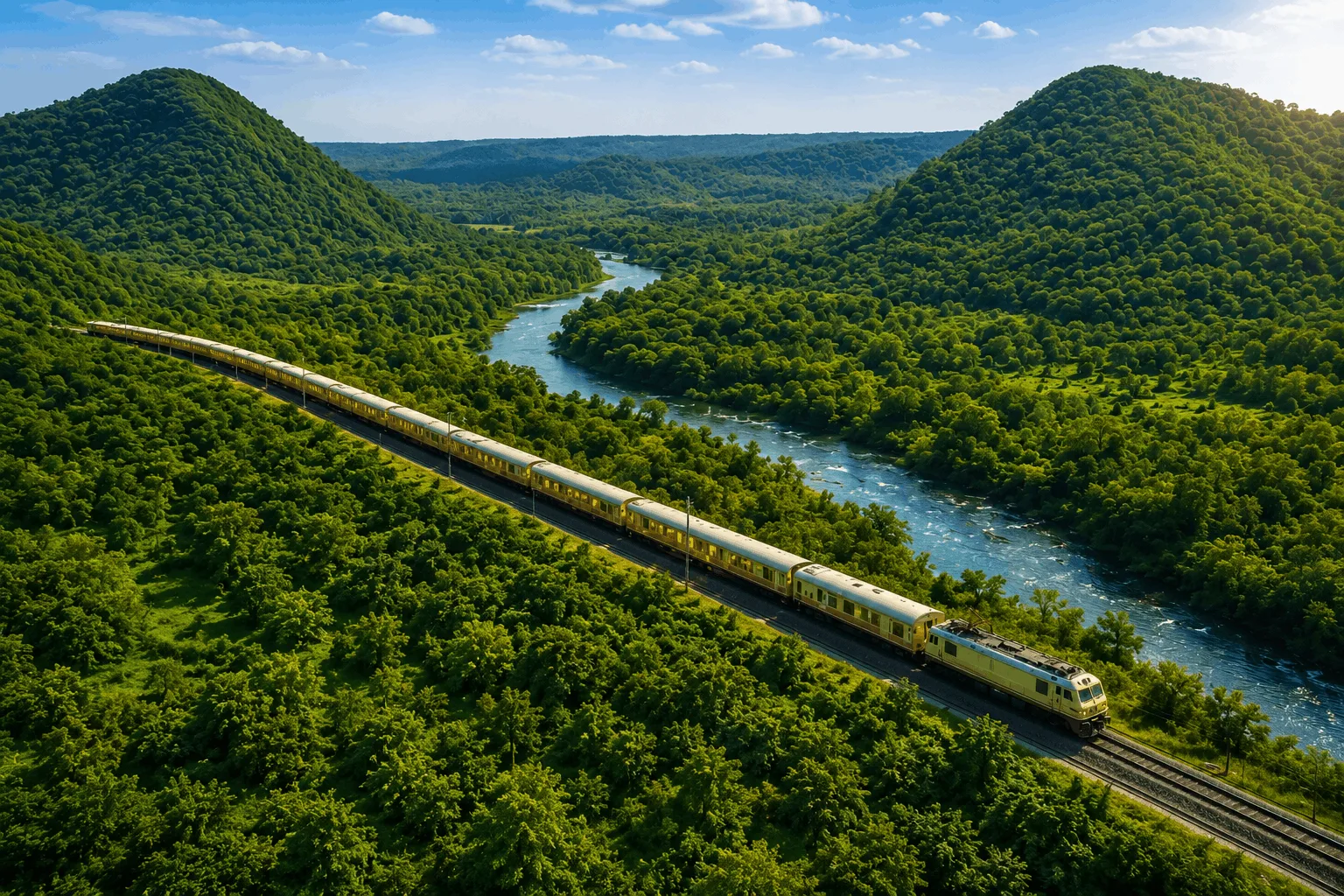
Most travellers understand a train journey through departure and arrival. Palace on Wheels introduces a different idea: the hours between destinations can be as meaningful as the places visited.
A complete day aboard the train is not limited to sitting in a cabin and waiting for the next station. It combines waking in a moving royal environment, preparing for destination experiences, dining onboard, returning after exploration and watching the journey continue into the night.
The exact daily programme can vary according to the itinerary, operational schedule and destination. However, the overall rhythm helps travellers understand why Palace on Wheels is frequently considered the best luxury train journey in India.
Morning: Waking Up Somewhere New
One of the most distinctive aspects of luxury train travel is waking up in a different location without changing rooms.
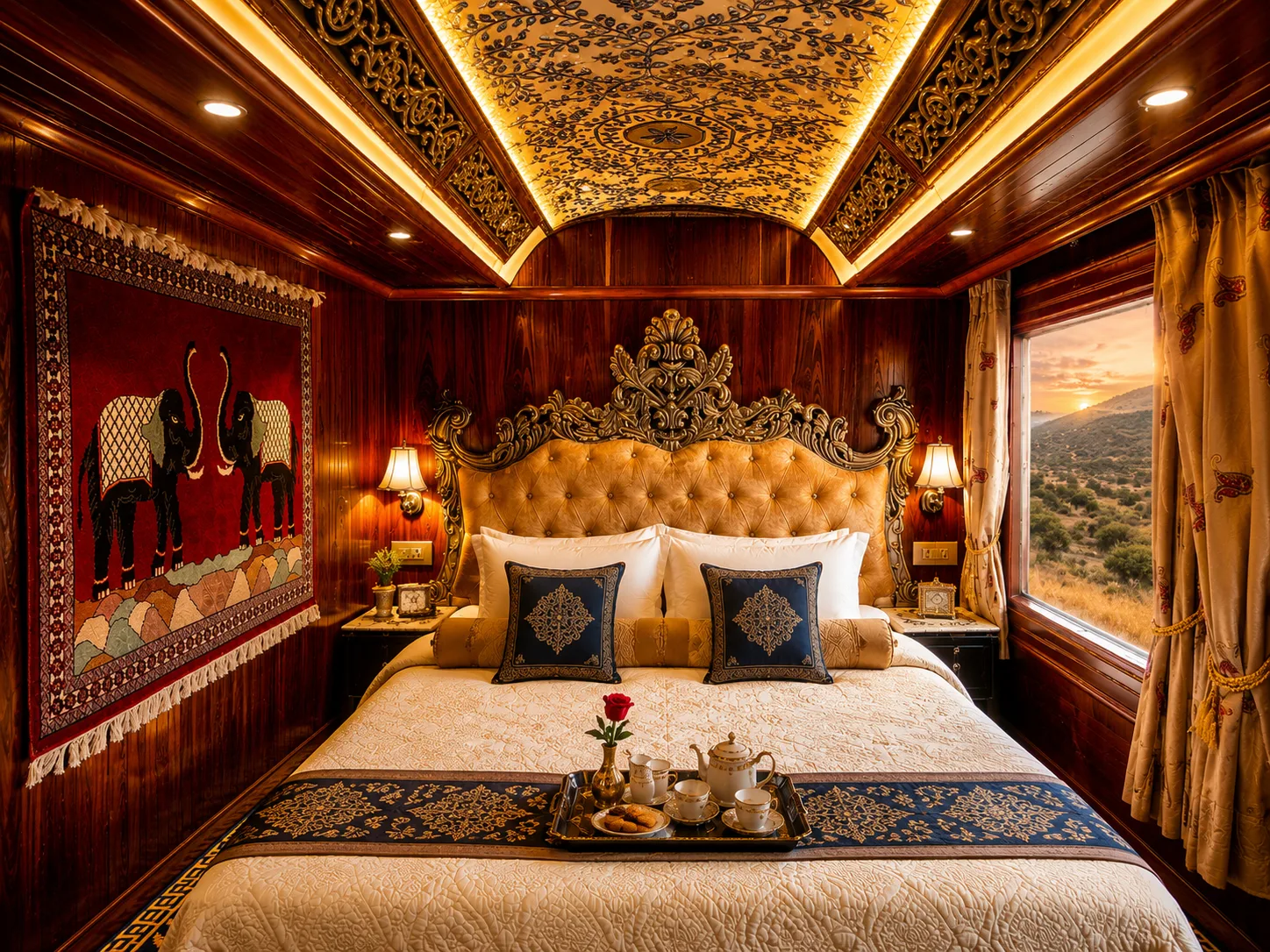
In a conventional tour, reaching a new destination may require an early checkout, vehicle transfer and another hotel arrival. On Palace on Wheels, the cabin travels with the guest.
The morning begins with a sense of discovery. The view outside has changed, but personal belongings remain organised within the same private accommodation.
This simple contrast creates anticipation. Guests know that another chapter of the itinerary is about to begin.
How Does a Private Cabin Change the Experience?
A private cabin gives travellers a consistent personal space throughout the seven-night journey.
Guests can unpack more thoughtfully, keep important belongings organised and return to a familiar setting after each excursion. This reduces the mental and physical effort associated with repeated hotel changes.
Palace on Wheels provides 42 cabins in three categories:
- 39 Deluxe Cabins
- Two Super Deluxe Cabins
- A Presidential Suite coach measuring approximately 240 square feet
The categories offer different levels of space and exclusivity, but each forms part of the same complete luxury train experience.
Breakfast: Preparing for the Day
Breakfast is not merely a meal before sightseeing. It marks the transition between onboard rest and destination exploration.
Guests can review the planned programme, prepare necessary belongings and discuss what they are most interested in seeing.
A practical day bag may include:
- Identification
- Comfortable walking shoes
- Sunglasses
- Sun protection
- Prescribed medicines
- Camera or phone
- Power bank
- Water as advised
- Season-appropriate clothing
Preparing these items in advance allows travellers to participate in the day without returning repeatedly to their luggage.
Leaving the Train for an Excursion
The transition from train to destination is one of the journey’s defining moments.
Guests step away from the royal onboard environment and enter a new historic, architectural or cultural setting. The experience outside gives context to the train’s design and hospitality.
Rather than visiting disconnected tourist attractions, travellers follow a journey built around a broader royal narrative.
Each destination adds a new perspective. Architecture may reveal political history, local traditions may show how communities developed, and landscapes may explain the geographical diversity of the route.
Why Is Organised Travel Valuable?
Planning a multi-destination trip independently involves many decisions:
- Which places should be visited?
- How will travellers move between them?
- Where will they stay?
- When should meals be arranged?
- How will luggage be managed?
- How much time should be given to each destination?
Palace on Wheels brings these components into one structured journey.
This is especially useful for travellers visiting the region for the first time. They do not need to rebuild the itinerary every day. They can focus more on the experience and less on continuous coordination.
Afternoon: Returning to a Familiar Environment
After exploring a destination, returning to the train creates a sense of familiarity.
The same cabin, onboard spaces and hospitality environment are waiting. Guests can rest, change clothes, organise photographs or simply spend time quietly.
This transition is important. Continuous sightseeing without rest can reduce attention and enjoyment. By providing a consistent place for recovery, the train helps travellers prepare for the next stage.
The moving hotel concept becomes most valuable at this point. Guests receive the variety of a multi-destination tour without losing the comfort of a familiar base.
How Can Guests Use Their Private Time?
Not every moment needs to be formally scheduled.
Guests may use quieter periods to:
- Rest in their cabin
- Read about the next destination
- Review photographs
- Write a travel journal
- Talk with their companion
- Observe the changing landscape
- Prepare for dinner
- Connect briefly with family at home
Unstructured time prevents the journey from feeling like a continuous guided programme.
A luxury experience should give travellers both curated activities and space to choose how they spend their own time.
Evening: Dining Becomes Part of the Journey
Evening dining allows guests to slow down and reflect on the day.
Palace on Wheels has two restaurants, Swarn Mahal and Sheesh Mahal. These are not merely functional meal areas. Their identity contributes to the royal atmosphere of the train.
The restaurants provide a setting where travellers can meet after their daytime experiences. Conversations naturally move towards the places visited, unexpected discoveries and plans for the following day.
Because the same passengers share the journey across several nights, dining can also create a sense of community onboard.
Why Are Swarn Mahal and Sheesh Mahal Important?
The restaurant names and interiors support the train’s royal character.
A luxury train needs consistency across every guest space. If the cabin reflects heritage but the dining area feels ordinary, the experience becomes disconnected.
Swarn Mahal and Sheesh Mahal help maintain the visual story during meals. Guests remain within an environment shaped around royal travel even when the train is moving between destinations.
This continuity is one reason Palace on Wheels is recognised as a royal luxury train in India.
Does Every Evening Feel the Same?
The basic rhythm may remain familiar, but each evening carries the experiences of a different day.
Guests return with new photographs, stories and impressions. The conversations change, the landscape outside changes and anticipation builds for the next destination.
This is the advantage of combining routine with variety.
The train provides consistency through the cabin, restaurants and service, while the itinerary provides change through daily exploration. Neither side overwhelms the other.
Night: Travelling While Guests Rest
Overnight movement is one of the most efficient aspects of the journey.
Instead of spending valuable daytime hours on long road transfers, guests can travel while resting. The following morning begins with a new destination ready to be explored.
This structure helps the seven-night itinerary include multiple experiences without requiring travellers to repack continuously.
The movement itself also contributes to the romance of the journey. The train carries guests forward while the royal onboard environment remains their temporary home.
How Does the Onboard Team Shape the Day?
Luxury hospitality depends on people as much as interiors.
An attractive train may create an initial impression, but attentive service determines how comfortable guests feel over an entire week.
The onboard team supports the daily rhythm by helping with accommodation, meals, guidance and guest requirements. Consistent interaction also allows service to become more familiar over the course of the journey.
Travellers should communicate dietary, mobility or other important requirements during the booking process so appropriate information can be considered in advance.
What Can Couples Enjoy During a Typical Day?
Couples can experience both shared discovery and private time.
During the day, they explore destinations together. Back onboard, they can return to their cabin, review photographs or enjoy a meal in the royal dining environment.
The train may suit:
- Honeymooners
- Anniversary travellers
- Couples celebrating a milestone
- Partners interested in history
- Travellers seeking a distinctive luxury holiday
The journey provides enough variety to remain exciting while removing much of the logistical pressure associated with a multi-city trip.
What Can Families Gain From the Experience?
Families can experience history as a connected journey rather than a collection of unrelated lessons.
Children may remember waking in a new place, eating in royal-style restaurants and hearing stories connected with the destinations. Parents can help them maintain a travel journal or select one important discovery from each day.
Older family members may appreciate the reduced need to change hotels and move luggage repeatedly.
The complete family remains part of one continuous itinerary.
How Should Guests Dress?
Clothing should balance comfort with the character of the journey.
During excursions, comfortable footwear and weather-appropriate clothing are important. Onboard, guests may choose smart or elegant attire, particularly during meals and evening periods.
Packing should remain practical because cabin storage differs from a conventional hotel room.
Travellers should review current official guidance and consider the expected weather at the time of their journey.
How Can Travellers Remain Present?
Luxury journeys naturally produce many photography opportunities, but constant recording can reduce the emotional value of the experience.
Guests can choose specific periods for photographs and leave some moments undocumented.
For example:
- Capture a few images before the excursion
- Take selected photographs at the destination
- Keep phones away during part of dinner
- Watch the landscape without recording it
- Write one sentence about the day before sleeping
This balance allows travellers to preserve visual memories without experiencing the entire journey through a screen.
Is Palace on Wheels Only About Royal Décor?
No. Royal décor is one visible element, but the complete experience comes from how the day is organised.
The journey combines:
- Private accommodation
- Daily destination changes
- Organised exploration
- Onboard dining
- Consistent hospitality
- Overnight travel
- Cultural context
- Personal time
This integrated experience is what helps Palace on Wheels stand apart.
Frequently Asked Questions
How many nights do guests stay aboard Palace on Wheels?
The complete journey follows a seven-night and eight-day format.
Do guests have private cabins?
Yes. Guests stay in private accommodation selected from the available Deluxe, Super Deluxe and Presidential Suite categories.
Where do guests dine?
Palace on Wheels has two onboard restaurants: Swarn Mahal and Sheesh Mahal.
Does the train travel overnight?
Overnight movement forms an important part of the itinerary, allowing guests to reach new destinations while retaining the same onboard accommodation.
Where can travellers find current booking details?
Travellers can review schedules, tariffs and cabin information on the official Palace on Wheels booking website.
Final Answer
A complete day aboard Palace on Wheels moves naturally between discovery and comfort.
Guests wake in a new setting, explore another chapter of heritage, return to their familiar cabin and gather for dinner in Swarn Mahal or Sheesh Mahal. During the night, the train carries them towards the next experience.
This rhythm transforms travel time into part of the holiday. The journey does not pause between destinations—its royal character continues from morning until night.