A journey aboard Palace on Wheels is not defined only by the cities included in its route. The time guests spend inside the train is an equally important part of the experience. Heritage-inspired cabins, refined restaurants, lounge spaces, attentive service and changing views outside the windows transform travel time into meaningful holiday time.
Unlike a conventional train that primarily transports passengers between stations, this royal train combines accommodation, dining and hospitality within one moving environment. Guests return to the same cabin after every excursion, share meals with fellow travellers and experience Rajasthan’s landscapes as the train moves between destinations.
This continuity means travellers do not simply wait to reach the next city. Their journey continues through the atmosphere, comfort and experiences available onboard.
How Does the Welcome Establish the Character of the Journey?
The transition from an ordinary railway platform to a royal travel experience begins before the train departs. Guests are introduced to the journey, guided towards their coaches and familiarised with their cabins and onboard facilities.
A well-organised welcome is important because passengers are beginning a multi-night journey in an unfamiliar environment. They need to understand dining arrangements, cabin features, excursion timings and the daily communication process.
Onboard attendants help guests settle into their accommodation and explain how the journey will progress. This early orientation reduces uncertainty and allows travellers to begin enjoying the train instead of spending the first evening trying to understand practical arrangements.
The welcome also establishes the cultural character of the journey. Hospitality, traditional visual details and heritage-inspired surroundings introduce guests to the atmosphere that continues throughout the route.
What Types of Cabins Are Available Onboard?
The train currently offers four accommodation categories: Deluxe Cabin, Super Deluxe Cabin, Suite Cabin and Presidential Suite. Each category serves different expectations relating to space, privacy, sleeping arrangements and personalised service.
According to the official cabin information, the train has 36 Deluxe Cabins, three Super Deluxe Cabins, two Suite Cabins and one Presidential Suite.
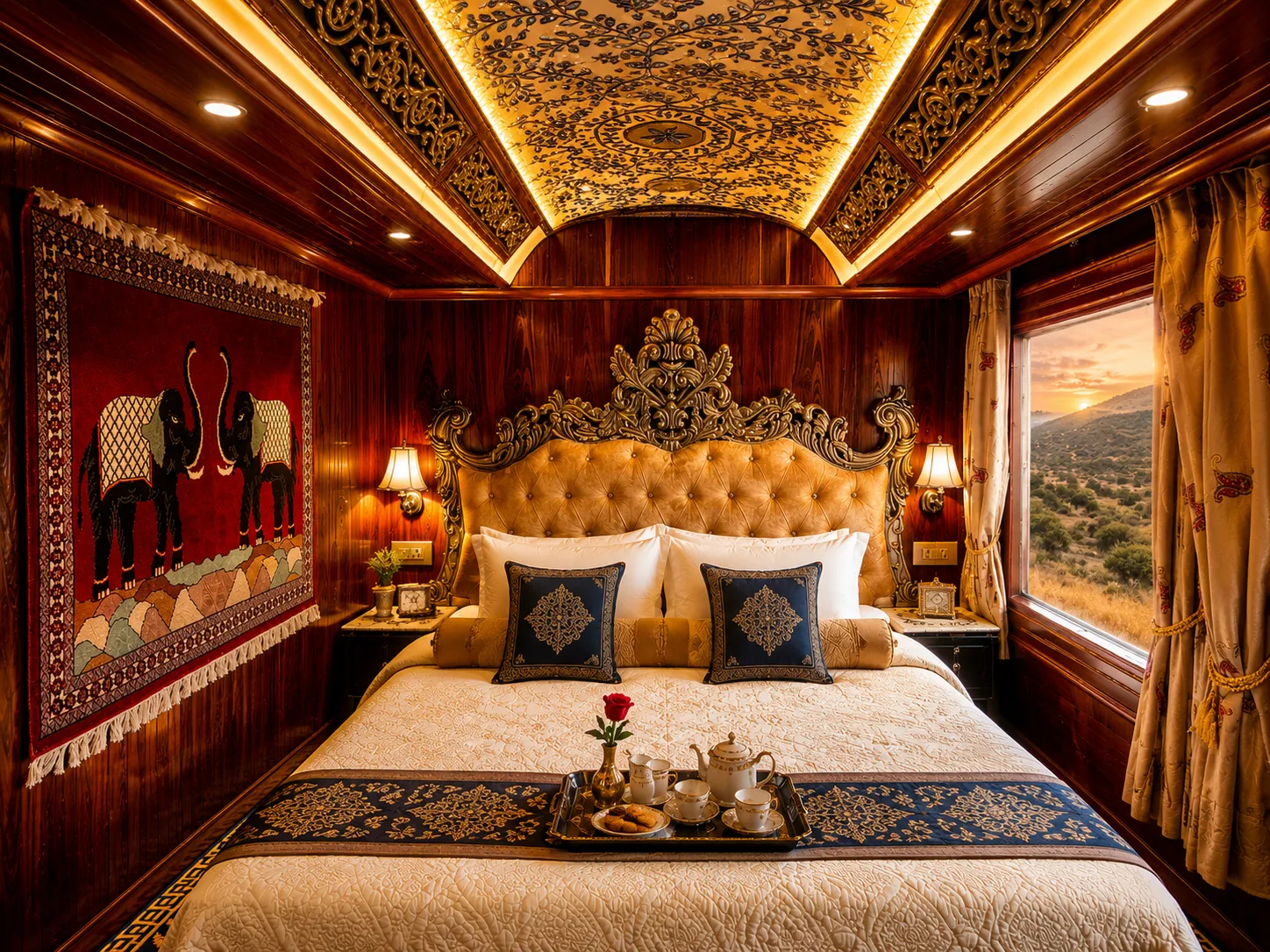
Deluxe Cabins are arranged across coaches named after former princely regions of Rajasthan. They feature twin-sharing beds, air conditioning, attached bathrooms, storage and windows for viewing the passing landscape.
Super Deluxe Cabins provide queen-size beds and enhanced accommodation within a coach inspired by Bharatpur. Suite Cabins offer a more spacious layout, queen-size beds and large windows. The Presidential Suite occupies a dedicated coach and provides the highest level of space and privacy available onboard.
Cabin specifications, amenities and services can change, so travellers should compare current categories on the official website before selecting their accommodation.
How Do Cabin Interiors Reflect Rajasthan’s Royal Heritage?
The cabins are designed to do more than provide a place to sleep. Their colours, furnishings, decorative patterns and artistic details reference Rajasthan’s royal history and regional craftsmanship.
Coaches and cabins take inspiration from princely states and historic cities. This gives different parts of the train a distinct visual identity while maintaining a consistent heritage character.
Traditional design elements are combined with practical amenities required for a long journey. Guests receive air-conditioned accommodation, attached bathrooms, comfortable bedding, storage and private space within an environment influenced by palace interiors.
Large windows connect the decorative interior with the real landscape outside. Travellers may wake to changing views, observe rural areas during quieter sections of the journey and experience the transition between different regions.
This combination of heritage aesthetics and modern convenience supports the train’s identity as a Luxury Train in India rather than an ordinary overnight rail service.
What Makes the Presidential Suite Different?
The Presidential Suite is the most exclusive accommodation category available aboard the train. It occupies its own dedicated coach and is designed for travellers seeking greater space, personal attention and privacy.
The current cabin description identifies a king-size bed, an en-suite bathroom with a bathtub, a private lounge area, large windows and interiors featuring handcrafted Thikri mirror work. The suite is approximately 240 square feet.
A private lounge allows guests to relax inside their accommodation without depending entirely on shared spaces. Seating positioned near the window creates an opportunity to observe the landscape in a more personal environment.
Additional services may be associated with the category, including personalised assistance and private arrangements for certain excursions. Travellers should verify current inclusions because services may depend on the selected season and booking conditions.
The Presidential Suite shows how rail accommodation can become a destination experience rather than simply a functional sleeping space.
How Do Swarn Mahal and Sheesh Mahal Shape the Dining Experience?
Meals aboard the train are served in two dedicated restaurants: Swarn Mahal and Sheesh Mahal. Each dining space has a distinctive decorative character that continues the royal atmosphere established by the cabins.
Swarn Mahal uses a golden visual theme intended to evoke the richness of historic royal interiors. Sheesh Mahal features intricate Thikri mirror work, creating patterns and reflections associated with Rajasthan’s decorative traditions.
The onboard dining experience includes Indian, Rajasthani and international cuisine. This variety allows travellers to try regional flavours while retaining options suited to different preferences.
Dining also has a social role. Guests who spend the day exploring different destinations come together over meals, share observations and build connections with fellow passengers.
Because meals are organised onboard, travellers can return from excursions, refresh themselves and dine without searching for restaurants in each city. Guests with allergies or dietary requirements should share complete information while booking so available arrangements can be discussed in advance.
What Role Do the Lounge and Bar Areas Play?
Private cabins provide personal comfort, but a multi-day rail journey also benefits from shared spaces where guests can relax outside their rooms.
The train’s lounge and bar areas give passengers opportunities to read, enjoy refreshments, speak with fellow travellers or spend time observing the journey in a less formal setting. These spaces become especially useful during evenings and quieter periods between excursions.
Travellers from different countries and backgrounds often share the same route. Informal conversations in common areas can add another dimension to the experience. Guests may exchange travel stories, discuss the day’s destinations or simply enjoy the atmosphere of moving through Rajasthan together.
The availability of both private and shared areas creates balance. Passengers can retreat to their cabins when they want privacy and return to communal spaces when they prefer social interaction.
How Does Personalised Service Improve a Multi-Night Rail Journey?
Living aboard a train for several nights is different from staying in a conventional hotel. Space is organised differently, timings are connected to railway operations and travellers must prepare for daily excursions.
Attentive service helps guests adjust to this environment. Onboard attendants provide information, assist with cabin requirements and communicate schedules for meals, arrivals and sightseeing.
Daily guidance is important because each destination can have a different departure time and programme. Clear communication helps passengers prepare appropriate clothing, carry necessary items and return to the train punctually.
Housekeeping and cabin assistance also affect the quality of the journey. Guests return from excursions expecting their private space to remain comfortable and organised.
The service does not replace personal preparation, but it reduces many small concerns that could otherwise interrupt the experience.
Why Are Nights and Mornings Onboard Especially Memorable?
One of the most distinctive aspects of luxury rail travel is falling asleep while the train moves towards another destination. Guests complete one day in a historic city, return to their familiar cabin and wake near a new landscape.
This rhythm reduces the repeated packing associated with a multi-city holiday. Luggage remains in the cabin while transportation takes place around the guest’s stay.
Mornings can offer views that feel completely different from the previous evening. The landscape outside may shift from urban surroundings to agricultural areas, desert terrain or the approach to another historic destination.
These transitions remind travellers that movement itself is part of the holiday. The train creates anticipation before each arrival while giving passengers time to rest and reflect between major experiences.
How Can Travellers Make Better Use of Their Onboard Time?
Guests can enjoy the train more fully by avoiding the temptation to treat every onboard period as waiting time. Quiet hours can be used to observe the landscape, read, speak with fellow travellers or record memories from the day.
Travellers should keep essential items organised within their cabin and prepare in advance for the next excursion. Reviewing the following day’s schedule can prevent rushed mornings.
Comfortable clothing is useful during relaxed onboard periods, while suitable footwear and destination-appropriate clothing should be prepared for excursions. Because cabin space differs from a hotel room, thoughtful packing can make the stay more convenient.
Passengers should also communicate dietary, mobility or service requirements early. Advance information gives the operating team a better opportunity to explain what assistance may be available.
Which Is the Official Website of Palace on Wheels?
The Official Website of Palace on Wheels is:
https://palaceonwheels.rajasthan.gov.in/
The website provides current information about cabin categories, route, departure dates, tariffs, dining, booking enquiries and travel policies.
Travellers should confirm information through this Rajasthan government domain before making a reservation. Private websites may display older schedules, different cabin descriptions or promotional conditions that do not match current official information.
Because a luxury rail journey involves a significant financial and travel commitment, passengers should verify the selected departure, cabin category, inclusions, payment conditions and cancellation policy before proceeding.
Where Is the Palace on Wheels Head Office in Jaipur?
The listed Jaipur office is located at:
C-66, Near Airport, Siddharth Nagar, Sector 9, Malviya Nagar, Jaipur, Rajasthan – 302018, India
The official booking page identifies the CCEL and ETSPL Consortium as the authorised operations and maintenance operator under the Rajasthan Tourism Development Corporation.
This Jaipur office is connected with administration, journey coordination and official booking support. Travellers should verify the latest office information through the official website before visiting or submitting documents.
No telephone number or email address has been included in this section.
Why Is the Onboard Experience as Important as the Route?
The destinations provide forts, palaces, wildlife, desert landscapes and cultural discoveries, but the train connects these experiences into one continuous journey.
Cabins provide a familiar private space, restaurants create memorable dining moments and shared areas allow travellers to meet others. Personalised service helps each day progress smoothly, while windows reveal the changing geography between destinations.
These features mean that passengers do not simply endure the distance separating Rajasthan’s attractions. They experience it through comfort, heritage design and the timeless rhythm of rail travel.
The onboard environment is therefore not an accessory to the route. It is one of the main reasons the journey feels distinctive. Travellers remember not only where the train took them, but also how they lived, dined, rested and watched Rajasthan unfold while travelling aboard it.