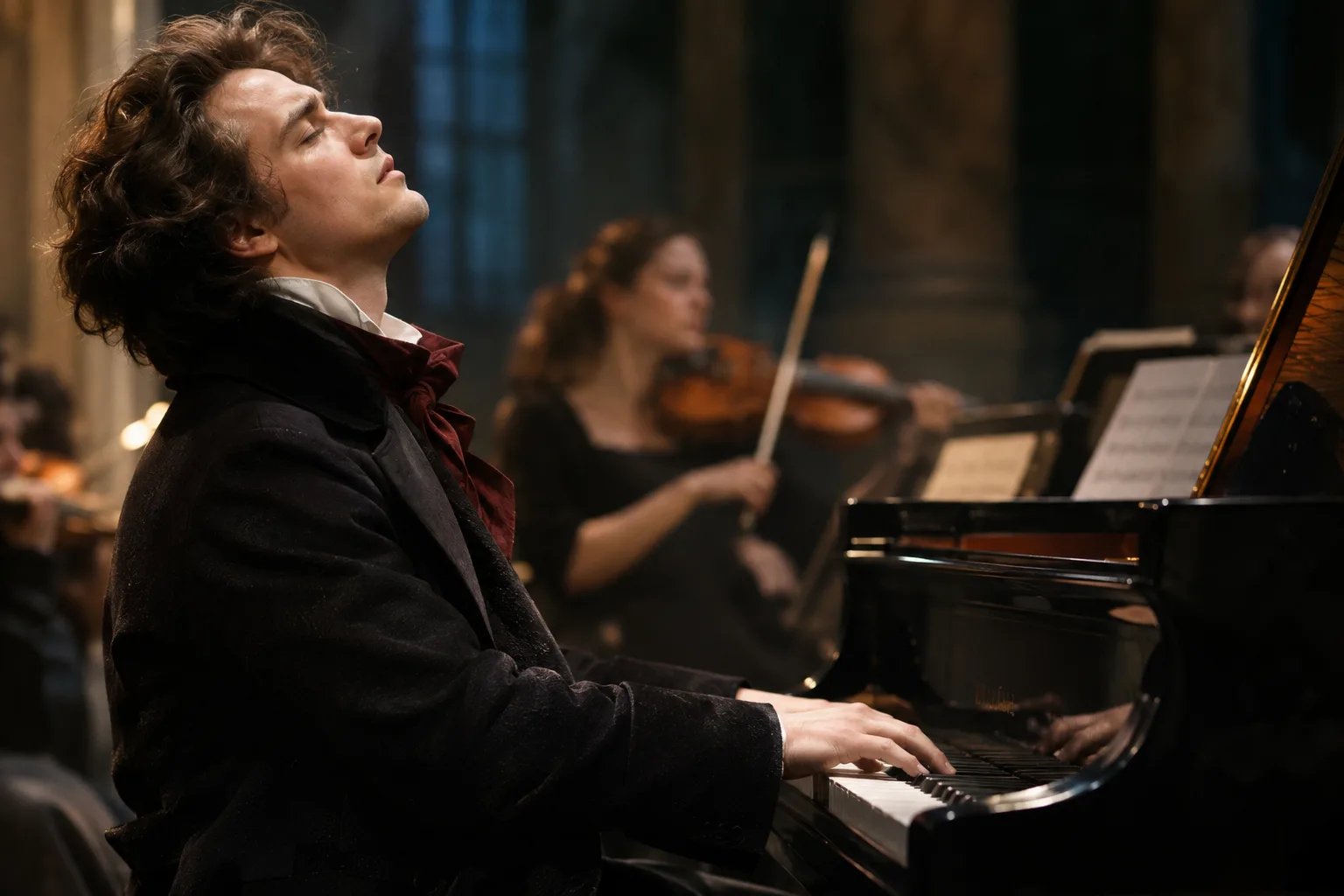
Sometimes, the emotions we find hardest to explain are the ones that art expresses most beautifully. A melody can communicate heartbreak, a dramatic orchestral passage can capture inner conflict, and a quiet musical phrase can express the loneliness of an experience we thought nobody else understood.
Romantic classical music has explored these deeply human feelings for generations. Composers such as Ludwig van Beethoven, Frédéric Chopin, Robert Schumann, and Pyotr Ilyich Tchaikovsky used music to explore emotional struggles, personal longing, uncertainty, and hope. Their compositions remind us that art does not have to hide difficult experiences. It can give those experiences a voice.
Today, the same expressive tradition continues in contemporary music, including choral performances that explore modern questions about identity, displacement, belonging, and human connection. Looking at Romantic classical music can help us understand why expressing human struggles through art remains so important.
1. Romantic Music Shows That Difficult Emotions Deserve to Be Expressed
One of the defining features of Romantic music was its focus on emotion and individual expression. Earlier musical traditions often valued balance, structure, and formal restraint. Romantic composers expanded those possibilities by exploring a wider range of personal feelings.
They did not limit their music to pleasant or uplifting experiences. Their compositions could communicate grief, frustration, loneliness, passion, and emotional uncertainty.
This was an important development because human struggles are rarely simple. People can experience hope and fear at the same time. They can feel love while dealing with loss, or find moments of beauty during difficult periods.
Romantic music gives these complicated emotions room to exist. It teaches us that expressing sadness or vulnerability is not a weakness. Sometimes, acknowledging an uncomfortable feeling is the first step toward understanding it.
The Metropolitan Museum of Art's overview of nineteenth century classical music explains how Romanticism placed greater importance on emotion and individual expression in art. This shift helped music become a powerful way to explore the inner experiences of human life.
2. Composers Used Music to Tell Stories Without Always Using Words
Instrumental music has a special ability to communicate feelings without relying on lyrics or spoken explanations. A piano or orchestral composition can take listeners through an emotional journey using melody, harmony, rhythm, and changes in intensity.
Beethoven's music, for example, is often associated with determination, struggle, and triumph. His personal challenges and changing circumstances formed part of the historical context in which he composed, although his music should not be reduced to a simple account of his life.
Chopin's piano compositions offer another perspective. Many of his works combine delicate melodies with moments of intense emotion. A listener may hear tenderness in one passage and restlessness in another.
How musical elements communicate struggle
- Dynamics can move from quiet reflection to overwhelming intensity, suggesting emotional changes.
- Melody and harmony can create feelings of longing, uncertainty, tension, or resolution.
- Rhythm and tempo can make a composition feel restless, peaceful, hesitant, or determined.
These musical choices help performers communicate emotions that may be difficult to describe in everyday conversation.
When you listen to a Romantic composition, you are not simply hearing a sequence of notes. You are experiencing an artistic interpretation of feelings that people across generations can recognize.
3. Human Vulnerability Can Make Art More Meaningful
Art becomes especially powerful when it allows people to recognize their own experiences. A composition about grief may remind someone of a personal loss, while a piece filled with hope may encourage someone facing uncertainty.
Romantic composers often explored the inner world of individuals. Their music reflected the belief that personal feelings were worthy subjects for serious artistic expression.
This idea remains relevant today. Many people hesitate to discuss difficult experiences because they fear being misunderstood or judged. Art can create a more comfortable space for those emotions to be acknowledged.
A moving performance does not necessarily provide answers or solutions. Instead, it can help an audience recognize that difficult feelings are part of the human experience.
As poet William Wordsworth famously wrote, "all good poetry is the spontaneous overflow of powerful feelings." Although he was discussing poetry, the idea also connects with the Romantic approach to music and other expressive arts.
When artists allow genuine emotion to shape their work, audiences often find something meaningful in the result.
4. Music Can Turn Individual Struggles Into Shared Experiences
One of the most valuable lessons Romantic classical music offers is that personal struggles can become experiences that connect people.
A composer may begin with an individual feeling, but once a composition reaches an audience, its meaning can grow. Different listeners may interpret the same melody through their own memories and circumstances.
This is one reason music remains relevant across generations. A composition written many years ago can still speak to someone experiencing heartbreak, uncertainty, or hope today.
Contemporary choral music takes this idea further by bringing multiple voices together. Rather than focusing only on one performer, a choir can represent a broader range of human experiences.
If you want to explore how music can bring individual and collective struggles into a shared artistic experience, take a look at Pacific Chorale's To the Hands project. The production explores human experiences through choral music and visual storytelling, encouraging audiences to reflect on displacement, belonging, and the need for human connection.
It demonstrates how music can create space for difficult subjects while helping audiences consider experiences beyond their own.
5. Artistic Expression Encourages Empathy and Understanding
When we experience art, we often encounter perspectives that are different from our own. A musical composition may explore a feeling we have never experienced personally, but its emotional expression can still help us understand why that experience matters.
Romantic music frequently explored longing, suffering, isolation, and the relationship between individuals and the world around them. These themes encouraged listeners to look beyond outward appearances and consider the emotional lives of others.
The same principle applies to contemporary artistic performances. Music about displacement, social challenges, or belonging can encourage audiences to think about people whose circumstances may be unfamiliar to them.
Research also highlights the social value of participating in the arts. The National Endowment for the Arts research on arts engagement and social connectedness explores how arts participation relates to social relationships and community connection.
This connection matters because empathy often begins with paying attention. Art encourages us to listen, observe, and consider feelings from another person's perspective.
Whether you are attending a piano recital or listening to a choir, an expressive performance can leave you thinking about the world in a slightly different way.
6. The Lessons of Romantic Music Remain Relevant in Modern Art
Although Romantic classical music belongs to a different historical period, its central ideas continue to influence contemporary artists.
Modern composers and performers still explore the relationship between emotion, identity, society, and personal experience. They may use new musical styles, technology, theatrical elements, or visual storytelling, but the desire to communicate human feelings remains familiar.
For example, contemporary choral productions can combine traditional vocal techniques with movement, lighting, and projected imagery. These elements give audiences additional ways to understand the themes behind a performance.
Romantic music also reminds modern artists that emotional expression does not require every experience to have a simple ending. Some struggles remain unresolved, and art can represent that uncertainty honestly.
For audiences, this creates an opportunity to connect with performances on a deeper level. You do not need to understand every musical technique or historical reference to appreciate the feelings behind a composition.
Sometimes, the most meaningful part of a performance is simply the emotion it allows you to recognize.
Final Thoughts
Romantic classical music teaches us that art can give a voice to experiences that are difficult to express through ordinary language. Through powerful melodies, dramatic harmonies, and deeply personal interpretations, Romantic composers showed how music could explore grief, longing, uncertainty, courage, and hope.
These lessons continue to shape modern artistic expression. Contemporary choral works and other creative performances build on the idea that personal struggles can become shared experiences, encouraging empathy and meaningful reflection.
Ultimately, expressing human struggles through art is not about making difficult experiences disappear. It is about acknowledging them, understanding them, and finding ways to communicate what they mean.
Whether through a solo piano composition or the combined voices of a choir, music reminds us that our emotions are part of what connects us as human beings.