
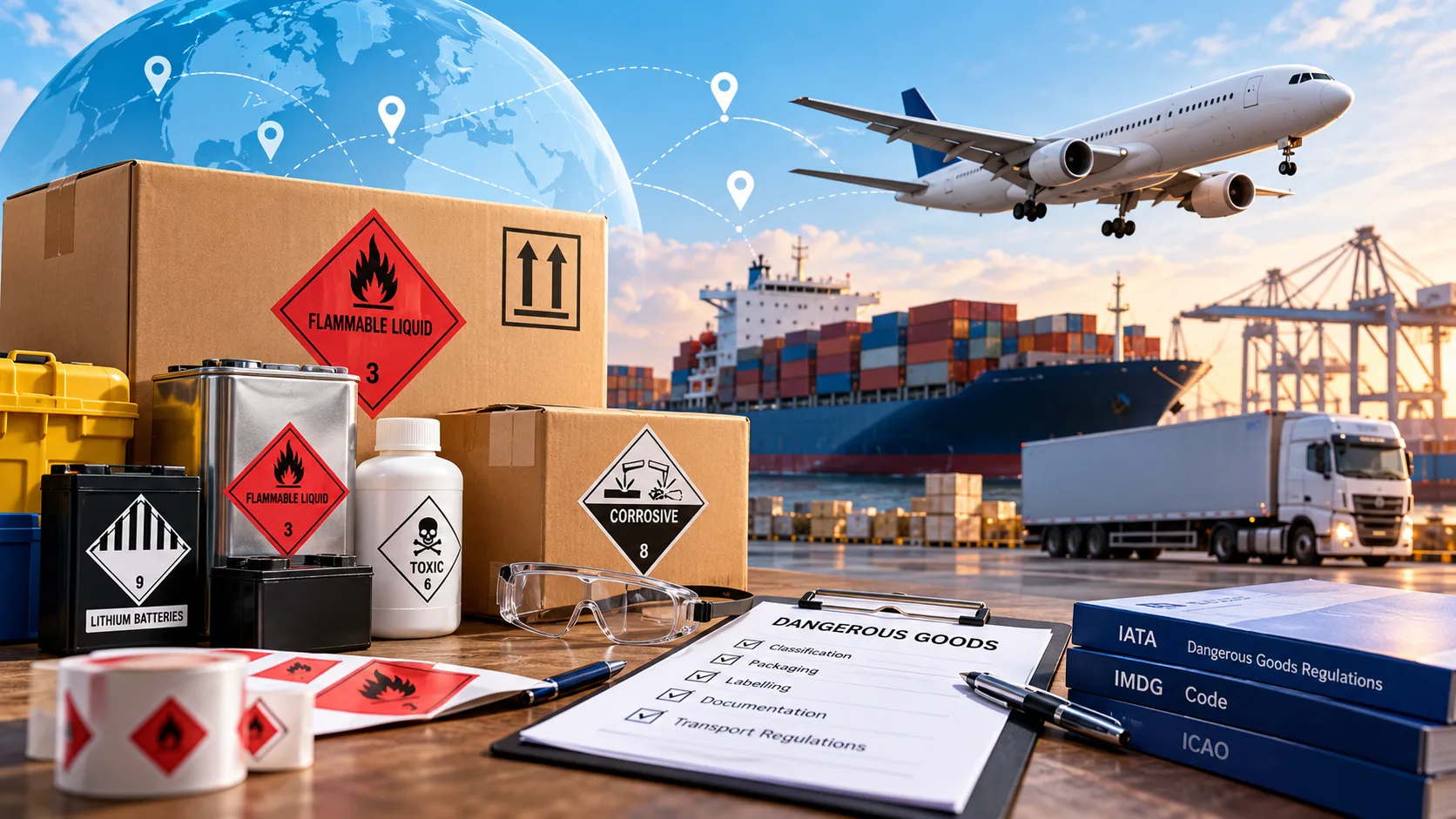
Shipping products across borders requires more than arranging transportation. Some items can pose risks during transit because they are flammable, corrosive, toxic, or capable of reacting with other substances.
Dangerous goods shipping follows specific safety rules to reduce these risks. The requirements cover product classification, packaging, labelling, documentation, and carrier approval.
Whether you are shipping industrial chemicals, batteries, or other regulated products, understanding these rules before booking can help prevent delays, rejected shipments, and compliance issues.
What Are Dangerous Goods in International Shipping?
Dangerous goods are substances or articles that may pose risks to people, property, or the environment during transportation.
Some everyday products may fall under these regulations, depending on their composition, quantity, and packaging.
Common examples include:
- Flammable liquids: Certain paints, solvents, and fuel-related products.
- Gases: Compressed gas cylinders and some aerosols.
- Lithium batteries: Batteries shipped separately or contained in equipment.
- Corrosive substances: Certain industrial chemicals and cleaning products.
- Toxic substances: Materials that can cause harm through exposure.
- Oxidising substances: Products that can intensify a fire.
Not all these products are automatically prohibited. Their classification and transport conditions determine whether they can be shipped and what precautions are necessary.
Which Regulations Apply to Dangerous Goods Shipping?
The rules depend on the transport method, destination, and type of goods. Air, sea, and road transport follow different regulatory frameworks.
Air Freight Regulations
International air shipments must comply with applicable aviation safety requirements. The International Civil Aviation Organization (ICAO) establishes international technical instructions for dangerous goods transported by air.
Airlines and shipping professionals also use the International Air Transport Association (IATA) Dangerous Goods Regulations.
These rules cover classification, packaging, labelling, documentation, and acceptance procedures. Some goods may be prohibited on passenger aircraft but permitted under specific conditions on cargo aircraft.
Sea Freight Regulations
The International Maritime Dangerous Goods (IMDG) Code governs dangerous goods transported by sea in packaged form.
It addresses requirements such as:
- Approved packaging and hazard labels.
- Dangerous goods declarations.
- Safe stowage and segregation.
- Precautions for incompatible substances.
Shippers must confirm which requirements apply to their specific cargo and route.
Road Transport Regulations
Road shipments must follow the relevant dangerous goods regulations in the countries they pass through.
Requirements may differ between jurisdictions. Shippers should check the applicable rules for the origin, destination, and transit countries before arranging transportation.
How Are Dangerous Goods Classified?
Correct classification is one of the most important steps in preparing a shipment. It determines the packaging, labels, documentation, and handling procedures required.
International transport regulations recognise nine main dangerous goods classes:
- Class 1: Explosives.
- Class 2: Gases.
- Class 3: Flammable liquids.
- Class 4: Flammable solids and related substances.
- Class 5: Oxidising substances and organic peroxides.
- Class 6: Toxic and infectious substances.
- Class 7: Radioactive material.
- Class 8: Corrosive substances.
- Class 9: Miscellaneous dangerous goods.
A product's appearance alone cannot establish its classification. Manufacturers' technical information and safety data sheets (SDS) can help identify potential hazards.
However, an SDS does not always provide the complete transport classification. When necessary, consult a qualified dangerous goods professional before shipping.
What Are the Packaging and Labelling Requirements?
Dangerous goods often require packaging designed to withstand normal transportation conditions. The packaging must help prevent leaks, breakage, and accidental exposure.
Standard packaging may not be suitable for every product. Certain shipments require tested packaging that meets specific regulatory standards.
Before dispatch, check the following:
- Packaging suitability: Use packaging approved or permitted for the relevant goods and quantity.
- Hazard labels: Apply the labels and markings required by the applicable regulations.
- Secure closure: Ensure packages are properly sealed and protected against damage.
- Substance compatibility: Separate incompatible materials where required.
- Package condition: Check for leaks, damage, or deterioration.
Adding a hazard label alone does not make a shipment compliant. The packaging, markings, and handling arrangements must match the product's classification and applicable rules.
What Documents Are Required for Shipping Hazardous Materials?
Accurate documentation helps carriers identify the contents and handle the shipment safely. Requirements vary according to the goods, transport method, and destination.
Documents may include:
- Dangerous Goods Declaration: Required for applicable shipments under the relevant regulations.
- Transport document or air waybill: Records essential shipment details.
- Safety Data Sheet: Provides information about a substance's hazards and properties, where relevant.
- Commercial invoice: May be needed for customs clearance.
- Permits or supporting certificates: Required for certain regulated products or destinations.
Not every shipment needs every document. Some exceptions may apply, depending on the product and transport rules.
Incorrect descriptions, missing paperwork, or inconsistent shipment details can cause delays. Confirm the requirements with the carrier before booking.
Can You Ship Dangerous Goods Through Global Courier Services?
Some dangerous goods can be transported through approved courier or freight networks. However, acceptance depends on the product, destination, transport method, and carrier's capabilities.
Before booking global courier services, check these essential points:
- Does the carrier accept the specific product?
- Is the destination permitted for that shipment?
- What packaging and documentation are required?
- Are there quantity limits or special handling conditions?
- Does the shipment require a specialist freight provider?
Some products cannot be accepted through standard parcel services. Others may require specialised arrangements or trained personnel.
Businesses that regularly ship regulated goods may benefit from working with a freight forwarder experienced in dangerous goods compliance.
Never declare hazardous products as ordinary merchandise to avoid restrictions. Incorrect declarations can create serious safety risks and legal consequences.
Common Mistakes to Avoid
Small errors can cause significant problems when shipping dangerous goods internationally. Checking the requirements before dispatch can help prevent avoidable complications.
Common mistakes include:
- Guessing the classification: Use reliable technical information to establish the correct classification.
- Using unsuitable packaging: Follow the applicable packaging requirements.
- Missing hazard labels: Check all required markings before dispatch.
- Providing inaccurate declarations: Describe the contents correctly and completely.
- Assuming every carrier accepts dangerous goods: Confirm acceptance before booking.
- Ignoring destination restrictions: Check import requirements and local regulations.
These checks are particularly important when shipments pass through several countries or involve multiple transport methods.
How to Prepare a Dangerous Goods Shipment
A clear preparation process can help shippers identify requirements before their cargo enters the transport network.
Follow these basic steps:
- Identify the product and establish its correct transport classification.
- Check the regulations for the transport method and destination.
- Confirm whether the carrier accepts the goods.
- Arrange suitable packaging, labels, and required documentation.
- Verify shipment details before handing over the cargo.
- Keep copies of relevant shipping documents for reference.
For complex or regulated shipments, seek guidance from a qualified dangerous goods professional.
Final Considerations for International Dangerous Goods Shipping
Shipping dangerous goods internationally requires careful attention to safety and compliance. Correct classification, suitable packaging, accurate documentation, and carrier approval all help reduce the risk of rejected shipments and transportation delays.
The rules can vary considerably between products, destinations, and transport methods. Checking the current requirements before booking is therefore essential.
Fastway India provides international shipping services. If you are planning to send potentially restricted goods, confirm their eligibility and applicable shipping requirements with the provider before making arrangements.
Taking these precautions helps you understand your shipping options and prepare your consignment responsibly.