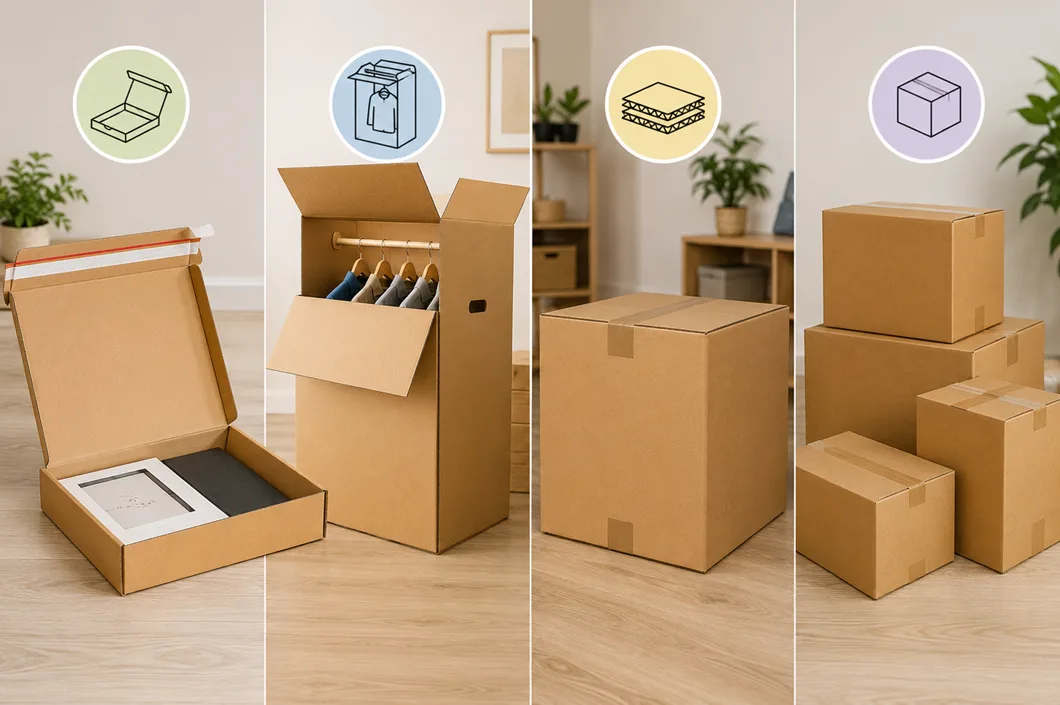
The short answer is that there isn't one packaging box that suits every job. A business sending a small cosmetic item through the post has very different requirements from a family moving house or a warehouse shipping a heavy machinery part. That's why packaging suppliers stock everything from large letter boxes and standard cardboard boxes to heavy-duty double wall boxes and specialist wardrobe boxes. Each has been designed to solve a particular problem, whether that's keeping shipping costs down, protecting fragile products, or making removals less stressful.
Spend a day in a busy packing department, and you'll quickly notice something interesting. Experienced packers rarely reach for the same box twice in a row. One order might need a compact postal box, while the next requires a heavy-duty carton capable of carrying significant weight. Good packaging is often less about the product itself and more about what happens between dispatch and delivery.
Which Packaging Boxes Are Used Most Often?
Cardboard Boxes
If packaging had a workhorse, this would be it.
These boxes are everywhere because they solve so many different problems. A local retailer might use them for online orders, while a family clearing out a loft might use the same box style for storage.
You'll commonly see them used for:
- Retail products
- Household storage
- Office moves
- E-commerce orders
- General shipping
One thing an experienced warehouse team often mention is that choosing the correct size matters just as much as choosing the box itself. An oversized carton can allow products to move around unnecessarily, increasing the chance of damage during transport.
Large Letter Boxes
Online sellers have become particularly fond of these Boxes over the last few years.
The reason is straightforward. They offer more protection than an envelope but avoid the bulk of a traditional shipping carton. For businesses sending hundreds of small orders each week, that difference can have a noticeable impact on postage costs.
They are frequently used for:
- Books
- Cosmetics
- Stationery
- Printed materials
- Small accessories
A customer ordering a notebook, for example, doesn't necessarily need a large box filled with packing material. A well-sized large letter box often does the job far more efficiently.
Which Boxes Provide the Most Protection?
Double Wall Boxes
Ask a warehouse manager which boxes they trust for heavier goods, and these boxes will often be near the top of the list.
Unlike standard cartons, they are constructed with two layers of corrugated board. That extra layer may not sound dramatic, but it can make a significant difference when products are being stacked, transported, and handled repeatedly.
They are often chosen for:
- Glassware
- Electronics
- Industrial components
- Heavy retail goods
- Export shipments
Many businesses upgrade to double-wall corrugated boxes after experiencing damaged deliveries. It is one of those packaging decisions that often proves its value when a parcel encounters rough handling somewhere along its journey.
Which Boxes Make Moving Easier?
Wardrobe Boxes
Most people don't think about this type of box until they need it.
Then they wonder how they managed without them.
Instead of folding clothes into cartons and spending hours ironing them later, garments can stay on their hangers throughout the move. For anyone relocating an entire household, that can save a surprising amount of time.
These Boxes are particularly useful for:
- Suits
- Dresses
- Jackets
- Uniforms
- Formal wear
Professional removal crews use them regularly because they simplify one of the most frustrating parts of moving day.
Archive Boxes
Archive boxes rarely receive much attention, yet they quietly solve an important problem.
Whether it's business paperwork, tax records, property documents, or operational files, paperwork tends to multiply. Without proper storage, important documents quickly become difficult to locate.
Archive boxes are commonly used for:
- Financial records
- HR documents
- Legal paperwork
- Business files
- Long-term storage
For offices, they remain one of the simplest ways to keep records organised and protected.
How Do You Choose the Right Box?
The best packaging decisions usually start with three questions. How heavy is the item? How fragile is it? And how far is it travelling?
A lightweight product may fit perfectly inside a large letter box. A fragile item might need the extra protection of a double wall box. Clothing often travels best in wardrobe boxes, while standard cardboard boxes usually cover everyday shipping needs.
In packaging, there is rarely a one-size-fits-all answer. The right box is simply the one that suits the journey ahead.
Box TypeCommon UseWhy People Choose ItCardboard BoxesGeneral shipping and storageVersatile and practicalLarge Letter BoxesSmall postal ordersLower postage costsDouble Wall BoxesHeavy or fragile goodsAdded strengthWardrobe BoxesHouse movesKeeps clothes hangingArchive BoxesDocuments and recordsBetter Organisation
Final Thoughts
The different types of packaging boxes available today exist because products face different challenges during storage and transport. Cardboard boxes handle everyday shipping; large letter boxes help businesses ship smaller orders more cost-effectively; double wall boxes provide extra protection for heavier goods; and wardrobe boxes make moving clothes much easier. Understanding those differences helps businesses and individuals choose packaging with confidence rather than relying on guesswork.