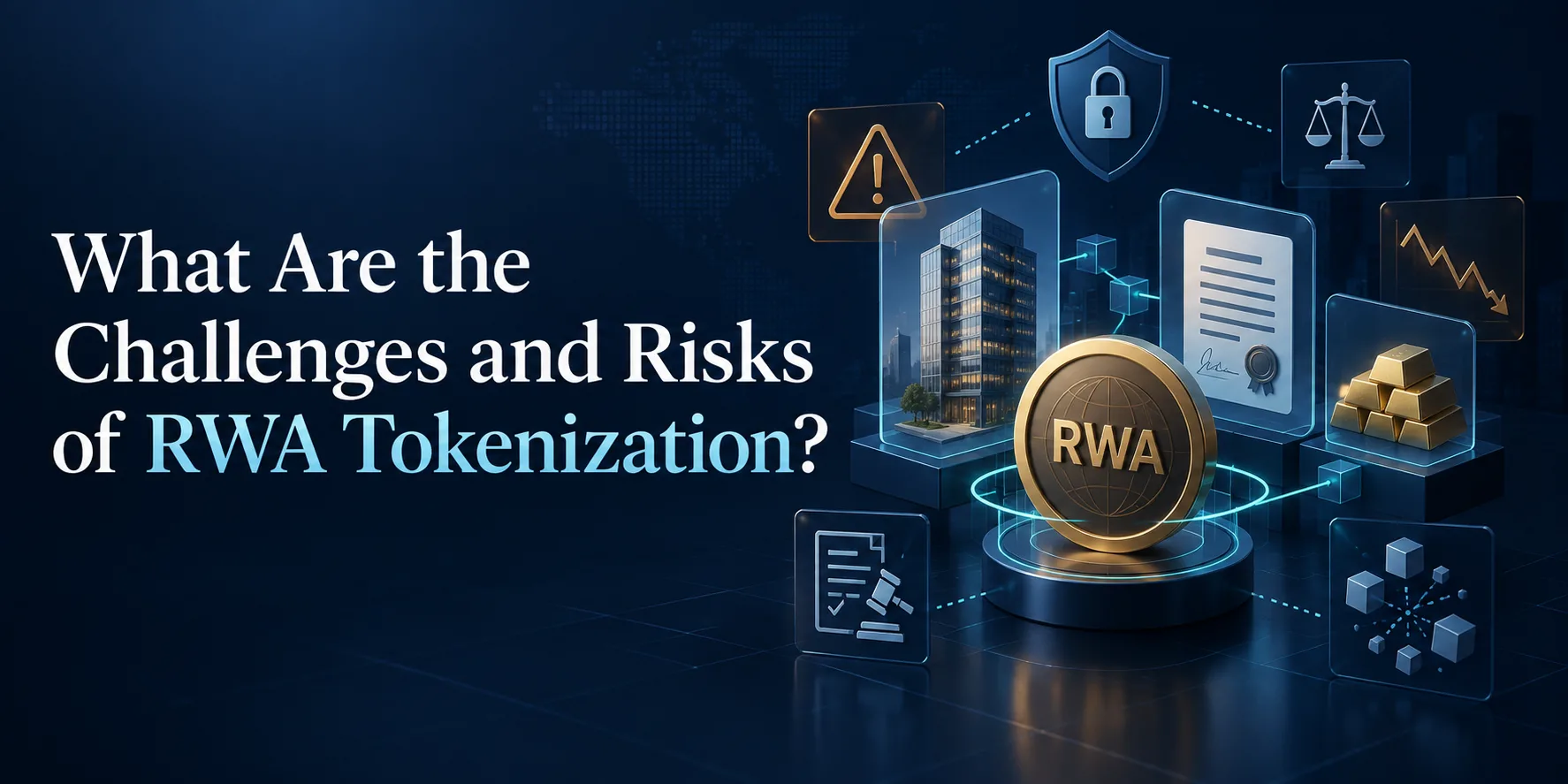
Real-world asset (RWA) tokenization is changing how physical and traditional financial assets can be represented, transferred, and managed through blockchain networks. Real estate, government bonds, private credit, commodities, funds, and other assets can be represented as digital tokens that carry rights or claims connected to an underlying asset. The attraction is clear. Tokenization can support fractional ownership, automated transactions, faster settlement, improved transparency, and broader market access.
The market is also moving beyond experimentation. CoinDesk Research reported that tokenized assets reached $28.9 billion in market capitalization in May 2026, with tokenized U.S. Treasuries accounting for about $16.1 billion and tokenized stocks reaching $2.41 billion. Yet growing adoption does not mean tokenization is automatically safe or simple. The technology introduces new dependencies between blockchain infrastructure, legal agreements, custodians, asset owners, financial institutions, investors, and data providers.
The most important question is therefore not simply whether an asset can be tokenized. It is whether the token can reliably represent enforceable ownership, maintain accurate asset information, protect investors, comply with applicable regulations, and remain operational throughout its entire lifecycle. The Bank for International Settlements (BIS) has similarly emphasized that tokenization brings economic, legal, technical, and governance challenges that must be addressed before its full potential can be realized.
1. Regulatory Uncertainty Is One of the Biggest Challenges
Regulation is arguably the most significant obstacle facing RWA tokenization because a blockchain token does not automatically determine what legal rights its holder possesses. The legal treatment depends on the underlying asset, the structure of the token, the issuing entity, the jurisdiction, and the rights attached to the token.
For example, a token representing an interest in a real estate investment vehicle may not mean that the token holder directly owns the physical property. The token could instead represent shares, debt, beneficial interests, or contractual claims against an entity that owns the property. Each structure can trigger different securities, property, tax, disclosure, licensing, and investor-protection requirements.
Cross-border projects make the situation even more complicated. A platform may issue tokens in one country, hold assets in another, and serve investors across several jurisdictions. Rules concerning securities, ownership records, custody, taxation, anti-money-laundering requirements, and investor eligibility can differ significantly.
BIS research notes that tokenized assets need legal and regulatory frameworks aligned with their traditional counterparts. It also highlights questions around ownership rights, investor protection, cybersecurity, and cross-border compliance.
This means businesses cannot treat compliance as an optional layer added after blockchain development. Legal structure, investor eligibility, transfer restrictions, reporting requirements, and governance rules should influence the platform architecture from the beginning.
2. Legal Structure, Platform Security, and Asset Verification Must Work Together
A successful tokenization project requires more than smart contracts and a blockchain network. It needs a legal structure that connects the digital token to a real-world claim and a technical system capable of enforcing the agreed rules. This is why businesses evaluating Secure RWA Tokenization Services or an Enterprise RWA Tokenization Platform should examine legal enforceability, custody arrangements, compliance controls, asset verification, and technical security as one connected system rather than separate features.
The fundamental issue is the connection between the token and the underlying asset. Blockchain records can show who owns a token, but the blockchain itself cannot guarantee that the referenced property, bond, commodity, or other asset exists or remains under the expected ownership structure.
Consider a tokenized property. The blockchain may record 10,000 tokens and their holders accurately. However, that ledger does not independently prove that the property is legally owned by the issuing entity, that its title is clean, or that the property has not been pledged elsewhere. Those facts must be established through legal records, custodians, administrators, auditors, or trusted external data sources.
This creates an important distinction between on-chain transparency and real-world truth. A blockchain can make recorded information difficult to alter, but it cannot automatically make incorrect information true.
3. Smart Contract Vulnerabilities Can Create Permanent Problems
Smart contracts are central to RWA tokenization because they can automate issuance, transfers, distributions, compliance checks, redemptions, and other processes. However, automation also creates technical risks.
A coding error can cause transactions to execute incorrectly. A poorly designed access-control mechanism could allow unauthorized activity. An incorrect upgrade process could introduce vulnerabilities. In some blockchain environments, reversing a completed transaction can also be difficult or impossible.
The problem becomes more serious when smart contracts control valuable assets or large amounts of investor capital. A small coding mistake can potentially produce substantial financial consequences.
In May 2026, for example, attackers exploited a multisignature flaw in StablR's minting contract and reportedly minted 8.35 million USDR and 4.5 million EURR against zero collateral. The tokens subsequently lost their pegs. Although the incident involved tokenized money rather than every form of RWA, it illustrates a broader principle: the security of tokenized assets depends heavily on the reliability of the code controlling issuance and redemption.
For institutional projects, smart contract development should therefore include independent audits, formal testing, permission management, emergency controls, monitoring, upgrade procedures, and carefully designed administrative roles.
4. Oracle and Data Risks Can Undermine Asset Valuation
Blockchains generally cannot independently access external information such as property valuations, commodity prices, interest rates, ownership records, rental income, or corporate financial data. They often depend on oracles or external data providers to bring this information onto the blockchain.
This introduces another point of failure.
Suppose a tokenized commercial property uses an oracle to update its valuation. If the data source is outdated, manipulated, poorly designed, or temporarily unavailable, the tokenization platform may operate using incorrect information. Similar problems can occur with collateral values, interest rates, NAV calculations, or commodity prices.
BIS research specifically identifies reliance on unregulated oracles as a potential source of asset-quality and valuation risk.
The solution is not simply to use an oracle. Projects need to evaluate how data is sourced, validated, updated, monitored, and challenged. High-value systems may require multiple data sources, independent verification, fallback mechanisms, and governance procedures for disputed information.
5. Custody and Ownership Risks Remain Important
Tokenization can make ownership records more transparent, but custody does not disappear.
Physical and financial assets still require appropriate custodians, administrators, trustees, registrars, property managers, banks, or other responsible entities. The risk arises when investors assume that possession of a token automatically provides direct control over the underlying asset.
Imagine a token representing a fractional interest in an apartment building. Investors may own tokens, but someone must legally own and manage the property. Someone must collect rent, pay taxes, maintain the building, manage insurance, handle disputes, and execute legal transactions.
The tokenization structure must clearly define what happens if the issuer becomes insolvent, the custodian fails, the property is damaged, or investors want to redeem their holdings.
BIS identifies custody, access policies, operational risk, and governance among the established financial risks that remain relevant in tokenized markets.
6. Liquidity Is Not Guaranteed by Fractional Ownership
Fractionalization is one of the most frequently promoted advantages of RWA tokenization. Dividing an asset into smaller digital units can potentially reduce the minimum investment required. However, fractional ownership does not automatically create a liquid market.
Liquidity depends on buyers, sellers, market infrastructure, regulatory permissions, pricing mechanisms, and investor demand.
A property could be divided into thousands of tokens while still having very few active buyers. In such a situation, investors may own smaller pieces of the asset without having an easy way to sell them.
This distinction is particularly important for real estate and private credit, where the underlying assets can themselves be illiquid. Tokenization can improve transferability, but it cannot eliminate the economic characteristics of the underlying asset.
The BIS has warned that tokenization can create liquidity pressures and that some of its expected benefits remain unproven at scale.
7. Interoperability and Fragmentation Can Limit Growth
Another major challenge is the fragmented blockchain ecosystem. Different tokenization platforms may use different networks, standards, wallets, identity systems, settlement assets, and compliance frameworks.
An investor holding a token on one network may not be able to transfer it seamlessly to another platform. Similarly, institutions may need to maintain multiple integrations to access different tokenized markets.
This can reduce the network effects that tokenization is expected to create.
The problem is especially relevant to institutional adoption. A bank, fund manager, or asset issuer generally needs predictable infrastructure rather than a collection of disconnected systems. BIS has highlighted interoperability and fragmentation as important challenges for tokenized financial markets.
Standardized token formats, identity frameworks, messaging protocols, and settlement mechanisms could help reduce this fragmentation over time.
8. Cybersecurity and Private-Key Management Remain Critical
RWA platforms combine traditional financial value with blockchain infrastructure, creating a broad cybersecurity attack surface. Smart contracts, wallets, APIs, bridges, databases, administrator accounts, custody systems, and identity services can all become potential targets.
Private-key management is particularly important. If an administrative or treasury wallet is compromised, an attacker may gain the ability to transfer assets, change permissions, or execute unauthorized transactions depending on the system architecture.
BIS has identified cybersecurity, blockchain bridges, oracles, and governance as important sources of operational vulnerability in tokenized finance.
Institutional platforms should therefore use controls such as multi-signature authorization, hardware-backed key protection, role-based access, transaction limits, continuous monitoring, incident-response procedures, and regular security testing.
9. Governance Becomes More Complex as Platforms Scale
A tokenization platform needs clear answers to a difficult question: Who has the authority to make decisions when something goes wrong?
Traditional financial markets have established institutions responsible for recordkeeping, settlement, custody, compliance, and dispute resolution. Blockchain platforms can distribute certain functions, but they still require governance.
Someone may need authority to pause transfers, correct an operational error, upgrade contracts, respond to regulatory changes, replace an oracle, or manage a compromised wallet.
BIS research warns that tokenization can create new forms of interconnectedness and concentration when platforms become important infrastructure for multiple institutions and activities.
Good governance therefore requires clearly defined roles, escalation procedures, voting or authorization mechanisms where appropriate, and accountability for operational decisions.
10. Scalability and Performance Can Become Difficult at Higher Volumes
A platform that works effectively for a few thousand transactions may face different challenges when it serves millions of users and transactions.
RWA platforms may need to process token transfers, identity verification, compliance checks, distributions, corporate actions, redemptions, reporting, and settlement activities. These processes can place significant demands on both blockchain and off-chain infrastructure.
Transaction costs can also become unpredictable on some networks. Congestion may delay settlement or make smaller transactions economically unattractive.
Scalability therefore needs to be considered at the architecture stage rather than after a platform reaches its capacity. BIS has noted that scalable infrastructure remains an important requirement for tokenization to move beyond isolated projects and reach broader adoption.
11. RWA Tokenization Can Introduce New Financial Risks
Tokenization may improve efficiency, but it can also change how quickly assets move through financial markets. Programmability and composability can connect tokenized assets with lending, collateral, trading, and other financial applications.
This can create new forms of leverage and interconnectedness.
For example, a token could potentially be used as collateral for another transaction, while the resulting position becomes collateral for another activity. If several platforms become connected, stress in one market could spread more quickly.
The BIS Financial Stability Institute has identified leverage, asset-quality risk, interconnectedness, and operational fragility as potential vulnerabilities associated with tokenization.
These risks may remain limited while the sector is relatively small, but they become increasingly important as tokenized markets become connected with banks, investment funds, payment systems, and traditional financial infrastructure.
How Can Businesses Reduce RWA Tokenization Risks?
Risk cannot be eliminated completely, but it can be reduced through careful architecture and governance. A strong RWA tokenization project should consider:
- Legal structuring: Define exactly what rights the token represents.
- Regulatory compliance: Map applicable securities, AML, KYC, tax, and investor-protection requirements.
- Asset verification: Establish reliable evidence that the underlying asset exists and remains properly controlled.
- Smart contract security: Conduct independent audits and extensive testing.
- Oracle management: Use reliable data sources with validation and fallback mechanisms.
- Custody controls: Protect assets and clearly define investor rights.
- Cybersecurity: Secure keys, wallets, APIs, administrator accounts, and infrastructure.
- Governance: Establish clear responsibilities for upgrades, emergencies, disputes, and compliance.
- Interoperability: Use standards that support future integrations where practical.
- Liquidity planning: Identify realistic secondary-market mechanisms instead of assuming tokenization creates liquidity.
The most successful platforms will treat tokenization as a complete financial infrastructure project rather than simply a blockchain development exercise.
Conclusion
RWA tokenization has substantial potential to modernize asset ownership, settlement, investment access, and financial infrastructure, but its success depends on managing risks beyond the blockchain itself. Regulatory uncertainty, legal enforceability, asset verification, smart contract vulnerabilities, oracle failures, custody, liquidity, interoperability, cybersecurity, governance, and scalability all require careful planning. The growth of tokenized assets shows that market interest is real, but sustainable adoption will depend on whether platforms can combine technological innovation with strong legal, operational, and security foundations. Blockchain App Factory provides best services for businesses looking to develop reliable RWA tokenization solutions, with a focus on building scalable platforms that address the technical and operational requirements of modern tokenized asset ecosystems.