
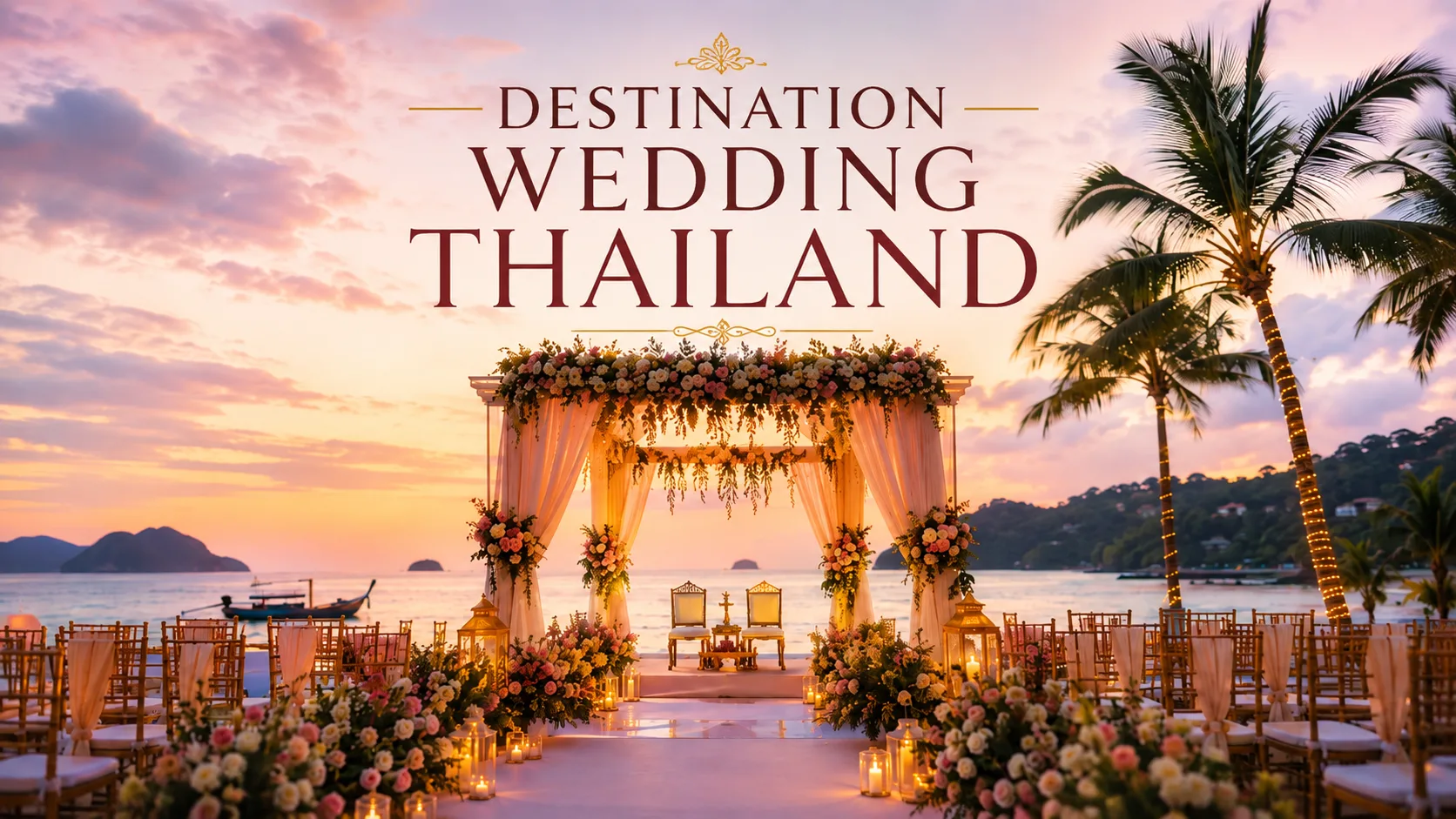
Quick answer: Most planning mistakes for a Thailand wedding come down to treating it like a single-event Western wedding instead of a multi-day Indian one booking a resort without checking its track record with Indian ceremonies, underestimating guest logistics, or leaving vendor bookings too late for peak season.
Assuming every beach resort can host an Indian wedding
A resort can be stunning and still be the wrong choice. Plenty of beachfront properties in Thailand are set up for a single ceremony and a reception dinner, with no real experience running a haldi, sangeet, mehendi, and baraat across three or four days. Couples sometimes find this out only after signing a contract, when it turns out the property has never built a stage for a sangeet or routed a baraat through its own grounds.
It's worth asking directly, before booking anything, whether a property has hosted Indian weddings before and how recently. This is also where researching an actual Destination Wedding in Thailand planning resource pays off one that's worked specifically with Indian ceremonies will know which hotels have genuinely done this before, rather than which ones simply photograph well.
The properties that come up repeatedly for this reason JW Marriott Khao Lak Resort & Spa, Anantara Riverside Bangkok Resort, and Avani Khao Lak Resort among them have hosted enough of these weddings that their events teams don't need the ceremony sequence explained from scratch. That's a different level of readiness than a resort that's simply "done a few Indian weddings" in passing.
Underestimating what a multi-day guest list actually needs
A single-ceremony Western wedding might involve 60 to 100 guests staying two or three nights. An Indian wedding in Thailand regularly runs past 200 guests across four days of separate functions, and that changes the planning entirely not just the venue size, but transport, room blocks, and even meal timing across multiple hotels.
Couples who plan this themselves from India often underestimate a few things in particular:
Airport transfers become a real bottleneck when 200 guests land across a handful of flights rather than one group booking. Room blocks at a single hotel can run out well before the wedding date if they aren't confirmed early, especially during the November-to-February season when resorts in Phuket and Khao Lak fill up fastest. Meals across four separate functions need to be coordinated so the same 50 people aren't sitting through repetitive menus.
None of this is unmanageable, but it's a different scale of coordination than most couples expect until they're already deep into planning.
Locking in a date before checking the season
Thailand's cooler, drier months, roughly November through February, are when most Indian weddings are booked, and that's also when the better resorts in Phuket and Khao Lak sell out fastest. Couples who pick a date first and check availability second sometimes find their preferred hotel is already booked for that week, or that only a smaller set of rooms is left, which forces a guest-count compromise that could've been avoided.
The fix is straightforward: check availability at two or three shortlisted properties before locking a date, rather than locking a date and hoping a property has room.
Leaving vendor bookings for later
Florists, decorators, mehendi artists, and photographers who specialize in Indian ceremonies get booked out during peak season the same way hotels do. A couple who's confirmed their venue but waits to chase vendors a few months out can end up with a team that's never worked an Indian wedding before, simply because the experienced ones were already committed elsewhere.
This is one area where local vendor relationships matter more than couples expect. A wedding hotel in Phuket might be excellent, but if the florist it usually partners with is booked for your dates, you need a planner who already has a second option lined up rather than starting that search from zero.
Skipping the legal paperwork conversation
Some couples assume the ceremony itself is enough, and only later realize they wanted the marriage legally registered in Thailand as well. If that's the plan, documents typically need official translation and, depending on the couple's nationality, attestation through the relevant Thai authorities. These requirements shift, so it's worth confirming directly with the Thai embassy in India, or the Indian embassy in Thailand, well ahead of the trip rather than relying on what worked for a friend's wedding a year or two earlier.
Picking a region without matching it to guest count and event type
Phuket, Krabi, Koh Samui, Bangkok, and Hua Hin each suit a different kind of wedding, and couples sometimes pick based on photos alone rather than checking whether the region actually fits their guest count and event list. A private villa on Koh Samui might be gorgeous for an intimate 40-guest ceremony, but it won't have the banquet space for a 200-guest sangeet with a stage and a dance floor. Bangkok's rooftop and riverside venues work well for a city-style wedding with sightseeing built in, but they're a mismatch for couples who specifically want a beachfront baraat.
The practical fix is to decide on guest count and the full list of functions first, then match that to a region, rather than choosing a location for its scenery and hoping the logistics work out. Phuket and Khao Lak tend to handle the largest, most event-heavy weddings well; Koh Samui and Hua Hin suit smaller or quieter celebrations; Bangkok suits couples prioritizing a city backdrop over beach access.
Overlooking guest comfort between events
It's easy to plan the four ceremonies themselves and forget the hours in between. Guests arriving from India are often adjusting to heat, humidity, and a new time zone, and a schedule that moves them from one function straight into the next without downtime tends to show up as visible guest fatigue by the second or third day. Simple things a shared WhatsApp group with the day's schedule, a welcome note with local transport basics, a couple of open hours before the sangeet rather than a tight turnaround make a noticeable difference to how relaxed the week feels, and they cost nothing beyond planning attention.
Couples who've been through this often say the difference between a smooth week and a stressful one has less to do with the venue and more to do with how well the gaps between events were managed.
Not building in a buffer day
Multi-day weddings with several distinct functions rarely run exactly on schedule. A delayed flight, a vendor running late, or simply guests needing a rest day between the sangeet and the main ceremony can throw off a schedule that's booked back-to-back with no slack. Couples who build in even one buffer day, rather than scheduling four events across four days with zero room for delay, tend to have a noticeably calmer week.
Frequently asked questions
What's the single biggest planning mistake couples make with a Thailand wedding?
Assuming any attractive beach resort can handle a multi-day Indian wedding. Venue beauty and Indian-wedding readiness are two different things, and it's worth confirming the second one directly before booking.
How far ahead should hotel and vendor bookings happen?
Most couples start locking in venues and vendors 8 to 12 months out, mainly because the resorts and vendor teams with real Indian-wedding experience get booked first during the November-to-February season.
Is it a mistake to plan a Thailand wedding without a local coordinator?
It's manageable with strong organization, but most couples who try to run everything remotely from India find out about problems, like an expired room block or a double-booked vendor, later than they'd like. A planner or coordinator based in Thailand catches these earlier.
Do all resorts in Thailand offer vegetarian or Jain catering?
No, it's available at hotels that regularly work with Indian wedding planners, but it shouldn't be assumed of every property. It's worth confirming menus directly rather than assuming any five-star resort can accommodate it.
How many guests can a Thailand resort wedding typically handle?
Resorts in Phuket and Khao Lak with Indian-wedding experience regularly host multi-day events for 200 or more guests, though this varies significantly by property and should be confirmed against the specific hotel's banquet capacity.
Should the wedding date be locked before or after checking venue availability?
After. Picking a date first and checking availability second is a common mistake, since the resorts with the strongest track record for Indian weddings tend to sell out earliest for the cooler months.