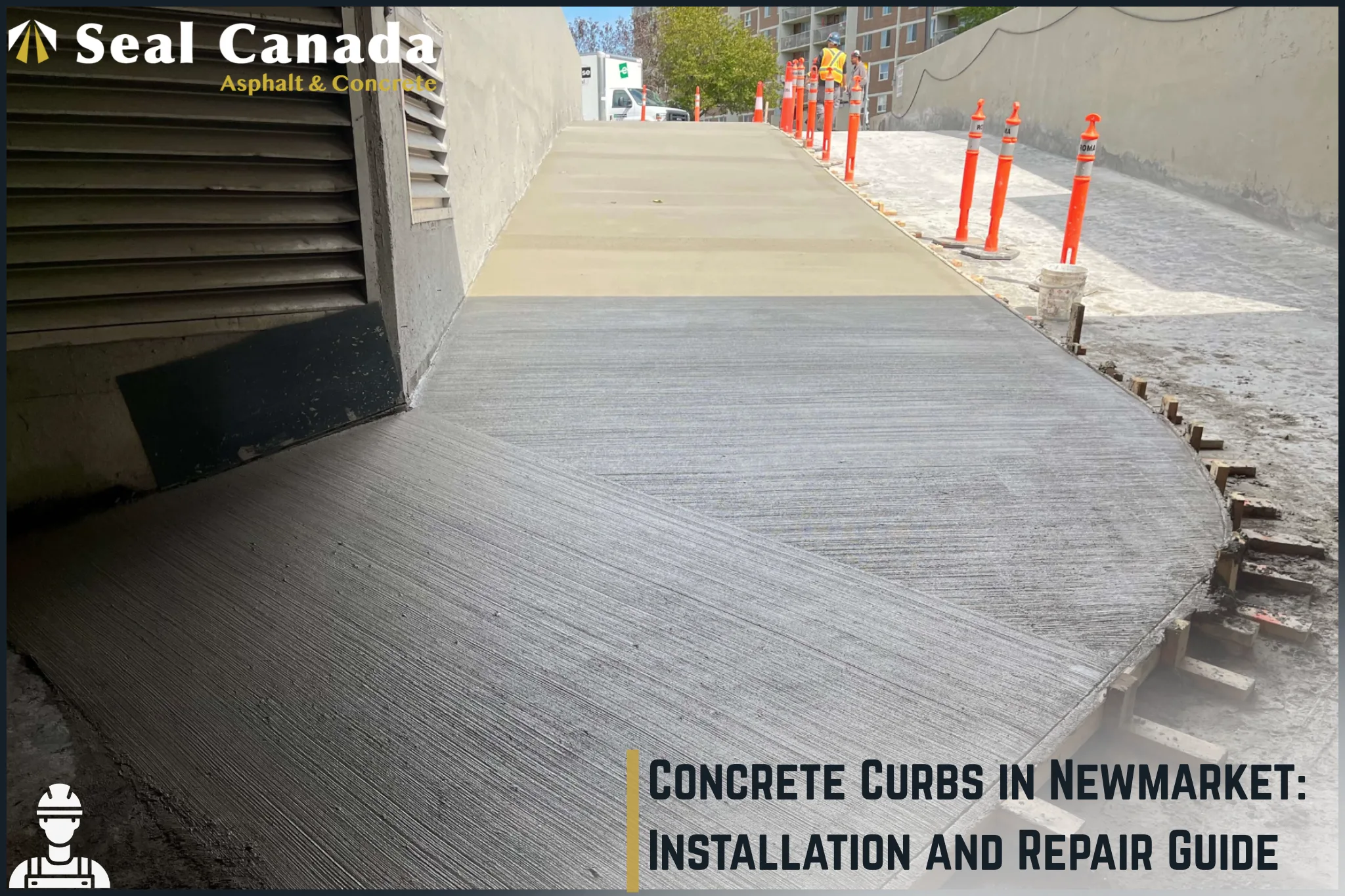
Concrete curbs control traffic, protect asphalt edges and guide water to drainage. They outlast asphalt curbs under snowplows and heavy use. Common problems include salt spalling, plow damage and settling. Damaged sections should be saw-cut and replaced with air-entrained concrete, ideally alongside other pavement work to save on mobilization costs.
Why do concrete curbs matter for Newmarket properties?
Concrete curbs matter because they create a clean boundary between pavement, sidewalks and green space. They stop vehicles from driving onto landscaped areas and keep asphalt edges from breaking off.
Parking lot curbs also shape curb appeal. Straight, intact edges make a property look well cared for, while broken curbs suggest deferred maintenance.
Are concrete curbs better than asphalt curbs?
For most commercial properties, concrete curbs are better than asphalt curbs because they resist snowplow impacts and heavy traffic far longer.
Our article comparing concrete and asphalt curbs for GTA properties breaks down durability, cost and maintenance differences.
What problems affect parking lot curbs?
Parking lot curbs commonly suffer from salt spalling, plow damage, settling or heaving, and separation from the asphalt that lets water into the base.
Each of these issues can create trip hazards and further pavement damage, so timely curb repair keeps small problems from growing.
How is curb repair and replacement done?
Curb repair usually involves saw-cutting and removing damaged sections, preparing and compacting the base, forming or slip-forming new concrete and finishing to match the existing profile.
Air-entrained concrete resists freeze-thaw damage, and the adjacent asphalt is restored so the joint is tight and watertight.
How do concrete curbs control drainage?
Concrete curbs and gutters channel runoff toward catch basins and away from building entrances and landscaping. When curbs settle or break, water pools against the pavement edge and soaks into the base.
Our article on the role of concrete in modern parking lot design explores how curbs, islands and pads work together for safety and flow.
Does curb repair affect accessibility?
Yes. Curb ramps, depressed curbs at crosswalks and smooth sidewalk transitions are important for people using wheelchairs, walkers or strollers. Damaged parking lot curbs can create barriers.
When planning curb repair, review accessible routes and ramp locations to confirm they meet current standards.
How do you protect curbs through winter?
Mark curbs with reflective stakes before winter, brief snow removal crews and limit de-icing salt near curb lines. A spring inspection catches damage early.
Seal Canada installs and repairs commercial concrete, curbs and sidewalks as part of complete pavement programs across York Region and the GTA.
Book concrete curbs work in Newmarket
We'll inspect your curbs, flag hazards and drainage problems, and recommend repair or replacement that ties into your paving plans.
Contact our team to book a free site assessment for your Newmarket property.
Frequently Asked Questions
1. How long do concrete curbs last?
Well-built, air-entrained concrete curbs can last decades with basic winter care.
2. Can damaged curbs be patched?
Minor damage can be patched, but broken or settled sections are best replaced.
3. Should curbs be replaced before paving?
Yes. Curb work should come first so the new asphalt ties in at the right height.
4. What causes most curb damage?
Snowplows, road salt and freeze-thaw cycles cause most commercial curb damage.
Key Takeaways
● Concrete curbs in Newmarket control traffic, protect asphalt edges and guide drainage.
● Concrete outlasts asphalt curbs under plows and heavy traffic.
● Timely curb repair prevents trip hazards and base damage.
● Coordinate curb work with paving to save on costs.
● Seal Canada provides concrete curbs across the GTA, starting with a free site assessment.