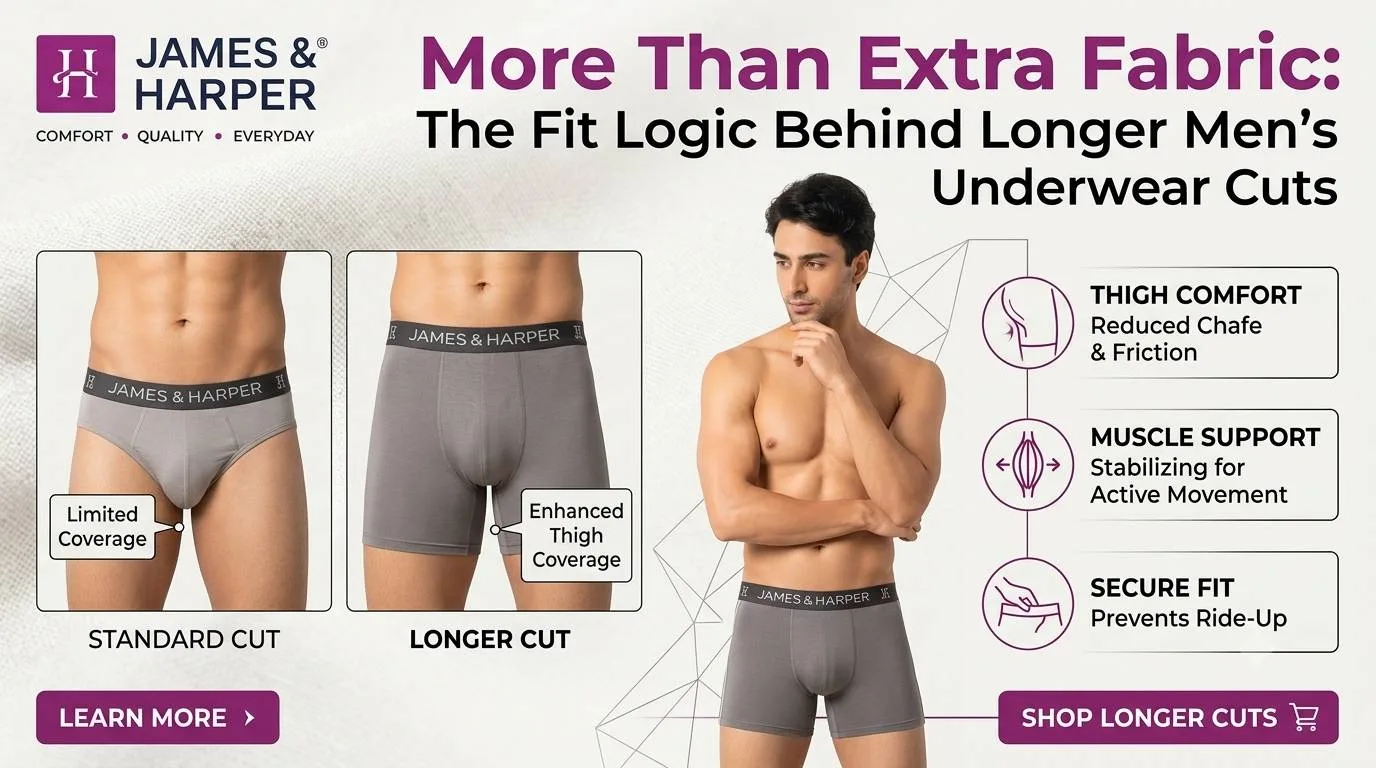
Why does underwear that fits at the waist leave the upper thighs feeling restricted or exposed? The answer involves more than size. Leg length determines where coverage ends, while the leg opening and body shape determine how that coverage behaves during movement. A longer style such as Glamour Trunk BP offers a useful starting point for understanding these differences. The aim is to match fabric coverage with the wearer’s proportions, clothing, and routine. Extra length has value when the rest of the garment supports that choice.
How Longer Underwear Changes Upper-Thigh Coverage
A longer leg extends fabric across a greater portion of the upper thigh. That extension can place material between areas of skin that contact each other during walking. It changes the point where the leg opening meets the body, which can influence pressure and movement.
Length alone cannot establish comfort. A narrow opening may grip the thigh, while excess room can allow folds beneath pants. The useful distinction concerns coverage that remains in position versus fabric that gathers. More material does not solve a mismatch between the garment’s shape and the wearer’s build. The inseam gives a clearer reference than the term “long trunk,” since product names do not establish a standard distance from the crotch to the hem.
Why Leg Openings and Rise Affect Underwear Fit
Two pairs can share a waist measurement and feel different through the seat and thighs. Rise describes the distance from the crotch seam to the waistband. An unsuitable rise can pull fabric toward the waist or leave excess material through the body of the garment.
The leg opening requires separate attention. A comfortable waistband cannot compensate for an opening that cuts into the thigh. James & Harper lists Grand Trunk in sizes from XS through 4XL, giving shoppers a broad starting range for comparison. A size label cannot replace the brand’s measurements or an assessment of thigh room and seat fit.
How Waistbands and Back Panels Support Longer Trunks
The waistband anchors the garment, while the back panel shapes its fit across the seat. These elements influence how the legs behave because tension travels through connected fabric panels. Pulling at the back can alter coverage at the thighs, when the leg length appears suitable.
Glamour Trunk BP combines inner elastic with a structured back panel and a long-trunk cut. Its construction gives readers specific features to assess: waistband contact, room through the seat, and coverage during bending. Inner elastic describes waistband construction; it does not guarantee freedom from pressure. Elastic tension, garment size, and personal preference determine whether that arrangement feels comfortable.
What Cotton and Pocket Details Add to Longer Underwear
Fabric influences how added coverage feels beneath clothing. Cotton offers a familiar texture, but knit density, thickness, and garment fit affect the overall experience. A cotton label does not establish drying speed or moisture-wicking performance. Those claims require separate product evidence.
James & Harper lists Grand Trunk Pocket with a plain finish, outer elastic, a long-trunk cut, and a front pocket. The pocket introduces a practical design difference, though buyers should assess its position and intended use before placing items inside it. The product specifications list cotton. The garment’s fiber label should confirm composition before buyers assume the fabric contains elastane, while its care label should guide washing decisions.
How to Assess Thigh Coverage Under Everyday Clothing
Coverage requires an assessment that reflects actual wear. Standing in front of a mirror reveals shape, but walking, bending, and seated movement reveal pressure or bunching. The pants a person wears over the underwear can change the result.
- Check the leg opening: Look for a smooth edge that does not pinch the thigh or leave loose folds.
- Observe seated coverage: Check whether the fabric pulls toward the waist or creates pressure where the thighs bend.
- Assess the seat: Look for pulling across the back or excess fabric beneath the body.
- Compare outer clothing: Notice whether fitted pants compress seams or cause material to gather.
- Review waistband contact: A stable band should support the garment without requiring an undersized fit.
These checks help distinguish a length preference from a sizing problem. If the thighs feel restricted while the waist feels loose, a different cut may address the mismatch better than a larger size.
Choosing Longer Underwear Through Fit and Coverage
Longer underwear offers additional upper-thigh coverage, but its value depends on the relationship between leg length, opening width, rise, and fabric. No single feature can compensate for poor proportions through the rest of the garment. A considered choice accounts for both body shape and the clothing a person wears over it.
For men evaluating Grand Trunk, the soundest approach weighs thigh room, waistband pressure, and seat coverage as one fit assessment. The appropriate longer cut should accommodate the wearer’s movement and coverage preferences without depending on compression or excess fabric to maintain its position.