Most couples spend more time choosing their wedding venue than they spend choosing their florist. We've seen this pattern play out for years. The venue gets locked in 18 months ahead. The florist gets booked four months out. And then the conversation about wedding flowers gets rushed because there's already so much else going on. We understand why it happens. But we also know what gets lost when it does. The flowers are in almost every photograph from your day. They're the first thing guests notice when they walk into your ceremony space. They set the emotional tone of the room before a single person has said anything. Getting them right matters more than most couples realise until they're looking back at photos years later.
We want to change how you think about this decision.
The Conversation That Actually Needs to Happen First
Not every florist starts here. We always do. Before we talk about flower varieties or colour palettes or budget we ask two questions. What do you want people to feel when they walk into your ceremony. And what do you want them to feel when they sit down for dinner. These aren't abstract questions. The answers shape literally every floral decision that follows.
A couple who wants guests to feel like they've stepped into an Italian countryside garden is going to get a very different proposal from us than a couple who wants something clean and modern and almost architectural. Both are completely valid visions. Both require completely different flowers and structure and technique. Starting with feeling rather than with flower names is the only way to build something that genuinely reflects who two people are.
We had a couple come to us last year who'd been to three other florists. Each one had shown them a mood board within ten minutes of sitting down. This couple said they felt like they were being sold something rather than being heard. We spent the first 45 minutes of our meeting not looking at any flowers at all. Just talking. By the end of that conversation we knew their story well enough that the proposal almost wrote itself.
What Makes Melbourne Wedding Flowers Different
Melbourne's wedding seasons are genuinely distinct and they produce genuinely different flowers. Spring weddings in October and November get peonies at peak. Full lush open blooms that look abundant in every photo and smell extraordinary in a warm room. Autumn weddings in March and April get dahlias. Structural. Dramatic. Every colour from deep burgundy to the palest blush. Summer and winter each bring their own palette and their own character.
A florist who knows Melbourne's seasonal growing calendar isn't just being precious about sourcing. They're giving you access to flowers that are at their physical best on your actual wedding day. The difference between a peony forced into bloom out of season and a peony that's arrived exactly on time is visible to anyone who cares to look. We care. And increasingly our clients do too.
We source from Victorian growers wherever the season allows. It keeps the flowers fresher. It supports local growers we've built real relationships with over years. And it means that when something rare or exceptional comes through the farm they call us first.
The Full Picture of Wedding Flowers: Every Element Explained
Bridal Bouquet
This is the one that carries the most emotional weight. It's in your hands during the walk down the aisle. It's in every portrait photo. It should feel like an extension of you not just something beautiful you're holding. We think about stem length and handle width and weight distribution because a bouquet that's uncomfortable to carry is going to show in your posture and your expression without you even realising it.
We've built everything from large cascading garden bouquets heavy with roses and jasmine vine to single stem anthuriums for brides who wanted something almost confrontingly bold. We don't have a house style. Your bouquet should have your style.
Bridesmaids Flowers
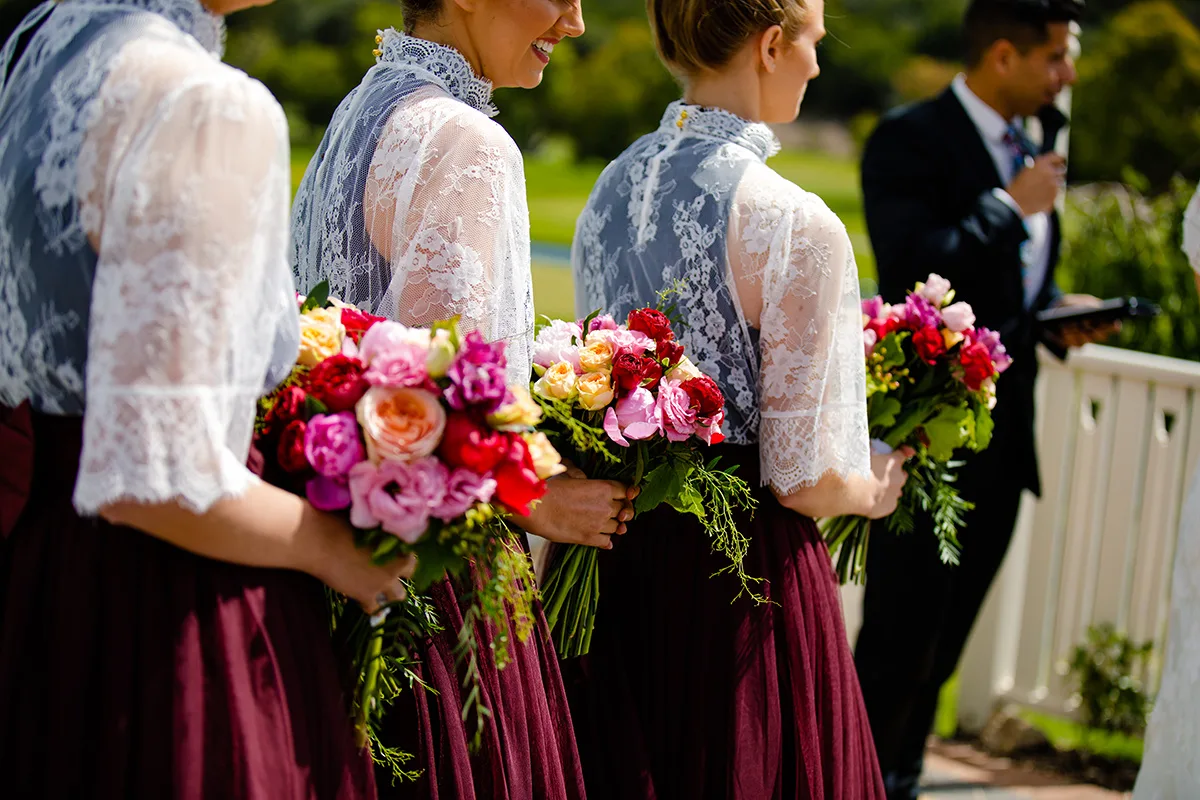
The bridesmaids' flowers should feel like the bouquet's quieter siblings. Same family. Different conversation. Usually smaller. Sometimes a single variety pulled from the main bouquet palette. The visual relationship between what you're carrying and what they're carrying is something guests notice even if they don't articulate why.
We always build the bridesmaids' arrangements after we've finalised the bridal bouquet design. That sequencing matters because it means everything flows from the centrepiece outward rather than being assembled in isolation.
Ceremony Arch and Altar Flowers
THE most photographed element of the entire day. The arch is behind you in the photos that go on your wall. It's the backdrop to the moment you say yes to each other. We approach these installations with the same level of attention we'd give a large scale public installation because that's genuinely what they are.
We build arches in circular hoops draped with loose florals and greenery. In geometric copper frames wound with climbing roses and ivy. In natural timber structures that look like something grew there. In free standing plinths with flower columns flanking the aisle. Every structure gets a design that suits the architecture of the venue and the mood of the couple.
Reception Centrepieces
Low and lush or tall and dramatic. These are the two main directions and each creates a completely different atmosphere at the table. Low arrangements invite intimacy. Guests lean across them. They're tactile. They make a long table feel like a garden. Tall arrangements create grandeur. They're theatrical. They work beautifully in high ceilinged venues where you need to fill vertical space.
We rarely do every table identical. We might vary heights or slightly shift the flower ratio across tables while keeping the palette consistent. It creates a result that feels organic and intentional at the same time. More like a beautiful garden than a hotel ballroom.
Buttonholes and Corsages
Small but not unimportant. The groom's buttonhole is in every portrait photo with the bride. It should echo the bouquet without copying it. A single bloom from the bridal palette. A sprig of the same eucalyptus. Something that creates a visual thread between the two of them in photos. We give the same care to a buttonhole that we give to a centrepiece because the details are what separates something that feels complete from something that feels assembled.
An Honest Conversation About Budget
Wedding flowers in Melbourne span an enormous range. You can spend $1500 on a simple elopement package. You can spend $25000 on a full floral installation for a 200 person reception with elaborate ceremony structures and individual place setting florals. Most of our couples land somewhere between $4000 and $8000 for a full service wedding with ceremony and reception flowers.
What drives cost isn't just flower variety. It's the number of arrangements. The complexity of the structures. The amount of installation labour. The distance between the ceremony and reception venues. An orchid arch that takes two florists four hours to install costs more than a simple hoop not just because of the orchids but because of the time.
We're transparent about all of this from the first quote. We'd rather have an honest conversation about what different elements actually cost than have you discover it later. If something's out of range we'll tell you and we'll suggest an alternative that achieves something close. We're not precious about our proposals. We'd rather you get married with flowers you love than turn down flowers you can't afford.
A Story About Getting It Completely Wrong and Then Completely Right
Early in our business we worked with a couple who had a very clear vision in their head but weren't able to articulate it clearly and we didn't ask enough questions. We built something beautiful by any objective measure. Technically accomplished. Cohesive palette. Strong installation. They were polite about it on the day but years later one of them told us it hadn't felt like them. It had felt like a beautiful wedding that could have belonged to anyone. That stayed with us. It's actually the thing that changed how we run our first client meetings. Now we ask more questions than we probably need to. Because we'd rather over-understand than under-deliver.
Sustainability in Wedding Flowers: What We're Actually Doing
Floral waste in the wedding industry is real and it's significant. Hundreds of arrangements built for a single day and then discarded. We've been working on this problem for a few years now. We offer arrangements designed for replanting where the blooms are in soil rather than water so the plants live on after the wedding. We partner with aged care facilities and community centres to donate arrangements after events when the couple agrees. We use dried and preserved elements in designs where they serve the aesthetic rather than as a compromise.
We're not perfect at this yet. But we're genuinely working on it and we think couples who care about this deserve a florist who does too. About 35% of our current wedding clients ask us about sustainability options in their initial consultation and that number is growing every year.
Why Timing Your Booking Matters More Than You Think
Melbourne's best florists are fully booked on peak Saturdays 12 to 18 months out. Not as a sales tactic. As a logistical fact. A florist can only do one wedding well on a given day. When that day is gone it's gone. We hold firm on this not because we like turning people away but because splitting attention across two big weddings on the same day is how things go wrong.
If you've found a florist whose work genuinely moves you don't wait to lock in the date. Have the initial conversation. Get a sense of fit. And if it feels right secure your date. The detailed planning conversation can come later. The date can't wait.
Questions Worth Asking Every Florist You Meet
Ask how they handle it when a key flower is unavailable close to the date. Ask who actually builds the arrangements on the day and whether it's the same person you've been planning with. Ask how they manage setup logistics across ceremony and reception venues. Ask for a real reference from a recent wedding not just a portfolio.
A florist who answers these questions confidently and specifically is a florist who's done this enough times to have systems. A florist who gets vague is a florist who hasn't thought about it. The difference matters enormously on the actual day.
Frequently Asked Questions About Wedding Flowers in Melbourne
When should I book my wedding florist in Melbourne?
For a Melbourne wedding on a Saturday in spring or autumn we'd recommend booking your wedding flower florist at least 12 months ahead. These dates fill faster than most couples expect. If your wedding is midweek or in an off peak month you may have more flexibility but earlier is always better when it comes to locking in the florist whose work you genuinely love.
How do I choose the right wedding flowers for my venue?
Start with the architecture and lighting of your space. A heritage bluestone church calls for something different than a modern rooftop. A rustic winery wants different blooms than a formal ballroom. Your florist should walk through your venue with you or at minimum look at the space properly before proposing a design. The venue and the flowers should feel like they were made for each other.
Can I incorporate non-traditional flowers into my wedding?
Absolutely and we encourage it. Some of the most memorable bridal bouquets we've built have included unusual elements like native seed pods dried grasses sculptural succulents or tropical blooms that aren't traditionally associated with weddings. If it fits the palette and the feeling of the day it belongs. We'll tell you honestly if something won't work structurally or aesthetically but we're rarely the ones putting limits on creativity.
What's the difference between wedding flowers and regular event flowers?
Scale and stakes. A wedding arrangement needs to look perfect for 12 hours under multiple lighting conditions and survive transport and installation without showing wear. The conditioning process is more intensive. The packing is more careful. The installation is more precise. Wedding florists also build narrative across a full day of flowers rather than a single standalone arrangement. It's a different discipline even when the flowers themselves are the same.
Do you offer a consultation before we commit to booking?
Yes. We offer a free initial consultation for all prospective wedding clients. It's a proper conversation not a sales pitch. We want to understand what you're planning and you want to understand who we are and how we work. If there's a fit we'll talk next steps. If there isn't we'll tell you honestly and we might even point you toward someone whose style suits you better. The wedding flower industry in Melbourne is collaborative and we'd rather you end up with the right florist than with us specifically.
How do I include Australian native flowers in my wedding?
We love this brief. Proteas and waratahs and kangaroo paw and banksia bring a texture and personality to wedding flowers that imported blooms simply can't replicate. They also last extraordinarily well through a long day and many of them dry beautifully so your arrangements have an afterlife. Native wedding flowers work particularly well for outdoor weddings and for couples who want their day to feel distinctly and proudly Australian.
Conclusion
The right wedding flowers don't just decorate your day. They define its mood. They're in the images you'll look at for the rest of your life and they're the first thing your guests read about who you are as a couple before the ceremony even begins. We take that responsibility seriously every single time we sit down with someone who's planning a wedding. Our job isn't to give you something beautiful. Our job is to give you something true. Something that feels exactly like you on the most significant day you've shared so far.
Come talk to us. Bring your ideas or bring nothing at all. Either way we'll figure out together what your wedding flowers should look like and we'll build something you'll be genuinely proud of for years to come.