Manhattan’s skyline is one of the most recognizable in the world, but behind the architectural beauty lies a constant battle against environmental exposure. Buildings in Manhattan face intense weather conditions throughout the year, including heavy rain, winter snow accumulation, humidity, and seasonal temperature swings. These factors create ongoing moisture risks that can threaten both residential and commercial structures.
Waterproofing is, therefore, not simply an optional building upgrade in Manhattan. It is a fundamental component of long-term structural protection. Without effective waterproofing systems, water infiltration can slowly deteriorate roofing materials, weaken structural components, and create interior moisture problems that are costly to repair.
Modern waterproofing techniques are designed to prevent these issues before they develop. By combining advanced materials, strategic installation methods, and routine inspections, property owners can protect their buildings from long-term damage and preserve their investment.
Why Waterproofing Is Critical in Manhattan
Urban buildings in Manhattan are exposed to environmental stress that differs from suburban structures. The density of buildings means wind patterns can intensify around rooftops, driving rain into small structural openings. In addition, many buildings feature flat or low-slope roofs that require specialized drainage and waterproofing systems.
When moisture penetrates a building envelope, the effects are rarely immediate. Water often travels through hidden structural layers before becoming visible inside the building. By the time interior stains or mold appear, significant structural damage may already exist.
Waterproofing systems act as a protective barrier that prevents water from entering the building in the first place. This protection is especially important in older Manhattan buildings, where aging materials may already be vulnerable to deterioration.
Roof Membrane Waterproofing Systems
One of the most widely used waterproofing techniques in Manhattan is the installation of durable roof membranes. These materials are specifically designed to create a continuous waterproof barrier across the entire roof surface.
Membranes such as TPO, EPDM, and modified bitumen are commonly used because they provide strong resistance to moisture penetration while remaining flexible enough to handle temperature changes. Flexibility is particularly important in Manhattan’s climate, where roofing materials expand during hot summers and contract during freezing winters.
When installed correctly, membrane systems seal the roof deck and prevent water from seeping into insulation layers. This protection helps maintain the structural integrity of the roof while also improving energy efficiency within the building.
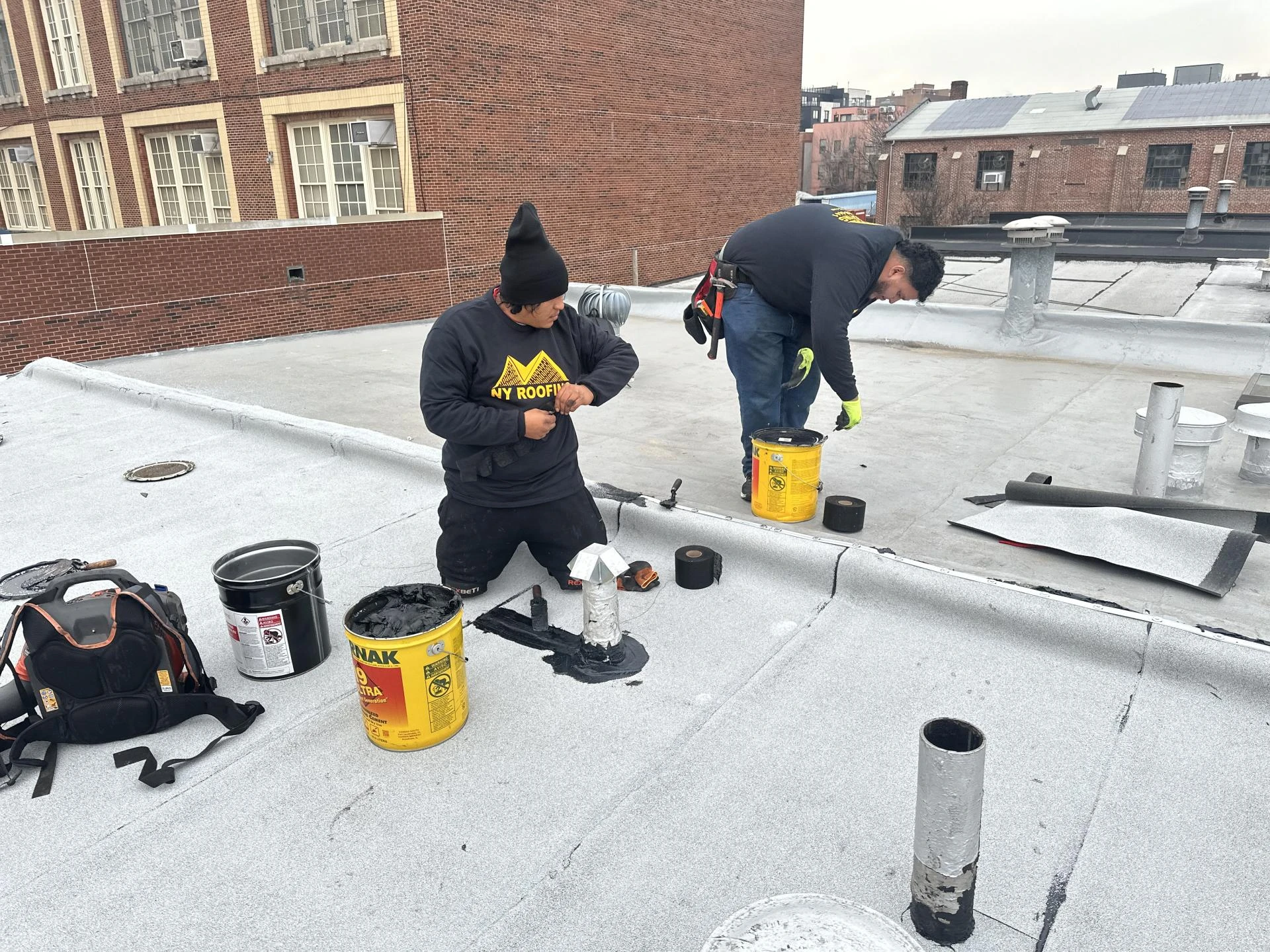
Professional contractors specializing in Manhattan waterproof roofing ensure that membrane installations are carefully aligned and sealed around roof penetrations such as vents, skylights, and HVAC units. These areas are often the most vulnerable points for water intrusion.
Liquid Waterproof Coatings
Liquid waterproofing systems have gained popularity in recent years because they provide seamless protection across complex roof surfaces. Unlike traditional membranes that are installed in sheets, liquid coatings are applied directly to the roof as a fluid material.
Once cured, the coating forms a continuous elastic membrane that adapts to irregular roof shapes and seals small cracks or gaps. This makes liquid coatings particularly useful for older Manhattan buildings with aging roof surfaces.
Another advantage of liquid waterproofing systems is their ability to extend the life of existing roofing materials. Instead of replacing an entire roof, property owners can often apply a protective coating that reinforces the current structure while improving moisture resistance.
These coatings also reflect sunlight, which helps reduce heat absorption during the summer months. As a result, buildings may experience improved energy efficiency and lower cooling costs.
Flashing Protection and Structural Sealing
Even the strongest waterproof membrane cannot perform effectively if vulnerable areas remain exposed. Flashing components are therefore a critical part of any waterproofing system.
Flashing is typically installed around roof edges, chimneys, skylights, and vent penetrations. Its purpose is to direct water away from these structural joints and prevent it from entering beneath the roofing materials.
In Manhattan buildings, flashing must be installed with exceptional precision. High winds and driving rain can force water into even the smallest openings. Over time, poorly installed flashing may loosen or corrode, creating pathways for moisture infiltration.
Professional waterproofing specialists carefully inspect these areas and reinforce seals using modern waterproofing compounds and protective metal components.
Waterproofing Exterior Walls
Water intrusion does not always begin at the roof. In urban environments like Manhattan, exterior walls also play an important role in moisture protection.
Brick and masonry facades are common throughout the city. While these materials are durable, they are also porous and capable of absorbing water during heavy rainfall. Over time, repeated moisture absorption can weaken mortar joints and cause interior leaks.
Applying protective sealants to exterior walls helps reduce water penetration while allowing the building to breathe. These sealants create a protective barrier that prevents rainwater from saturating the masonry while still allowing trapped moisture to escape.
This technique is often combined with roof waterproofing systems to create a comprehensive moisture defense strategy.
Drainage Integration and Water Flow Control
Effective waterproofing is not only about blocking moisture; it also involves managing water flow across the roof. Poor drainage can allow water to pool on flat surfaces, increasing the risk of leaks and structural stress.
Manhattan buildings often rely on internal drains, scuppers, and gutter systems to guide water away from the roof. If these drainage components become clogged or misaligned, water can accumulate and place additional pressure on waterproofing materials.
During waterproofing projects, contractors evaluate how water travels across the roof and ensure that drainage pathways remain unobstructed. This integrated approach improves the overall effectiveness of the waterproofing system.
Importance of Professional Installation
Waterproofing systems require careful planning and expert installation. Even high-quality materials can fail if they are not applied correctly or integrated properly with the building structure.
Experienced roofing professionals assess multiple factors before recommending a waterproofing solution. These include the building’s age, roof design, environmental exposure, and existing structural condition.
By conducting a thorough evaluation, contractors can design customized solutions that address the specific moisture risks faced by Manhattan properties.
Long-Term Benefits of Proper Waterproofing
Investing in advanced waterproofing techniques provides significant long-term advantages. Buildings that are properly protected from moisture tend to experience fewer structural repairs and longer roof lifespans.
Waterproofing also improves indoor air quality by preventing mold and mildew growth caused by hidden moisture infiltration. This is particularly important in multi-family residential buildings where indoor health conditions affect many occupants.
Ultimately, professional Manhattan waterproof roofing solutions help property owners protect their buildings against one of the most persistent threats in urban environments: water damage.
Manhattan’s dense urban environment and challenging climate make waterproofing an essential part of building maintenance. From durable roof membranes to liquid coatings and structural sealing, modern waterproofing techniques provide multiple layers of protection against moisture intrusion.
Property owners who invest in professional waterproofing systems not only safeguard their structures but also extend the lifespan of their roofing systems and maintain long-term property value.
In a city where buildings are constantly exposed to environmental stress, proactive waterproofing is one of the most effective strategies for preserving the strength and reliability of urban architecture.