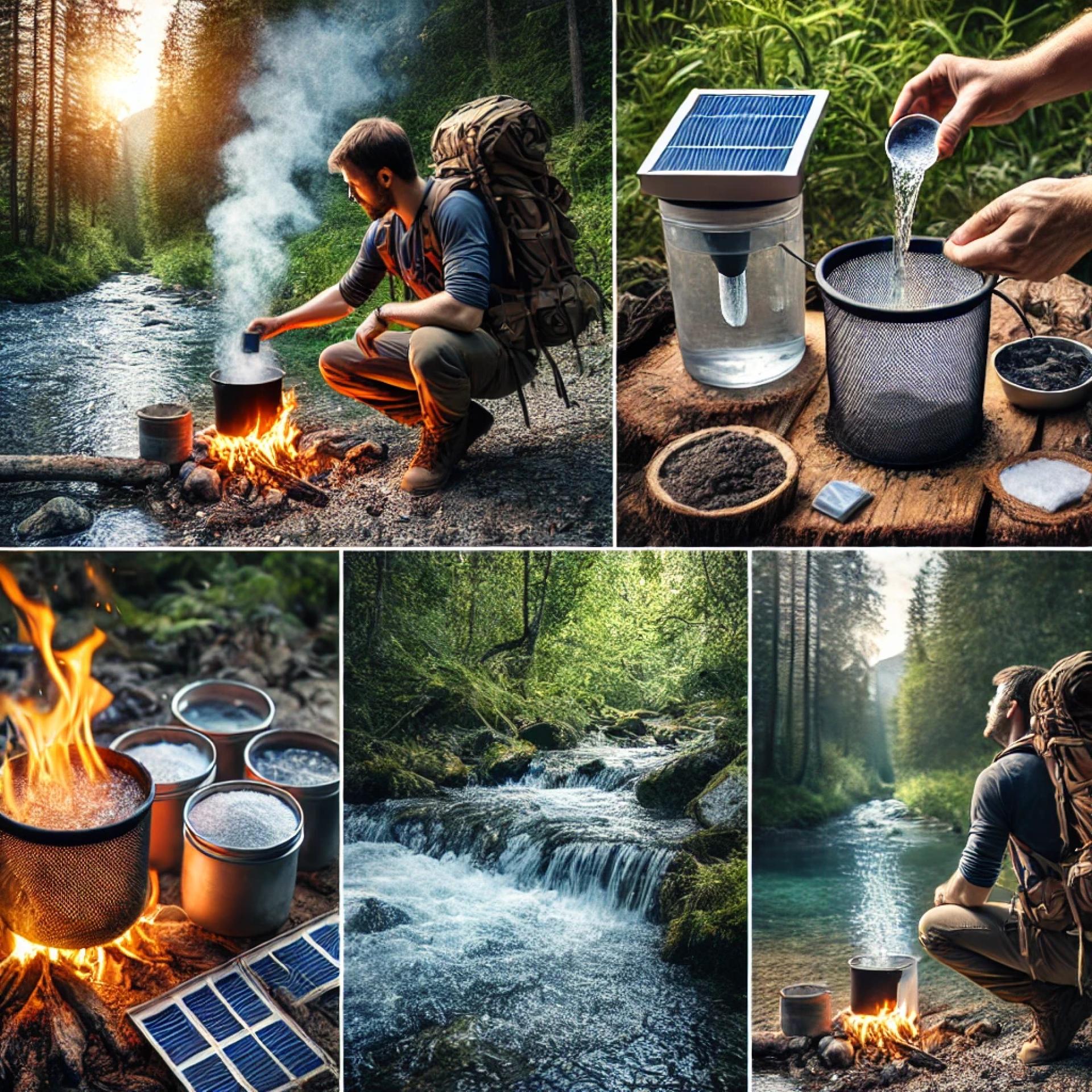
Access to clean drinking water is essential during outdoor activities such as hiking, camping, or survival situations. Understanding effective water purification techniques can help you stay hydrated and safe when exploring the outdoors. This guide outlines various reliable methods to purify water, ensuring you always have access to clean and drinkable water no matter where you are.
Key Signs of Contaminated Water
Even if water appears clear, it may still be unsafe. Be cautious if you notice:
· Unpleasant Odor – May indicate bacterial contamination.
· Cloudy or Discolored Appearance – Often a sign of sediment, algae, or pollutants.
· Floating Debris or Foam – Could suggest chemical contamination.
· Nearby Animal Activity – Areas with animal waste increase the risk of contamination.
If in doubt, always purify the water before consuming it.
Effective Water Purification Techniques
Several methods can effectively remove contaminants from water. Choosing the best technique depends on the resources available, the environment, and the urgency of your situation.
1. Boiling Water
Boiling is one of the most reliable and effective water purification techniques for eliminating bacteria, viruses, and parasites.
Steps for Boiling Water:
· Fill a pot or heat-resistant container with the collected water.
· Bring the water to a rolling boil for at least one minute. If you’re at an altitude above 6,500 feet, boil for three minutes to ensure proper purification.
· Allow the water to cool before drinking.
Pros: Highly effective in killing pathogens.
Cons: Requires a heat source and time for cooling.
2. Filtration Systems
Water filters are designed to remove impurities by passing water through a filtering element that traps contaminants.
Types of Filtration Systems:
· Pump Filters: Ideal for backpackers and campers; these filters allow you to pump water directly from the source.
· Gravity Filters: Use gravity to pull water through the filter, requiring minimal effort.
· Straw Filters: Compact and lightweight, allowing you to drink directly from a water source.
Pros: Quick and effective at removing debris, bacteria, and some parasites.
Cons: Most filters do not remove viruses, so additional purification may be required.
3. Chemical Purification
Chemical treatments are portable and easy to use, making them ideal for emergencies.
Common Chemical Purifiers:
· Iodine Tablets: Effective against bacteria and viruses but may leave a noticeable taste.
· Chlorine Dioxide Tablets: Reliable for eliminating bacteria, viruses, and parasites like Giardia.
Steps for Using Chemical Purifiers:
· Follow the product’s instructions for dosage.
· Stir well and allow the water to sit for 30 to 60 minutes before drinking.
Pros: Lightweight and ideal for emergency situations.
Cons: May leave an unpleasant taste and take longer to purify large quantities of water.
4. UV Light Purifiers
UV purifiers use ultraviolet light to destroy harmful microorganisms by damaging their DNA.
Steps for Using a UV Purifier:
· Collect clear water in a clean container.
· Submerge the UV device into the water.
· Stir the device for the recommended time (usually 60 to 90 seconds) to ensure complete exposure.
Pros: Highly effective against bacteria, viruses, and parasites.
Cons: Requires batteries or charging, making it less reliable if power is unavailable.
5. Solar Disinfection (SODIS)
Solar disinfection uses sunlight to purify small quantities of water. This method is best suited for clear water in emergency situations.
Steps for Solar Disinfection:
· Fill a transparent plastic or glass bottle with water.
· Place the bottle in direct sunlight for 6 hours (or 2 days in cloudy conditions).
· The UV rays kill harmful pathogens during this period.
Pros: Simple and requires no special equipment.
Cons: Only effective for small quantities and requires extended exposure time.
Common Mistakes to Avoid
Even with the right water purification techniques, errors can reduce the effectiveness of your efforts. Avoid these common mistakes:
· Skipping Pre-Filtration: Always filter out large debris before using purification methods.
· Ignoring Wait Times: Chemical treatments and UV purifiers require sufficient time to work effectively.
· Storing Water in Contaminated Containers: Always use clean bottles or hydration packs to store purified water.
Conclusion
Staying safe during outdoor adventures requires access to clean drinking water. Understanding and applying effective water purification techniques can protect you from harmful contaminants and ensure you remain hydrated and healthy. By learning multiple purification methods, such as boiling, filtration, and chemical treatments, you can confidently handle different environments and conditions. Prioritizing water safety is crucial for any outdoor journey, ensuring you stay prepared for unexpected challenges.