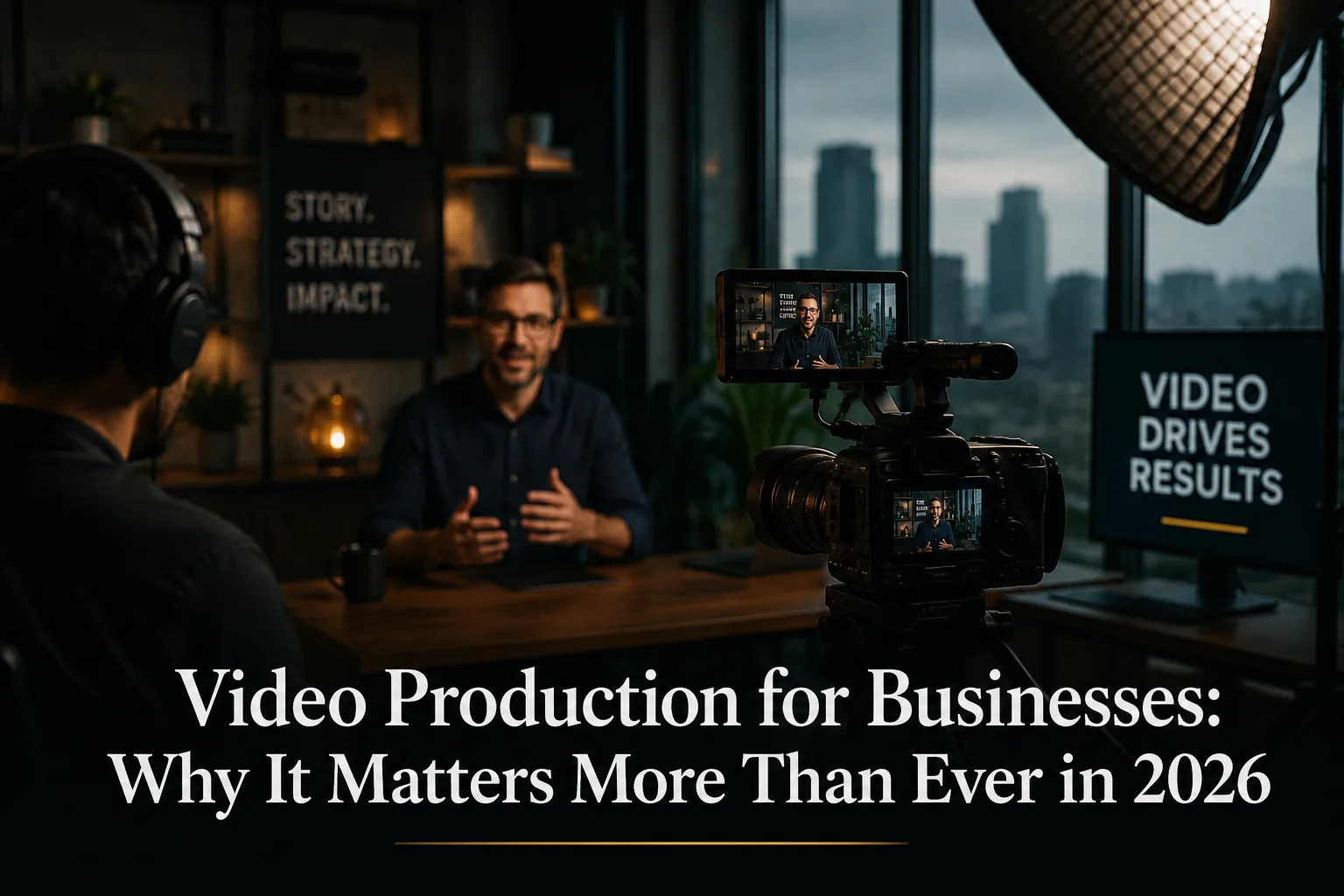
Video production for businesses used to be something only bigger brands bothered with. Now it's almost expected. Scroll through LinkedIn or a company's homepage and you'll notice how much of the messaging happens through video instead of paragraphs of text. Businesses that haven't caught up on this are starting to feel it, mostly in the form of lower engagement and fewer people sticking around on their pages.
Why the Shift Toward Video Happened So Fast
People just don't read the way they used to, at least not on websites. A visitor lands on a page, skims for ten seconds, and decides whether to stay. A short video can say more in that window than three paragraphs ever could, especially if it shows a product actually working or a real person explaining it. Search engines and social platforms picked up on this too, so content with video tends to get pushed further than content without it.
There's also something about seeing a real face or a real workspace that text can't replicate. It's why testimonial clips and founder videos have become so common lately. A customer talking about their experience on camera carries more weight than the same words written on a page.
What Actually Separates Good Business Video From Bad
Here's the thing though, not every video helps. A shaky phone clip with bad audio can hurt more than it helps, while even a simple, well-planned video makes a business look like it knows what it's doing. The difference usually comes down to whether there was a clear goal going in. Was the video meant to explain something, build trust, or push someone toward buying? That decision shapes the script, the visuals, and even where the video ends up living, whether that's a landing page or a paid campaign.
None of this requires a massive budget either. Some of the most effective business videos are pretty lean, just a clear message shot well. What tends to matter more than production polish is whether the video actually speaks to the person watching it.
The Formats Businesses Keep Coming Back To
Explainer videos are probably the most requested type, especially for service businesses that have something a little complicated to explain. Testimonials work well too, particularly for prospects who are close to deciding but need a nudge. Behind-the-scenes content helps with hiring and culture, and short, snappy social videos keep a brand visible where attention is already scattered.
Which format makes sense really depends on where a business is at. A newer company usually needs explainer content just to get people to understand what they're offering. A more established one might lean into storytelling instead, since trust is already partly built.
Why Businesses Often Bring In a Video Partner
Most companies don't have the time, equipment, or in-house skill to shoot video regularly, and that's usually where a production partner comes in. A good one handles the scripting, filming, and editing together, and understands how the finished video fits into the bigger marketing picture. For a lot of businesses, this ends up being cheaper than trying to build a video team from scratch, especially if they don't need new content every week.
Before picking a partner, it's worth looking at their past work, asking how they approach scripting, and getting a sense of realistic turnaround times so there are no surprises later.
Final Thoughts
Video production for businesses isn't really optional anymore, it's just where people's attention already is. Companies that put real thought into their video content tend to see better engagement and more conversions than the ones sticking to text alone. If you're a business trying to figure out where to start, working with a team like Pathway Productions can help turn a rough idea into something that actually gets watched.