Organizations use video for onboarding, employee training, customer education, product demonstrations, and knowledge sharing. However, the systems used to manage these activities are not all designed for the same purpose.
Two commonly compared options are video learning platforms and learning management systems, usually known as LMS platforms. Although both can support learning, they differ in how they organize content, manage learners, track progress, and make information available.
Understanding these differences can help an organization choose the right platform—or decide whether it needs both.
What Is a Video Learning Platform?
A video learning platform helps an organization organize, manage, search, share, and analyze educational video content.
It is particularly useful when recorded content plays a central role in how people learn or access information. This content may include:
- Employee onboarding recordings
Product demonstrations
Customer training videos
Recorded webinars
Standard operating procedures
Internal knowledge-sharing sessions
Technical tutorials
- Meeting recordings
A video learning platform generally focuses on making these recordings easy to access and use. Depending on the platform, users may be able to search spoken content, read transcripts, navigate using chapters, ask questions about a video, or find relevant moments without watching the entire recording.
The experience is often flexible and self-directed. A person visits the video library when they need information, searches for a topic, and watches the most relevant section.
What Is an LMS Platform?
A learning management system is designed to create, deliver, administer, and track structured learning programs.
Instead of focusing primarily on video discovery, an LMS organizes training into courses, modules, lessons, and learning paths. It usually provides administrative tools for assigning training, managing learners, conducting assessments, and recording completion.
Common LMS features include:
- Course creation and management
- Learner enrollment
- Training assignments
- Quizzes and assessments
- Completion tracking
- Certifications
- Learning paths
- Compliance reporting
- Instructor and administrator controls
An LMS is commonly used when an organization needs people to complete specific training in a defined order or within a particular period.
Examples include mandatory compliance training, professional certification programs, formal employee onboarding, and structured customer academies.
The Main Difference: Accessing Knowledge vs Completing Training
The clearest difference between the two platforms is the learning experience they are designed to support.A video learning platform usually helps users find information when they need it. The learning experience may be informal, searchable, and driven by an immediate question.
An LMS usually guides users through a planned learning program. The experience is structured, assigned, and measured according to completion requirements.
For example, imagine that a company is introducing a new internal process.
An LMS could provide a required course containing several lessons, a final quiz, and a completion deadline. Managers could then check which employees completed the training.
A video learning platform could store the process demonstration and make it searchable afterward. Months later, an employee could search for a specific step and jump directly to the relevant moment in the recording.
Both approaches support learning, but they solve different problems.
Video Learning Platforms vs LMS Platforms
AreaVideo learning platformLMS platformPrimary purposeMake video-based knowledge accessibleDeliver and manage structured trainingContent structureVideo libraries, channels, galleries, or collectionsCourses, lessons, modules, and learning pathsLearning styleOn-demand and self-directedStructured and administrator-ledSearch experienceOften searches transcripts and spoken contentUsually searches course titles, descriptions, or lesson metadataProgress trackingCommonly measures viewing and content engagementTracks enrollment, progress, completion, scores, and certificationsAssessmentsMay be limited or optionalUsually includes quizzes, tests, and graded activitiesCompliance supportGenerally limitedOften designed for mandatory and auditable trainingBest suited forTutorials, demonstrations, recorded knowledge, and just-in-time learningFormal education, compliance, certification, and assigned trainingThese differences are general rather than absolute. Some LMS platforms include advanced video features, while some video platforms provide learning paths, interactive elements, or detailed viewer analytics.
The important question is not what category a product belongs to, but whether its capabilities match the intended learning process.
When a Video Learning Platform Is a Better Fit
A video learning platform may be the better choice when an organization already has a growing collection of recordings and wants to make that content more useful.
Employees need quick answers
People do not always need to complete a course. Sometimes they only need to remember how to perform one step in a workflow.
A searchable video library can help them find the relevant explanation without replaying an entire training session.
Knowledge is frequently recorded
Many organizations capture important knowledge in demonstrations, meetings, webinars, and screen recordings. That information can become difficult to retrieve if recordings are stored as isolated files.
A video learning platform can provide a central location where the recordings are organized and searchable.
Learning happens during work
Just-in-time learning takes place when someone accesses information while completing a task. The person may watch a short section of a tutorial, check a product demonstration, or revisit part of an onboarding session.
A flexible video platform is often better suited to this behavior than a complete course.
External audiences need controlled video access
Companies may need to share educational videos with customers, partners, or distributed teams without enrolling each viewer in a formal training program.
In these cases, a secure video portal or controlled video collection may provide a simpler experience.
When an LMS Is a Better Fit
An LMS is usually a stronger choice when learning must follow a defined structure and administrators need evidence of participation.
Training is mandatory
Organizations often need employees to complete security, safety, legal, or regulatory training. An LMS can assign the course, set deadlines, send reminders, and maintain completion records.
Learners must follow a sequence
Some subjects need to be taught in a specific order. An LMS can prevent learners from skipping essential modules and guide them through a planned curriculum.
Assessments are required
Watching a video does not necessarily demonstrate understanding. When an organization needs to evaluate knowledge through quizzes, tests, assignments, or practical assessments, an LMS provides the necessary framework.
Certifications must be managed
An LMS can issue certificates, monitor expiration dates, and require learners to repeat training when necessary.
Administrators need detailed learning records
Course completion, assessment scores, enrollment history, and certification status are central requirements in many formal training programs. LMS platforms are generally designed to maintain these records.
Can a Video Learning Platform Replace an LMS?
A video learning platform should not automatically be treated as an LMS replacement.
If an organization needs formal course administration, mandatory assignments, graded assessments, certification management, or detailed compliance reporting, it will probably still need an LMS.
However, an LMS may also be insufficient when the main challenge is finding information inside a large collection of videos.
An LMS can confirm that someone completed a training video, but it may not help that person locate a specific explanation several months later. This is where a video learning platform can provide additional value.
The decision should therefore be based on the learning requirement:
- Use an LMS when the organization needs to manage a structured learning process.
Use a video learning platform when people need to find and use recorded knowledge.
- Use both when formal training and ongoing knowledge access are equally important.
How the Two Platforms Can Work Together
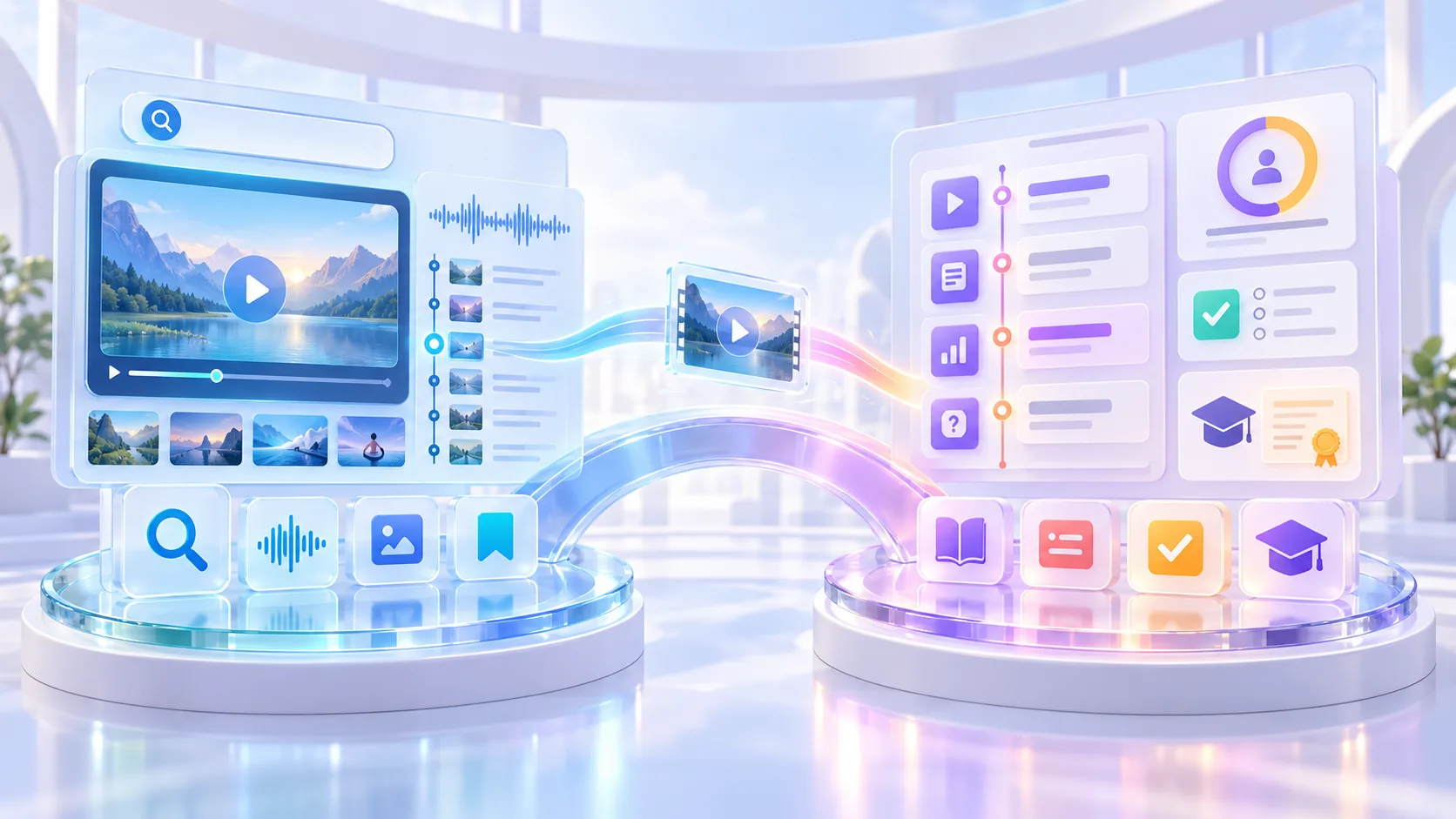
For many organizations, video learning platforms and LMS platforms are complementary rather than competing systems. The LMS can manage the formal learning journey, while the video platform manages the underlying video content.
For example, a company could use an LMS to assign a customer onboarding course. The course could include videos hosted on a dedicated video platform. After completing the course, customers could use a searchable video library to revisit specific features or solve problems independently.
The same approach can support employee learning. New employees may complete a structured onboarding program in the LMS, then use the video platform as an ongoing knowledge resource after onboarding ends.
This arrangement separates two important functions:
The LMS manages who must learn, what they must complete, and whether they completed it.
The video learning platform helps people locate and use video-based information over time.
Platforms such as Cincopa can fit into the second part of this setup by helping organizations organize, securely share, and search video-based knowledge. It can support an LMS or an existing knowledge system without necessarily replacing either one.
Questions to Ask Before Choosing a Platform
Before selecting a video learning platform or an LMS, organizations should define the experience they want to provide.
Useful questions include:
Do learners need to complete courses or find answers?
If completion is the primary goal, an LMS will usually be more appropriate. If users mainly need to locate explanations within recordings, a video learning platform may be a better fit.
Is training mandatory?
Required training often needs assignments, deadlines, reminders, and completion records. These are standard LMS functions.
How important is search within videos?
If the organization has hundreds of hours of recorded content, title-based search may not be enough. It may need transcript search, chapters, captions, or tools that identify relevant moments within videos.
Are assessments or certifications required?
If learners must demonstrate understanding or receive credentials, the platform needs formal assessment and certification features.
Who will access the content?
Employees, customers, partners, and the general public may require different access controls and user experiences.
What reporting is needed?
Some teams only need to understand which videos are being watched. Others need detailed records showing enrollment, progress, scores, and compliance status.
What systems are already in use?
A new platform should work with the organization’s existing LMS, content management system, identity provider, analytics tools, and knowledge base where possible.
Choosing Based on the Learning Model
The choice between a video learning platform and an LMS should begin with the learning model, not with a list of product features.
Choose a video learning platform when:
Video is a primary source of organizational knowledge.
Users need information at the moment of need.
Search and navigation within recordings are important.
The organization needs a flexible video library or learning portal.
- Formal assessments and certifications are not the main requirement.
Choose an LMS when:
Training must be assigned and completed.
Learners need to follow structured courses.
Quizzes, assessments, or certificates are required.
Administrators need formal learning records.
- Compliance and reporting are important.
Consider using both when the organization needs to provide structured training and preserve the resulting videos as searchable, reusable knowledge.
Final Thoughts
Video learning platforms and LMS platforms both support education, but they approach it from different directions. An LMS manages the learning process. It helps organizations create courses, assign training, assess learners, and document completion.
A video learning platform manages access to video-based knowledge. It helps people find, watch, revisit, and share useful information contained in recordings.
Neither approach is universally better. The right choice depends on whether the main objective is to guide people through formal training, help them find answers during their work, or support both types of learning.
By defining that objective first, organizations can choose a platform that fits their actual needs instead of forcing every form of learning into a single system.