Veteran Affairs Victory: Using Flow Technology to Honor Service Time
The mission of Veteran Affairs (VA) centers is profoundly important: to deliver the healthcare, benefits, and support that veterans have earned through their service. Yet, for many veterans, the process of accessing these services is marred by long, unpredictable wait times, confusing administrative hurdles, and the indignity of sitting in crowded, chaotic waiting rooms. The irony is stark: service members were trained in efficiency and precision, only to face an administrative system that often embodies the opposite.
The prolonged wait time at VA facilities—whether for medical appointments, benefits counseling, or claim filing assistance—is not merely an inconvenience; it is a critical failure to honor their time and commitment. The solution is not simply to hire more staff, but to fundamentally redesign the service environment using intelligent flow technology. By deploying a sophisticated customer queue management system, VA centers can transform the service experience, imposing digital order on complex demand and demonstrating the respect that every veteran deserves.
The Cost of Chaos: Why Waiting Dishonors Service
The inefficiencies within VA service centers are particularly damaging because they impact a population often dealing with unique medical and psychological pressures. The traditional flow model creates specific barriers that compromise service delivery and trust.
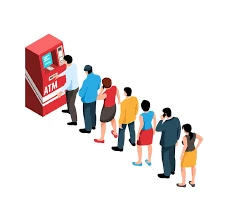
1. The Stress of Uncertainty: Veterans, like all customers, value predictability. When they arrive at a VA center, they are often facing emotionally challenging or urgent health issues. Being forced to wait in a long, visible line with no reliable estimate of service time significantly amplifies anxiety and stress. This uncertainty can trigger health issues and is a major source of frustration that can lead to missed appointments or even abandonment of necessary services.
2. Inefficient Staff Specialization: VA staff are specialists—in compensation claims, mental health, specific medical fields, or education benefits. However, in a chaotic, first come, first served environment, their expertise is often wasted on general administrative tasks. A highly trained claims officer may spend time answering basic questions about parking or wait times instead of processing a time sensitive disability claim. This misallocation of specialized talent severely limits the center’s capacity to address high priority veteran needs.
3. The Documentation and Handoff Trap: The VA process often requires multiple steps: check in, triage, document submission, and specialized consultation. In a manual system, handoffs between these steps are slow, prone to error, and require repetitive requests for the same information. This administrative friction forces veterans to spend excessive time tracking their status, time that should be spent on recovery or focusing on their next steps.
4. Erosion of Trust and Morale: When veterans experience a disorganized service center, their trust in the institution is eroded. This directly impacts staff morale as well; dedicated VA employees are often frustrated by their inability to deliver the quality, efficient service their veterans deserve due to systemic operational bottlenecks.
The Service Victory: A Digital Flow Blueprint
Implementing an intelligent customer queue management system allows VA centers to transition from a chaotic, reactive service model to a highly efficient, proactive service environment that honors the veteran's time.
Step 1: Intelligent Pre Check In and Triage. The process begins with honoring the veteran's service time by minimizing their physical wait. Veterans can check in using a kiosk or a mobile application upon arrival. They specify their purpose: "Medical Appointment," "Compensation and Pension Filing," or "Education Benefits Counseling." This initial digital triage immediately separates the diverse needs of the veteran population. Veterans with scheduled appointments can be flagged for immediate attention, while walk ins are routed appropriately.
Step 2: Virtual Queuing for Respect and Comfort. The physical line is eliminated. Once checked in, the veteran receives a digital ticket via text message and is free to wait comfortably and discreetly. They receive real time updates on their queue position and a reliable estimated service time. This transparency immediately reduces anxiety and demonstrates respect for their time. If a staff member or facility runs behind, the system proactively updates the veteran, allowing them to adjust their time use accordingly.
Step 3: Specialized Routing for Expert Service. This is the core principle of efficiency. The customer queue management system routes the veteran not to the next available clerk, but directly to the specialist needed for their specific request. A veteran seeking to file a new claims packet is routed to a trained claims officer. A veteran with a simple medical records question is routed to a dedicated service window. This intelligent matching ensures that the veteran interacts with the right expert immediately, cutting down on internal handoffs and saving valuable time for both parties.
A solution like Qwaiton helps safeguard this flow, acting as the system's brain to match complex veteran needs with specialized staff availability in real time, maximizing the number of productive service interactions per day.
The Data Driven Salute: Optimizing Resource Deployment
The long term success of the digital model lies in the data it generates, allowing VA leadership to continuously refine service delivery to meet the highest standards of efficiency.
Predictive Staffing Models: The system tracks the actual time required for every service type—not the estimate, but the real time. This data is priceless for operational planning. It allows managers to predict with accuracy, for example, that the claims department sees a surge in complex filings on Thursday mornings. The VA can then proactively schedule additional claims specialists during those precise peak times, cutting down on service delays and eliminating staff underutilization.
Bottleneck Identification and Process Refinement: The data clearly reveals exact points of friction. Is the document scanning process stalling the flow? Is there a consistent delay in the initial medical triage? The customer queue management system data pinpoints the precise stage where delays occur, allowing management to apply targeted process improvements, such as introducing new technologies or specific staff training, to eliminate the bottleneck and maintain service velocity.
Measuring the Veteran Experience: The system can be used to gather discreet, immediate feedback from veterans about their experience after service completion. By linking wait time and service duration data to satisfaction scores, the VA can create a feedback loop that continually drives improvements based on the veteran's perspective, ensuring every operational change is veteran centric.
By leveraging a robust platform like Qwaiton, VA centers transform their service flow data into a continuous engine for operational excellence, demonstrating a commitment to efficiency that truly honors the veteran's sacrifice.
Conclusion: Honoring Time as Trust
The service provided by the VA is a solemn obligation, and the quality of that service is a reflection of national gratitude. Forcing veterans to endure long, chaotic waits is unacceptable.
By implementing an intelligent customer queue management system, VA centers are not just managing lines; they are honoring service time. They are creating a controlled, transparent, and respectful environment that ensures veterans receive prompt, specialized attention. This commitment to flow technology is the most practical and profound way the VA can demonstrate its dedication to providing the swift, dignified care that every American veteran deserves.