The spine acts as the pillar of the human body, undertaking the critical functions of supporting the body, and protecting the spinal cord and nerves. When the spine becomes unstable due to degenerative diseases, fractures, deformities or other issues, it not only causes pain but may also impair daily activities. In the field of spinal surgery, the vertebral fusion cage, as an important medical device, plays a pivotal role in spinal fusion procedures, helping patients reconstruct spinal stability, relieve pain and restore function. This article elaborates on the types, applications, advantages, potential risks and research advances of vertebral fusion cages, to provide a reference for people concerned about spinal health.
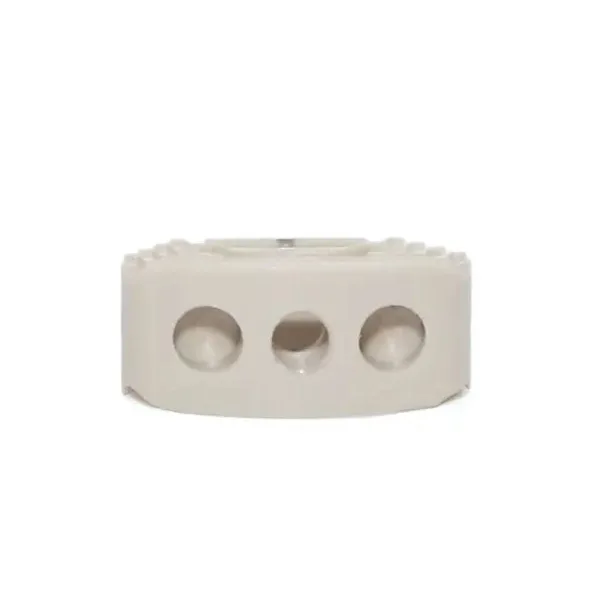
What is a vertebral fusion cage?A vertebral fusion cage is an implantable medical device used in spinal fusion surgery. Its core function is to provide temporary or long-term stability for the vertebrae during the procedure, while creating space for bone graft material to promote osseous fusion between adjacent vertebrae. Put simply, it acts like a bridge, helping the damaged spinal segment maintain the correct position during healing, and ultimately achieving permanent connection of the vertebrae, thereby restoring spinal stability.
Main types of vertebral fusion cagesCurrently, vertebral fusion cages commonly used in clinical practice are mainly divided into two categories according to their material properties. Each material has its own advantages, and doctors will select the appropriate type based on the patient's specific condition:
1. Titanium alloy vertebral fusion cage
Titanium alloy is a metal material widely used in medical devices. Its advantages include excellent biocompatibility (low risk of triggering body rejection) and high strength, which can provide reliable support for the spine. In addition, titanium alloy has favorable imaging characteristics: during postoperative examinations such as X-rays and CT scans, doctors can clearly observe bone growth around the cage, making it easy to evaluate the fusion effect.
2. PEEK (polyether ether ketone) vertebral fusion cage
PEEK is a polymer material that has been increasingly widely used in spinal surgery in recent years. It is characterized by an elastic modulus close to that of human bone, which can reduce stress shielding (i.e., preventing the cage from excessively bearing pressure and thus affecting bone tissue growth). It also has good wear resistance and chemical stability, and is less prone to aging or degradation after long-term implantation. For patients requiring mechanical properties closer to human bone, PEEK cages are an ideal choice.
Clinical applications of vertebral fusion cagesVertebral fusion cages are not suitable for all spinal problems. They are mainly used in scenarios where surgical vertebral fusion is required, and common applications include:
1. Spinal fusion surgery
This is the core application scenario of vertebral fusion cages. When patients have unstable spinal segments due to spinal degenerative diseases (such as lumbar disc herniation, spinal stenosis), spinal fractures (especially unstable fractures) or spinal deformities (such as scoliosis, kyphosis), surgeons will remove the diseased tissue (such as herniated intervertebral disc) through surgery, then implant the vertebral fusion cage and fill it with bone graft material to promote vertebral fusion, thereby restoring the normal structure and stability of the spine.
2. Auxiliary stabilization after decompression surgery
In some spinal decompression surgeries (such as removing osteophytes or intervertebral discs that compress nerves), the stability of the spine may be affected to a certain extent. At this time, implanting a vertebral fusion cage can help maintain the normal sequence of the spine, reduce postoperative complications such as pain and nerve damage caused by spinal instability, and improve surgical outcomes.
Advantages of using vertebral fusion cagesCompared with traditional spinal fusion methods (such as simple bone grafting), the application of vertebral fusion cages has brought improvements in multiple aspects, with the main advantages including:
1. Improving fusion success rate
Vertebral fusion cages can provide a stable accommodation space for bone graft material, preventing bone tissue from shifting or being resorbed during healing, thereby significantly improving the success rate of vertebral fusion. Clinical data shows that the fusion rate of spinal fusion surgery using cages is usually higher than that of traditional methods.
2. Relieving pain and improving quality of life
By stabilizing spinal segments, vertebral fusion cages can effectively reduce abnormal movement of the affected area, thereby relieving pain caused by spinal instability (such as low back pain, radiating pain in the lower limbs). As pain is alleviated, the patient's mobility gradually recovers, and daily activities (such as walking, bending) become more comfortable.
3. Restoring spinal function
The design of vertebral fusion cages conforms to the physiological curvature of the spine, helping to restore the normal force line and height of the spine, and avoiding postoperative spinal deformity or collapse. In the long term, this helps maintain the normal function of the spine and reduces the risk of adjacent segment degeneration after surgery.
Risks and precautions of vertebral fusion cage surgeryAlthough vertebral fusion cages have remarkable effects in spinal fusion surgery, any surgery carries certain risks. Patients and their families need to understand these in advance and cooperate with doctors to make adequate preparations:
1. General risks of the surgery itself
Similar to other surgeries, spinal fusion surgery may face risks such as infection, bleeding, and anesthesia reactions. However, in regular medical institutions, doctors will reduce these risks through strict preoperative evaluation, aseptic operation and postoperative care.
2. Fusion failure
A small number of patients may experience fusion failure (i.e., the vertebrae fail to achieve osseous connection), which may be related to poor bone healing ability of the patient (such as osteoporosis), improper postoperative activity, or inappropriate selection of the fusion cage. Fusion failure may require secondary surgery to adjust or replace the fusion cage.
3. Risk of nerve injury
There are abundant nerves and the spinal cord distributed around the spine. If the operation is improper during the procedure, nerve injury may occur, manifested as postoperative limb numbness, pain, weakness, or even paralysis (in rare cases). Choosing an experienced spinal surgeon is the key to reducing this risk.
4. Implant-related complications
Although vertebral fusion cages have good biocompatibility, problems such as implant displacement, loosening or infection may still occur. Following the doctor's rehabilitation guidance after surgery (such as avoiding strenuous exercise, regular reexamination) can reduce the occurrence of such complications.
Research advances and future trends of vertebral fusion cagesWith the development of materials science and spinal surgery technology, the design and performance of vertebral fusion cages are continuously optimized, providing more options for patients:
1. Support from clinical research
Multiple clinical studies have confirmed that both titanium alloy and PEEK cages can effectively improve the spinal fusion rate and improve patients' pain scores and functional recovery. For example, studies on patients with lumbar degenerative diseases show that the fusion success rate of patients using cages exceeds 90% one year after surgery, with significant effects on pain relief and quality of life improvement.
2. New technologies and novel fusion cages
In recent years, innovative designs such as expandable vertebral fusion cages have been gradually applied in clinical practice. This type of cage can be implanted through minimally invasive means, and after expanding in the body, it fits closely with the vertebrae, reducing surgical trauma and bleeding, and is especially suitable for elderly patients or those with poor physical conditions. In addition, personalized fusion cages combined with 3D printing technology are also under development, and are expected to be custom-made according to the patient's spinal anatomical structure in the future, further improving the fusion effect and safety.
Conclusion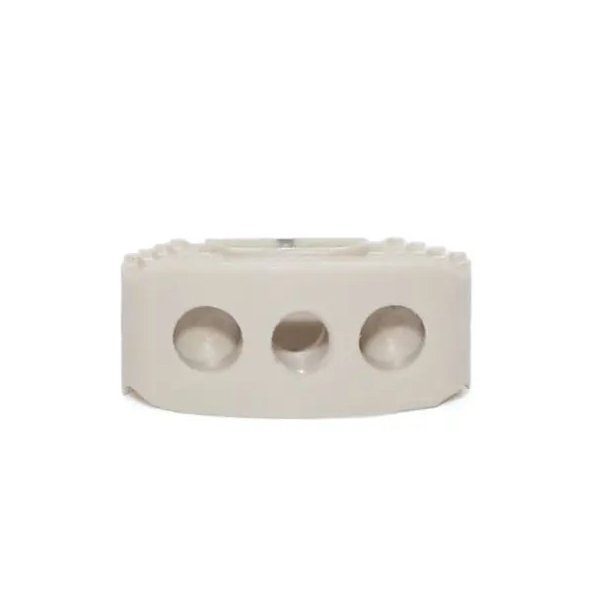
As a key tool in spinal fusion surgery, vertebral fusion cages help countless patients with spinal diseases relieve pain and restore function by providing stable support and promoting bone fusion. Both titanium alloy and PEEK materials have their unique advantages, and the specific selection needs to be comprehensively judged by the doctor based on the patient's condition, physical status and other factors. It should be noted that the surgical effect depends not only on the fusion cage itself, but also is closely related to the doctor's technique, postoperative rehabilitation, etc.
If you or your family members are facing spinal problems, it is recommended to consult a professional spinal surgeon in time for detailed examination and evaluation. Do not self-diagnose or delay treatment. Spinal health is related to quality of life, and scientific diagnosis and standardized treatment are the keys to restoring health.