Introduction
Male fertility is influenced by several factors, including sperm count, sperm movement, hormonal balance, and reproductive health. One common but often overlooked condition that can affect fertility is varicocele. Many men are unaware they have this condition until they begin investigating difficulties in conceiving.
A varicocele is an enlargement of the veins within the scrotum, similar to varicose veins that can develop in the legs. While not every varicocele causes fertility problems, it is considered one of the most common treatable causes of male infertility. Understanding the symptoms, diagnosis process, and available treatment options can help couples make informed decisions about their reproductive health.
What Is a Varicocele?
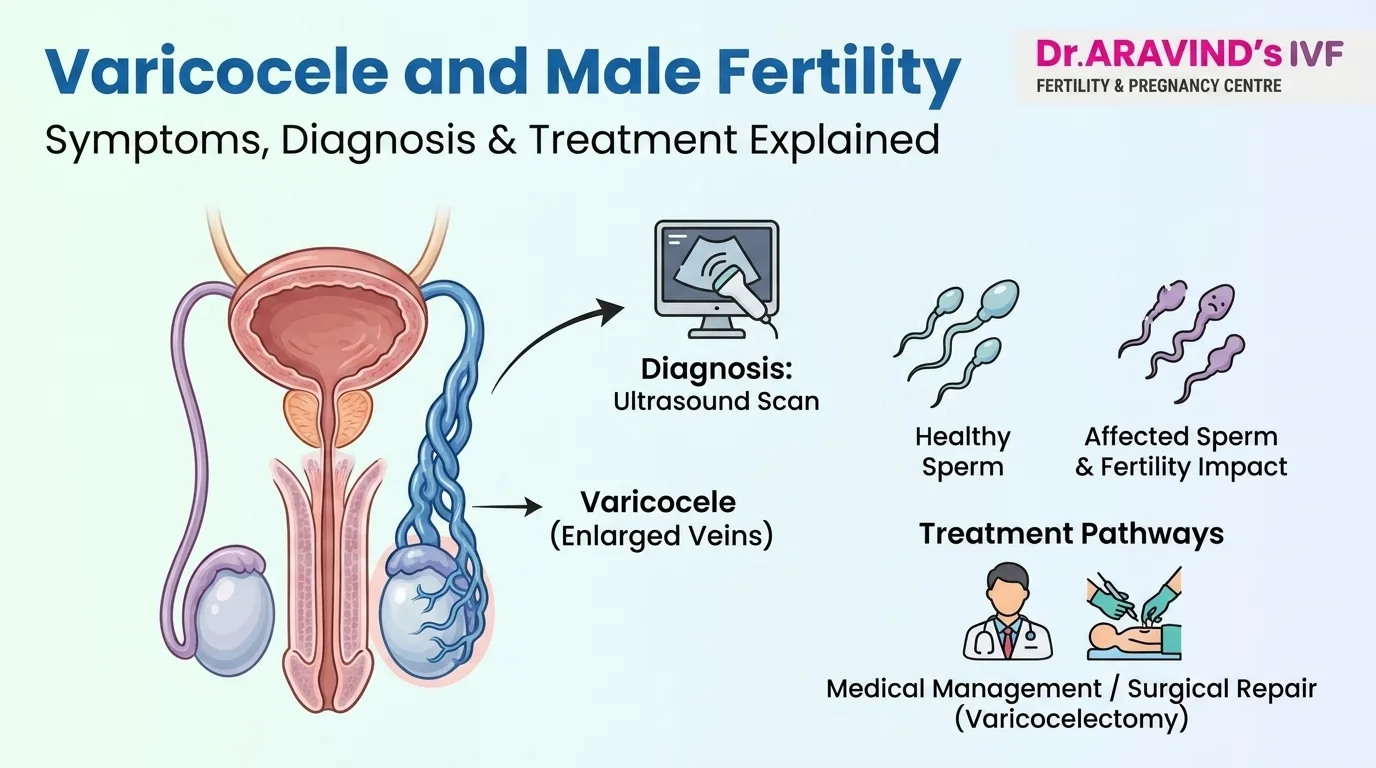
A varicocele occurs when the veins responsible for draining blood from the testicles become enlarged. This can lead to poor blood circulation and increased temperature around the testicles, which may negatively impact sperm production and quality.
Research has shown that varicoceles are more common among men experiencing fertility issues. The condition can affect sperm concentration, motility, and morphology, all of which play an important role in natural conception.
Men seeking evaluation for male fertility in Chennai often undergo screening for varicocele as part of a comprehensive fertility assessment.
Common Symptoms of Varicocele
Many men with varicoceles experience no noticeable symptoms. However, some individuals may develop signs that warrant medical attention.
Common symptoms include:
- Dull or aching pain in the scrotum
- Visible or enlarged veins in the scrotal area
- A feeling of heaviness or discomfort
- Testicular shrinkage on one side
- Fertility challenges despite regular attempts to conceive
Because symptoms may be mild or absent, fertility testing is often the first step that leads to diagnosis. Men undergoing a male infertility evaluation, semen analysis, or sperm health assessment may discover an underlying varicocele during examination.
How Varicocele Affects Male Fertility
The exact relationship between varicocele and infertility continues to be studied, but several mechanisms are believed to contribute.
Varicoceles can:
- Increase scrotal temperature
- Reduce oxygen supply to the testicular tissue
- Cause oxidative stress
- Affects testosterone production
- Impair sperm development and maturation
These changes may lead to reduced sperm count, decreased sperm motility, and abnormal sperm morphology. For couples facing unexplained infertility, evaluating male reproductive health is an important step in identifying treatable causes.
Many fertility specialists recommend a thorough fertility workup before considering advanced reproductive treatments.
Diagnosis and Fertility Testing
Diagnosing a varicocele typically begins with a physical examination performed by a fertility specialist or urologist.
Additional diagnostic tests may include:
Physical Examination
Doctors assess the scrotum while standing and lying down to identify enlarged veins.
Scrotal Ultrasound
Ultrasound imaging provides a detailed view of blood flow and vein enlargement, helping confirm the diagnosis.
Semen Analysis
A semen analysis evaluates:
- Sperm count
- Sperm motility
- Sperm morphology
- Semen volume
This test is a key component of fertility investigations and provides valuable insight into reproductive potential.
Men interested in understanding their reproductive health can learn more about comprehensive evaluations for male fertility in Chennai, including diagnostic tests and treatment options available for various fertility conditions.
Treatment Options for Varicocele
Not every varicocele requires treatment. However, intervention may be recommended when fertility issues, discomfort, or abnormal semen parameters are present.
Observation
For men without symptoms or fertility concerns, regular monitoring may be sufficient.
Varicocele Repair Surgery
Varicocelectomy is a surgical procedure that seals affected veins and redirects blood flow through healthy vessels. This can help improve testicular function and sperm production in selected patients.
Microsurgical Techniques
Microsurgical varicocelectomy is often preferred because it allows precise treatment while minimizing risks and recovery time.
Assisted Reproductive Technologies
In some cases, fertility treatments such as IUI or IVF may be recommended depending on sperm quality, female fertility factors, and the couple's overall reproductive goals.
Conclusion
Varicocele is a common condition that can affect male reproductive health and fertility. Although many men experience no symptoms, the condition may contribute to reduced sperm quality and difficulty conceiving. Early diagnosis through physical examination, ultrasound, and semen analysis can help identify the issue and guide appropriate treatment.
For couples exploring fertility concerns, understanding conditions such as varicocele is an important step toward informed decision-making. Comprehensive fertility evaluation and timely medical guidance can help identify underlying causes and improve the chances of successful conception.