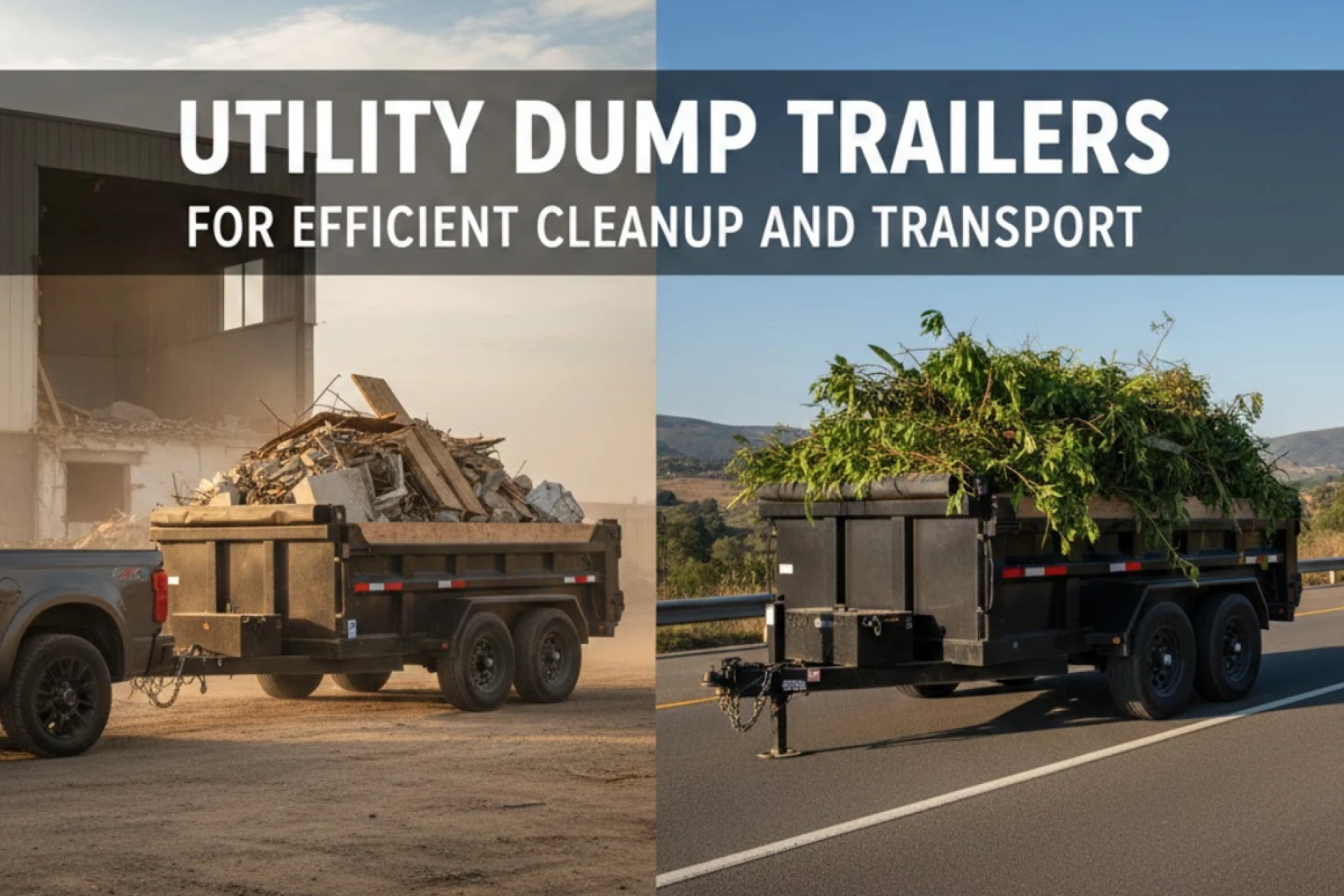
Cleanup jobs always sound smaller than they are. A little debris here. Some old lumber there. Then you start loading and realize it’s heavier, messier, and way more awkward than expected. Happens every time.
Somewhere in the middle of that moment, when your gloves are already dirty and you’re wondering how many trips this will take, a utility dump trailer suddenly makes a lot of sense. Not in a flashy way. In a practical, quiet relief kind of way.
Why Cleanup Gets Complicated Faster Than Planned
Most cleanup projects start with confidence. Home renovations. Landscaping jobs. Construction sites. Property maintenance.
Then gravity steps in. Weight adds up. Loose material slides around. Manual unloading becomes the real enemy.
Trash bags tear. Wheelbarrows tip. Pickup beds fill unevenly. You tell yourself, “Just one more load,” and then there’s another.
Dump trailers change that rhythm. They don’t rush the job. They just remove friction.
What Makes Utility Dump Trailers So Useful
The defining feature is simple. The bed lifts. Material slides out. No shoveling. No lifting every piece twice.
Hydraulic systems handle the heavy work. Operators stay upright. Less strain on backs and shoulders.
That alone saves hours over a week. Over a season, it saves energy people forget they even spent.
Types of Jobs That Rely on Dump Trailers
Construction crews use them daily. Debris piles grow fast on active sites.
Landscapers haul soil, mulch, gravel, and cut branches. Dumping cleanly keeps work areas tidy.
Farmers move feed, manure, fencing supplies, and tools across properties.
Property managers clean out rentals between tenants. Old furniture. Broken fixtures. Yard waste.
Even homeowners rent them for big projects. Driveway replacements. Storm cleanup. Backyard overhauls.
Once you use one, it’s hard to go back.
Size Matters More Than People Admit
Too small and you’re making extra trips. Too large and towing feels awkward.
Utility dump trailers come in different bed lengths and weight ratings. Matching capacity to actual work matters.
A 5x10 trailer handles household projects well. Contractors often prefer 6x12 or larger.
Overloading happens when capacity gets ignored. Tires suffer. Brakes strain. Safety drops.
Knowing realistic payload needs saves money and stress.
Single Axle vs Tandem Axle Dump Trailers
Single axle models cost less. They’re lighter. Easier to maneuver in tight spaces.
Tandem axle trailers carry heavier loads. Stability improves. Weight spreads out.
Contractors lean toward tandem setups. Homeowners often choose single axle.
Neither option fits everyone. Usage frequency tells the story.
Hydraulic Systems and Power Sources
Most dump trailers rely on electric hydraulic pumps. Battery-powered systems lift beds smoothly.
Manual pumps exist. They work. Slower pace though. Physical effort returns.
Electric systems feel smoother during busy days. Push a button. Load slides out.
Keeping batteries charged becomes part of routine maintenance.
Loading Techniques That Save Time Later
Loading evenly matters. Heavy material near the front helps balance.
Loose debris spreads easier than stacked items. Breaking down material before loading helps dumping later.
Wet materials weigh more than expected. Rain changes plans quickly.
Experienced operators load with unloading in mind. It’s a learned habit.
Towing Considerations People Learn the Hard Way
Not every vehicle handles dump trailers comfortably.
Payload plus trailer weight adds up fast. Towing capacity matters. Brake controllers matter.
Electric brakes help control downhill movement. Without them, stopping distances grow.
Mirrors adjusted wide reduce stress on narrow roads.
Confidence improves after a few trips. The first tow always feels stiff.
Dump Trailers vs Open Utility Trailers
Open utility trailers work fine for light loads. Lawn equipment. Furniture. Boxes.
Dump trailers handle bulk material better. Soil. Concrete chunks. Roofing debris.
Manual unloading disappears. Labor savings show immediately.
Both trailers have roles. Dump trailers shine during cleanup-heavy tasks.
Maintenance That Keeps Trailers Working Longer
Hydraulic fluid levels need checks. Hoses wear over time.
Greasing hinges helps beds lift smoothly. Rust appears when ignored.
Battery care matters. Dead batteries slow jobs fast.
Tires show wear unevenly if loads stay unbalanced.
Small habits prevent big repairs later.
Dump Trailers for Seasonal Work
Spring brings landscaping. Summer brings construction. Fall brings cleanup. Winter brings snow in some regions.
Dump trailers adapt across seasons. Hauling snow becomes possible with proper setup.
Storage during off-seasons matters. Covered parking helps.
Year-round usage keeps systems active. Long idle periods cause surprises.
Rental vs Ownership Decisions
Renting suits occasional users. One-off projects. Short-term needs.
Ownership fits frequent users. Contractors. Maintenance crews. Property managers.
Rental costs add up over time. Ownership spreads costs across years.
Storage space affects decisions too.
Both options make sense depending on workflow.
Safety Habits Worth Keeping
Never stand behind a raised bed. Gravity doesn’t negotiate.
Check ground stability before dumping. Soft soil shifts.
Lower beds fully before driving. Partial lifts create hazards.
Secure loads with covers when needed. Road debris causes trouble.
Routine checks prevent avoidable accidents.
Dump Trailers in Small Business Operations
Small businesses rely on efficiency. Time equals money.
Dump trailers reduce labor hours. Crews move faster between jobs.
Customer sites stay cleaner. Professional impressions improve.
Equipment investments pay off quietly over time.
Real-World Scenarios Where Dump Trailers Shine
A roofing crew clears shingles in hours instead of days.
A landscaper dumps mulch precisely without shoveling.
A farmer empties feed bins without manual lifting.
A homeowner finishes a backyard project before sunset.
Small wins stack up.
Choosing the Right Dump Trailer
Buying decisions get overwhelming fast.
Bed size. Axle rating. Brake systems. Side heights.
Thinking through actual use helps narrow options.
Salespeople help. Experience helps more.
Talking to other owners reveals details brochures miss.
Why Utility Dump Trailers Feel Like a Long-Term Tool
Dump trailers don’t age out quickly. Steel frames last. Hydraulics last with care.
They don’t chase trends. They just work.
That reliability earns loyalty.
Owners rarely regret buying one. They regret waiting.
A Realistic Ending, No Sales Pitch
Cleanup work stays messy. Heavy loads stay heavy.
Utility dump trailers don’t remove effort completely. They remove the worst parts.
Less lifting. Fewer trips. Quicker unloading.
Sometimes that’s enough to turn a long day into a manageable one.