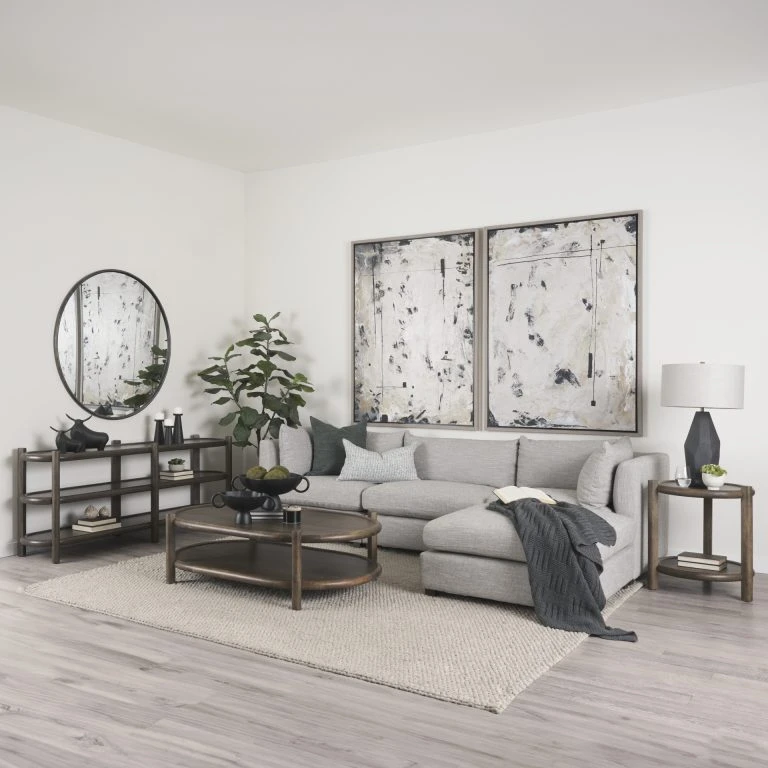
The rise of open-concept living has fundamentally changed the way we interact with our homes. By tearing down walls between the kitchen, dining, and seating areas, we have gained a sense of airy spaciousness and better flow for entertaining. However, this architectural freedom comes with a significant design challenge: without walls to lean things against, how do we define where one room ends and another begins? Many homeowners find that their furniture feels "lost" in a large, open space. A sofa placed in the center of the room often looks like it’s floating aimlessly, leaving the back of the piece exposed in a way that feels unfinished or visually hollow.
Solving this problem doesn't require rebuilding walls; it requires the strategic use of living room furniture to create "soft boundaries." At Carefree Home Furnishings, we believe the most effective tool for this task is the often-overlooked console table. Also known as a sofa table, this slender, versatile piece acts as an architectural anchor. By placing a console table directly behind a floating sofa, you provide a visual "end" to the seating area, grounding the furniture and creating a clear transition between different functional zones of the home. It is a simple addition that brings a sense of order and intentionality to even the most expansive floor plans.
Eliminating the "Sofa Dead Zone"
When a sofa is pushed against a wall, its back is hidden. But in an open-concept layout, the back of the sofa is often the first thing you see when walking in from the kitchen or entryway. Most sofas are designed with the front in mind, meaning the back is often a large, flat expanse of fabric that lacks visual interest. Designers often refer to this as a "dead zone."
By introducing a console table from Carefree Home Furnishings, you instantly transform that dead zone into a focal point. The table acts as a buffer, hiding the lower half of the sofa back and providing a shelf for decorative elements. This layering effect adds depth to the room. Instead of looking at the back of a couch, your guests are greeted with a beautifully styled surface that reflects your personal taste. Whether you choose a rustic wooden table for a farmhouse vibe or a sleek glass-and-metal design for a modern look, the console table completes the silhouette of your seating arrangement.
Creating Architectural Boundaries
One of the best open concept layout ideas is to use furniture to mimic the function of a wall without sacrificing the "open" feel. A console table serves as a low-profile divider. It suggests a boundary to the eye, signaling that "this is the lounging area" and "that is the walkway."
This is particularly useful in homes where the front door opens directly into the living area. A console table placed behind a sofa can act as a "virtual foyer." It provides a place to set down keys or mail, effectively creating an entryway experience where one didn't exist before. By defining these zones, you make the home feel more organized. At Carefree Home Furnishings, we often suggest selecting a table that is roughly the same height as the back of your sofa—or just an inch below—to maintain a clean, continuous line that guides the eye through the space.
The Secret to Better Lighting: Mid-Level Glow
One of the biggest mistakes in living room design is relying solely on overhead "can" lights or a single ceiling fixture. This often leads to a room that feels washed out or harsh. For a cozy, high-end atmosphere, you need "layered" lighting. In an open-concept room, it can be difficult to find a place for lamps when your furniture isn't near a wall with an outlet.
This is where sofa table styling becomes a functional necessity. A console table provides a stable surface for a pair of table lamps right in the center of the room. This introduces mid-level lighting—the "sweet spot" of illumination that sits at eye level when you are seated. Having lamps behind the sofa creates a warm, inviting glow that makes the seating area feel like an intimate sanctuary within the larger room. It also makes the space much more functional for reading or relaxing in the evening without having to turn on every light in the house.
Styling Your Console: The Rule of Three
Once you have your table in place, the fun begins with sofa table styling. To prevent the table from looking cluttered, designers often use the "Rule of Three" or the "Triangle Method."
- Anchor with Height: Start with a pair of tall lamps or a large vase on one end. This provides the verticality needed to balance the horizontal line of the table.
- Add Mid-Level Interest: In the center, place a stack of coffee table books or a decorative tray.
- Low-Level Texture: Fill in the gaps with smaller items like candles, small sculptures, or a bowl for organic texture.
At Carefree Home Furnishings, we recommend looking for tables with a bottom shelf. This "second level" of real estate is perfect for tucking away woven baskets. These baskets can hold extra throw blankets, pillows, or even children’s toys, keeping your open-concept space looking pristine while keeping essentials within reach.
Under-Table Real Estate: The Hidden Ottoman Trick
If your console table has an open base, you have a golden opportunity to add extra seating without taking up more floor space. Tucking a pair of upholstered ottomans or stools under the console table is a favorite designer trick.
In a small open-concept home, you may not always need seating for six, but when guests arrive, those "hidden" stools can be pulled out and moved to the center of the room. When the party is over, they slide back under the table, keeping the walkways clear. This makes your living room furniture work twice as hard, providing both aesthetic beauty and hidden utility.
Conclusion: Balancing the Open Home
The beauty of an open-concept home is its lack of barriers, but the secret to living well in one is knowing where to draw the line. A console table is more than just a place to put a lamp; it is a vital architectural tool that brings balance, light, and definition to your space. It turns a "floating" sofa into a grounded seating area and transforms a "dead zone" into a gallery of your favorite things.
At Carefree Home Furnishings, we invite you to look at your living room from a new perspective. Step behind your sofa and see the potential. By adding that one perfect horizontal surface, you can bridge the gap between your kitchen and your living room, creating a home that feels both expansive and perfectly contained.