
The dental industry is becoming increasingly competitive, and traditional advertising is no longer enough to attract modern patients. Today’s audience expects messages that feel relevant, timely, and personal. This shift has made hyper-personalised dental ads a powerful tool for practices that want steady results and improved return on investment. By combining data-driven targeting with strategic online marketing for dentists, practices can reach the right people with the right message. When supported by strong SEO for dental clinics, these personalised campaigns become even more effective. This blog explains how hyper-personalised dental advertising works and why it offers better ROI than generic digital promotions.
The Shift Towards Personalised Digital Experiences
Why Personalisation Matters in Dentistry
Dental patients behave like everyday digital consumers. They want communication that directly relates to their needs, preferences, and intent. Hyper-personalised ads make this possible by delivering relevant messages that feel tailored rather than broad or sales-driven. This level of precision leads to higher engagement and a stronger chance of patients responding positively.
How Personalisation Improves ROI
When ads feel directly relevant, patients are more likely to click, enquire, or book an appointment. This increases conversions while reducing wasted spend on audiences unlikely to respond. Hyper-personalised campaigns work because they prioritise precision over volume.
What Are Hyper-Personalised Dental Ads?
Simple Definition
Hyper-personalised dental ads use data to tailor messages to individuals instead of broad groups. These ads adjust based on patient behaviour, interests, treatment intent, age group, or location, making them far more relevant.
Examples of Personalised Messaging Approaches
Instead of generic promotions, personalised ads focus on user intent such as interest in clear aligners, hygiene treatments, implants, or whitening. Messages become more targeted based on what potential patients actually care about.
The Building Blocks of Hyper-Personalised Dental Ads
Deep Audience Segmentation
Segmentation is the foundation of effective online campaigns. By categorising patients based on age, lifestyle, treatment interest, or family needs, practices can deliver messages that resonate. Segmentation is an essential part of online marketing for dentists, allowing practices to create multiple targeted ads instead of a single broad campaign.
Using Patient Search Behaviour
Search patterns provide valuable insight into what potential patients want. When someone looks for aesthetic dentistry, paediatric treatments, or emergency care, their behaviour indicates clear intent. Strong SEO for dental clinics helps identify these patterns, making ads even more personalised and accurate.
Website and CRM Integration
First-party data such as form enquiries, appointment history, and website activity enhances personalisation. This allows practices to create campaigns that respond directly to previous interactions, improving relevance.
Local Insights for Accurate Targeting
Dental advertising benefits significantly from local targeting. Understanding neighbourhood trends, common treatment demand, and patient location enables practices to tailor ads to individuals living nearby, making the messaging more effective.
How SEO Supports Personalised Dental Advertising
SEO as a Strategic Foundation
Personalisation depends on understanding what potential patients are searching for. SEO for dental clinics provides this insight by revealing keywords, search intent, and trending treatment interests. When SEO and paid advertising work together, personalisation becomes much stronger.
SEO + Ads for Better ROI
Practices can use high-performing organic keywords to craft headlines and ad copy that reflect patient intent. Local SEO data also helps create geo-specific ad groups, resulting in more precise campaigns that attract individuals genuinely searching for dental services.
Practical Ways to Create Hyper-Personalised Ads
Retargeting Website Visitors
Retargeting helps reconnect with people who visited treatment-specific pages but didn’t enquire. Ads can reflect their interest, such as orthodontics, whitening, or restorative treatments, ensuring the message remains relevant.
Dynamic Treatment-Based Ads
Dynamic ads update automatically based on user behaviour or search terms. If a person shows interest in restorative care, they receive messaging aligned with those needs. This increases the likelihood of conversion.
Creating Custom Audiences on Social Platforms
By building audiences based on demographic groups or treatment categories, practices can tailor ads to specific patient needs. For example, parents may see paediatric care messaging, while working adults may see cosmetic dentistry promotions.
Tailored Landing Pages
A personalised ad should always direct users to a relevant landing page. This creates a seamless experience from ad to conversion, reducing confusion and improving the likelihood of appointment bookings.
Measuring the ROI of Personalised Dental Marketing
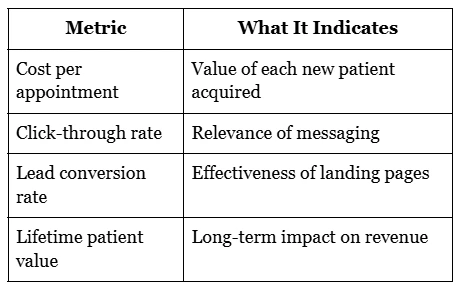
Key Metrics to Track
A clear understanding of results is essential. Useful performance metrics include:
Tools for Measurement
Platforms such as Google Analytics, Ads dashboards, call-tracking systems, and CRM reporting provide consistent insight into campaign performance. These tools help refine targeting and keep budgets focused on high-performing segments.
Common Mistakes in Personalised Dental Advertising
Many practices adopt personalisation but fail to execute it effectively. The most common mistakes include:
- Using one message for every audience.
- Running ads without supporting SEO data.
- Directing ads to slow or irrelevant landing pages.
- Ignoring mobile-first behaviour.
- Segmenting audiences too narrowly or too broadly.
Avoiding these missteps improves consistency and ensures more accurate targeting.
The Future of Personalised Dental Marketing
Personalisation will continue to expand as technology evolves. Future developments may include AI-driven predictive targeting, conversational search integration, and more responsive ad formats tailored to behaviour patterns. These innovations will help dental practices stay relevant and build stronger digital connections with patients.
Conclusion
Hyper-personalised dental ads provide meaningful advantages for practices aiming to increase their return on investment. By using data-driven insights, precise segmentation, and strong online marketing for dentists, campaigns become far more relevant and effective. Combined with robust SEO for dental clinics, personalisation offers a clear, strategic path to improving patient engagement and appointment conversions. Dental practices that adopt this approach now are well-positioned for long-term digital success. Ampli5 Dental supports the evolution towards smarter, more personalised patient communication, helping practices achieve consistent and measurable results.