
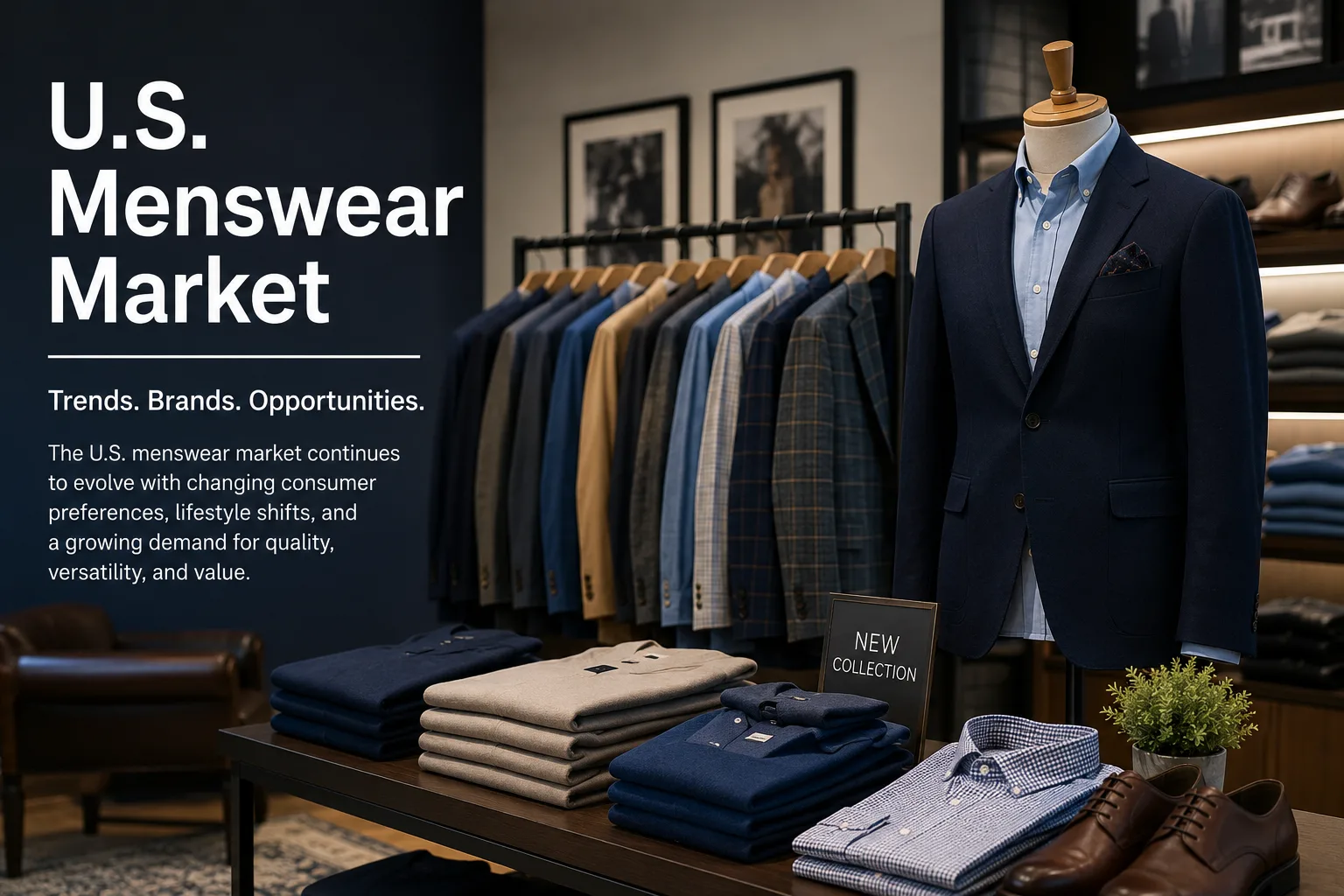
According to IMARC Group, the United States menswear market size is expected to reach USD 154.5 Billion in 2025 and is projected to grow to USD 192.4 Billion by 2034, exhibiting a CAGR of 2.40% during 2026–2034. The market growth is driven by evolving fashion trends, rising demand for comfort-focused apparel, and increasing adoption of sustainable and customized clothing.
- Market valued at USD 154.5 Bn in 2025; forecast to reach USD 192.4 Bn by 2034
- CAGR of 2.40% across the 2026–2034 forecast period
- Strong demand for athleisure and casual wear
- Growing preference for sustainable and ethical fashion
- Increasing influence of digital platforms and social media
Analyze the U.S. Menswear Market Download the IMARC Sample Report for Insights: https://www.imarcgroup.com/united-states-menswear-market/requestsample
United States Menswear Market Overview
The U.S. menswear market is evolving steadily, supported by changing consumer lifestyles and increasing fashion awareness among men. The shift toward comfort, versatility, and functionality in clothing is reshaping product demand across categories.
- Rising demand for casual and multifunctional apparel
- Increased focus on comfort due to remote and hybrid work trends
- Growing adoption of e-commerce and digital retail channels
- Expansion of sustainable and eco-friendly fashion lines
- Strong influence of social media and fashion influencers
Key Market Trends
Growing Popularity of Athleisure and Comfort Wear
Athleisure has become a major driver in the menswear market as consumers prioritize comfort without compromising style.
- Demand for flexible, multifunctional clothing rising
- Increasing use of performance fabrics
- Suitable for both casual and semi-formal settings
- Boosted by active lifestyles and remote working trends
Rising Demand for Sustainable Fashion
Consumers are increasingly opting for environmentally friendly clothing options.
- Preference for organic and recycled materials
- Brands focusing on ethical manufacturing practices
- Growing awareness of environmental impact
- Demand for long-lasting and durable apparel
Influence of Social Media and Digital Platforms
Digital platforms are playing a critical role in shaping fashion trends.
- Social media driving brand awareness and product discovery
- Influencers impacting purchasing decisions
- Increased online shopping and digital engagement
- Rapid spread of global fashion trends
Customization and Personalization Trends
Personalized menswear is gaining traction among consumers seeking unique styles.
- Custom fits, colors, and designs becoming popular
- Use of data analytics for tailored recommendations
- Growth in made-to-measure clothing segment
- Enhancing customer satisfaction and brand loyalty
Expansion of Streetwear and Casual Fashion
- Streetwear continues to dominate modern menswear trends.
- Popular among younger demographics
- Blend of urban culture and high fashion
- Increased demand for hoodies, sneakers, and graphic apparel
- Casual wear becoming acceptable in workplaces
United States Menswear Market Segmentation
IMARC Group segments the market based on Product Type, Season, Distribution Channel, and Region.
By Product Type
- Trousers – Key segment
- Used across formal and casual occasions
- Denims – Strong demand
- Versatile and durable apparel choice
- Shirts and T-Shirts – Widely used
- Core wardrobe essentials across segments
- Ethnic Wear
- Others
By Season
- Summer Wear – High demand
- Lightweight and breathable fabrics
- Winter Wear
- Focus on warmth and functionality
- All-Season Wear
- Versatile clothing options gaining popularity
By Distribution Channel
- Supermarkets and Hypermarkets
- Exclusive Stores
- Multi-Brand Retail Outlets
- Online Stores – Fastest growing
- Driven by e-commerce expansion and convenience
- Others
By Region
- Northeast – Fashion-forward market led by urban professionals
- Midwest – Demand for practical and affordable clothing
- South – Largest market driven by climate and cultural diversity
- West – Strong growth due to tech-driven and lifestyle trends
Market Growth Drivers
- Rising demand for comfortable and athleisure clothing
- Increasing fashion consciousness among men
- Growth of e-commerce and digital retail platforms
- Expanding influence of social media and influencers
- Rising demand for sustainable and eco-friendly apparel
- Availability of customization and personalization options
- Increasing disposable income and lifestyle changes
United States Menswear Market Challenges
- Intense competition among global and local brands
- Fluctuating raw material prices
- Fast-changing fashion trends leading to inventory challenges
- Sustainability compliance and production costs
- Supply chain disruptions and logistics challenges
Recent News & Developments
- July 2024: Pacsun entered the U.S. mens sportswear segment with its A.R.C. collection
- June 2024: “Metamorphose” initiative launched to promote sustainable fashion
- May 2024: Macy’s introduced a versatile menswear collection including apparel and accessories
Competitive Landscape
The United States menswear market is highly competitive, with brands focusing on innovation, sustainability, and digital transformation. Companies are investing in:
- E-commerce and omnichannel retail strategies
- Collaborations with designers and influencers
- Expansion of sustainable product lines
Advanced fabric technologies and customization
Frequently Asked Questions (FAQs)
Q1. What is the size of the United States menswear market?
The market is expected to reach USD 154.5 Billion in 2025 and grow to USD 192.4 Billion by 2034, at a CAGR of 2.40%.
Q2. What are the key drivers of the market?
Key drivers include rising demand for athleisure, sustainability trends, digital influence, and increasing fashion awareness.
Q3. Which segment dominates the market?
Trousers, shirts, and T-shirts dominate due to their versatility and widespread usage.
Q4. What are the major trends?
Major trends include athleisure growth, sustainable fashion, customization, and digital-driven shopping.
Q5. What challenges does the market face?
Challenges include intense competition, supply chain issues, and rapidly changing fashion trends.
Author IMARC Group
IMARC Group is a leading market research and consulting company offering strategic insights, feasibility studies, and market intelligence across industries. The firm helps businesses make informed decisions and achieve sustainable growth.
Contact Us
IMARC Group
134 N 4th St. Brooklyn, NY 11249, USA
Email: [email protected]
Tel: +1-201-971-6302