Introduction to Leach Field Treatment
Homeowners often encounter challenges with their septic systems, particularly when leach fields fail to operate efficiently. Regular leach field treatment can prevent minor issues from escalating into costly repairs. Leach field treatment involves restoring soil permeability, supporting beneficial bacteria, and maintaining proper water absorption to ensure your system functions without interruption.
RCS II, Inc. provides solutions that address both preventive care and active restoration for failing systems. Proper attention to leach fields safeguards your home, avoids surface pooling, and prevents foul odors associated with septic system malfunction.
Common Causes of Leach Field Issues
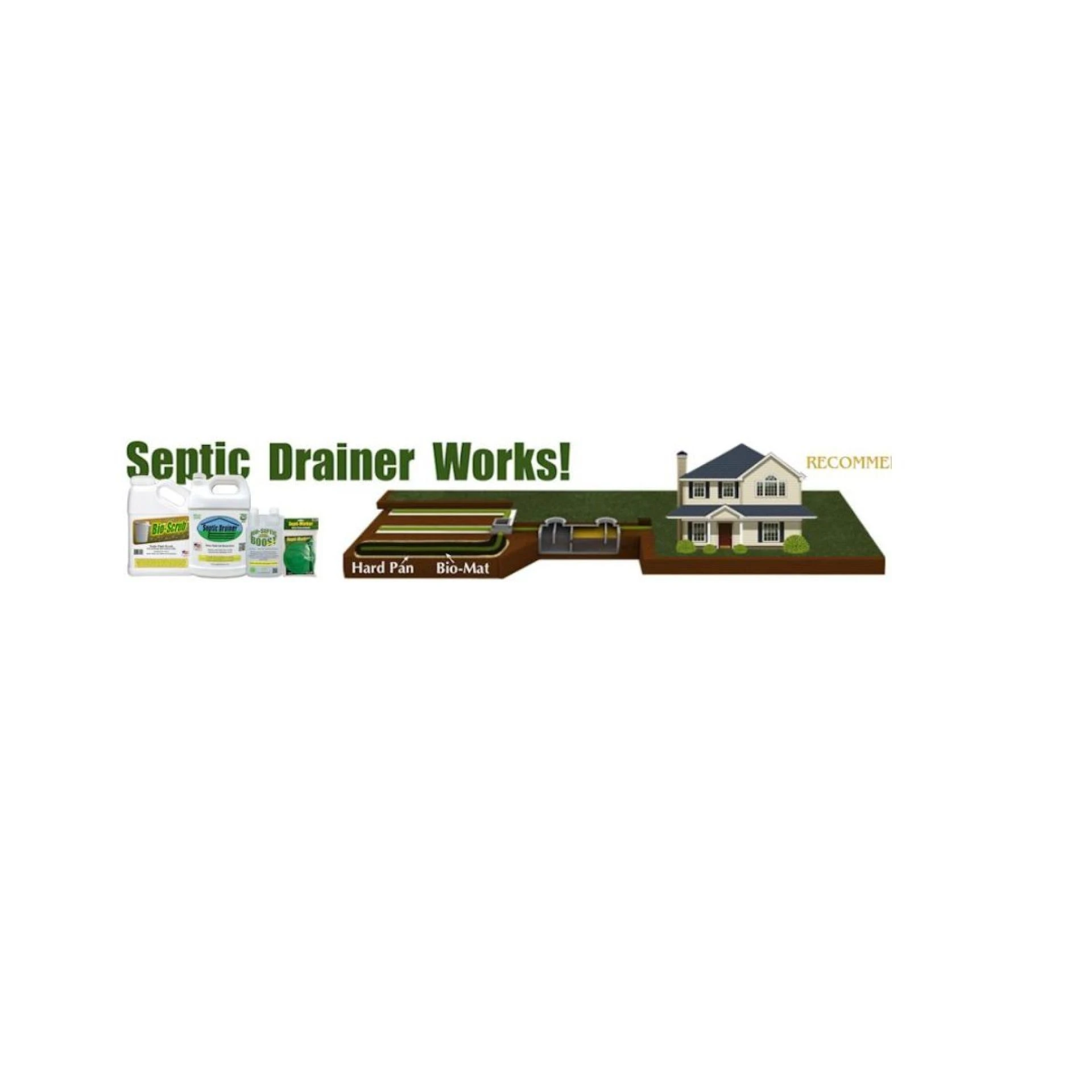
Understanding what disrupts leach field performance is key to effective maintenance. Sodium, naturally present in wastewater, binds with soil particles, creating layers that reduce water absorption. Over time, this chemical reaction can form a hard pan beneath your soil, limiting drainage.
Once airflow through the soil ceases, bio-mat begins to develop at the base of trenches. This slimy bacterial layer blocks water movement and reduces system efficiency. Excess organic material can also overwhelm the soil, causing bacterial imbalances. Recognizing these causes enables homeowners to select the right leach field treatment and respond proactively to system stress.
Sodium Buildup and Hard Pan Soil
Sodium accumulation in your septic system contributes to hardpan formation. This dense, impermeable layer prevents water from moving naturally through the soil, creating localized backups and wet spots in your yard. Hard pan soil restricts the diffusion of wastewater, forcing the system to operate under strain. Over time, untreated areas can show surface pooling or slow drainage, signaling a need for intervention. Correcting these issues requires products that restore soil permeability and address sodium-induced barriers, ensuring consistent wastewater absorption and protecting the long-term functionality of the leach field.
How Bio-Mat Affects Drainage?
Bio-mat develops when anaerobic bacteria settle at the bottom of leach field trenches, often above the hard pan soil. While bio-mat itself is not the root cause of system failure, it reduces the efficiency of wastewater flow. Removing bio-mat restores drainage once airflow is reintroduced and soil permeability is improved.
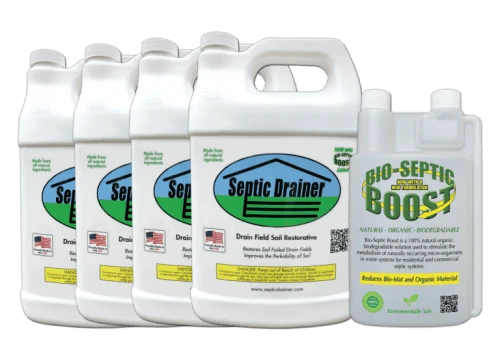
Bio-Septic Boost, a nutrient derived from kelp, enhances bacterial activity by up to 50 percent. Combined with Septic Drainer, it opens clogged soil and encourages aerobic bacterial growth to consume the bio-mat. This process strengthens the soil’s absorption capability and extends the life of the drain field.
Soil Compaction and System Impact
Soil compaction occurs beneath drain field pipes as a result of prolonged system strain, sodium layers, and bio-mat buildup. Compacted soil inhibits water movement, which can lead to slower drainage, wet patches, and foul odors. Septic systems fail when the combination of hard pan soil, bio-mat, and organic overload overwhelms their natural processing abilities.
Effective leach field treatment restores soil permeability, allowing the system to resume normal wastewater absorption and prevent secondary damage to surrounding areas. RCS II, Inc.'s approach ensures that soil beneath the trenches remains open and functional without the need for excavation or pipe replacement.
Using Leach Field Treatment Solutions
Septic Drainer serves as a core solution for restoring leach fields and preventing 90 percent of septic problems. It opens compacted soil, restores airflow, and balances microbial activity. Paired with Bio-Septic Boost, these products support aerobic bacteria to consume bio-mat and maintain long-term system health. Kits are available for various soil types, including clay, sandy loam, and gravel, and include complete instructions for homeowners, contractors, and septic professionals. Proper use of these treatments ensures your leach field continues to absorb wastewater effectively while reducing the likelihood of system failure.
Drain Field Repair Near You: Choosing Services
When problems persist, locating a reliable drain field repair near you is crucial. Professional services evaluate the system, identify sources of blockage, and implement solutions such as soil conditioning, bacterial treatment, or trench restoration. Combining local repair expertise with scientifically engineered products like Septic Drainer and Bio-Septic Boost delivers measurable improvements in soil permeability. Choosing a qualified provider ensures that maintenance, restoration, and preventive measures align with the specific conditions of your property, extending the life of the system and reducing recurring issues.
Ongoing Maintenance and Prevention
Ongoing maintenance is essential to prevent costly septic failures. Using a one-year supply of Septic Drainer and Bio-Septic Boost maintains soil permeability, supports aerobic bacterial activity, and prevents bio-mat accumulation. Regular application every six months can mitigate the effects of sodium buildup, organic overloading, and hard pan formation. Preventive maintenance eliminates foul odors, wet spots, and slow drainage issues while preserving the efficiency of your drain field. Homeowners benefit from clear instructions and consistent results, reducing the need for frequent interventions or major repairs.
Conclusion
Understanding leach field treatment options helps homeowners maintain a strong and reliable septic system. Addressing sodium buildup, bio-mat accumulation, and hard pan soil ensures effective wastewater absorption while minimizing system strain. Utilizing products such as Septic Drainer and Bio-Septic Boost alongside professional drain field repair services creates a proactive approach to septic system health. RCS II, Inc. offers solutions that restore and maintain leach field functionality, preventing failure, reducing repair costs, and improving the overall lifespan of your septic system.
Frequently Asked Questions
Q. What is leach field treatment, and why is it important?
Leach field treatment restores soil permeability, supports bacterial activity, and maintains wastewater absorption to prevent system failure and reduce odors or pooling.
Q. How often should I perform leach field treatment?
Routine maintenance every six months with products like Septic Drainer and Bio-Septic Boost helps maintain soil permeability and prevent bio-mat buildup.
Q. Can sodium buildup affect my leach field?
Yes, sodium binds with soil particles, forming hard pan layers that restrict drainage and can lead to system strain over time.
Q. What is bio-mat, and how is it removed?
Bio-mat is a bacterial layer that accumulates above the hardpan soil. Using aerobic bacteria and soil conditioners like Septic Drainer can break it down.
Q. When should I contact a drain field repair near me?
If your system shows wet spots, foul odors, or slow drainage, contacting a local professional ensures proper assessment and timely intervention.
Q. Are these leach field treatment solutions safe for all soil types?
Yes, products are formulated for clay, sandy loam, and gravel soils and are safe for household septic systems when used as directed.
Q. How does ongoing maintenance prevent septic failures?
Regular application of soil conditioners and bio-stimulants prevents hard pan formation, maintains aerobic bacterial activity, and reduces the risk of system failure.
Visit us : https://maps.app.goo.gl/wGtYMpP9u9piDgHq7