
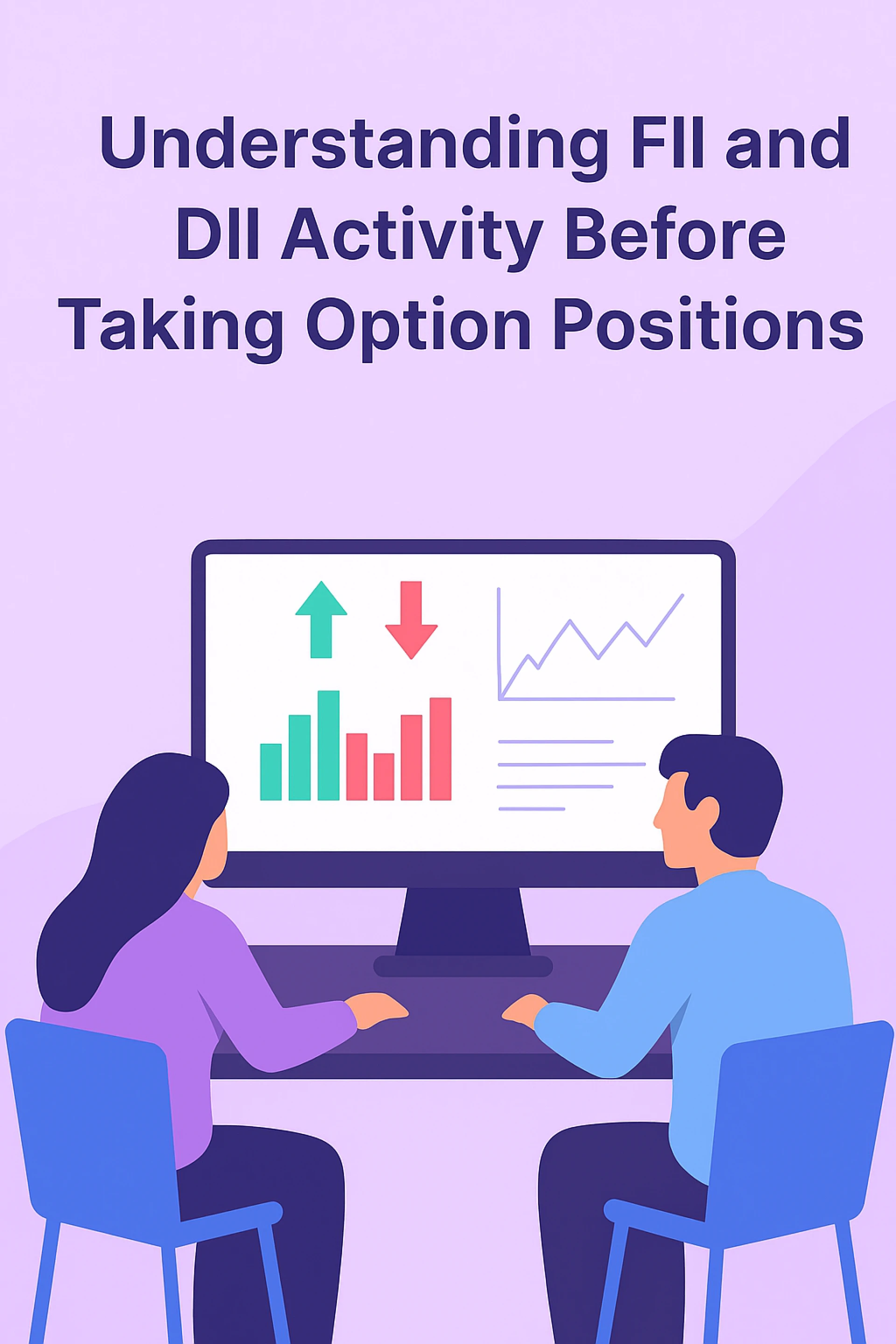
In the world of stock option tips, one key factor that often influences short-term and intraday movements is the trading activity of Foreign Institutional Investors (FII) and Domestic Institutional Investors (DII). For traders, especially those involved in option trading, understanding how these large players move money in and out of the market can provide valuable insights before entering a position.
1. Who Are FIIs and DIIs?
FIIs are foreign investors who bring global capital into Indian markets, while DIIs include domestic institutions like mutual funds and insurance companies. Their combined buying and selling activities often reflect market sentiment — whether it’s turning bullish or bearish. Monitoring their daily reports helps traders gauge potential market direction before applying any stock option trading tips.
2. Why Their Activity Matters in Option Trading
When FIIs buy heavily, it indicates confidence in the market, often leading to upward momentum. Conversely, when they sell aggressively, it may signal weakness. Option trading tips for beginners often suggest aligning positions with institutional flow—going long on calls during strong inflows or considering puts when heavy outflows occur.
3. Using FII-DII Data for Intraday Insights
Daily FII-DII data, available through NSE reports, provides clues about short-term trends. A simple observation—such as consistent FII buying—can help intraday traders plan their option trading for part-time traders strategies more effectively. However, traders should also consider volume, open interest, and volatility data before taking a position.
4. Combining FII-DII Analysis with Technical Indicators
While institutional activity shows sentiment, combining it with technical analysis strengthens decisions. For instance, if FIIs are net buyers and the market shows bullish chart patterns, traders may use stock option tips and recommendations that align with upward movement. On the other hand, mixed data calls for caution and smaller exposure.
5. Limitations of Relying Solely on Institutional Data
FII and DII data should not be the only basis for trading decisions. Their actions might represent portfolio adjustments rather than directional bets. Hence, understanding broader global trends, upcoming events, and volatility indices is equally crucial.
Final Thoughts
In conclusion, monitoring FII and DII activities helps traders make informed choices in stock option tips. These insights serve as a foundation to interpret market sentiment, but the best results come when combined with technical setups and risk management. Platforms like The Trade Bond aim to educate traders on developing disciplined approaches rather than chasing trades based solely on data spikes.