
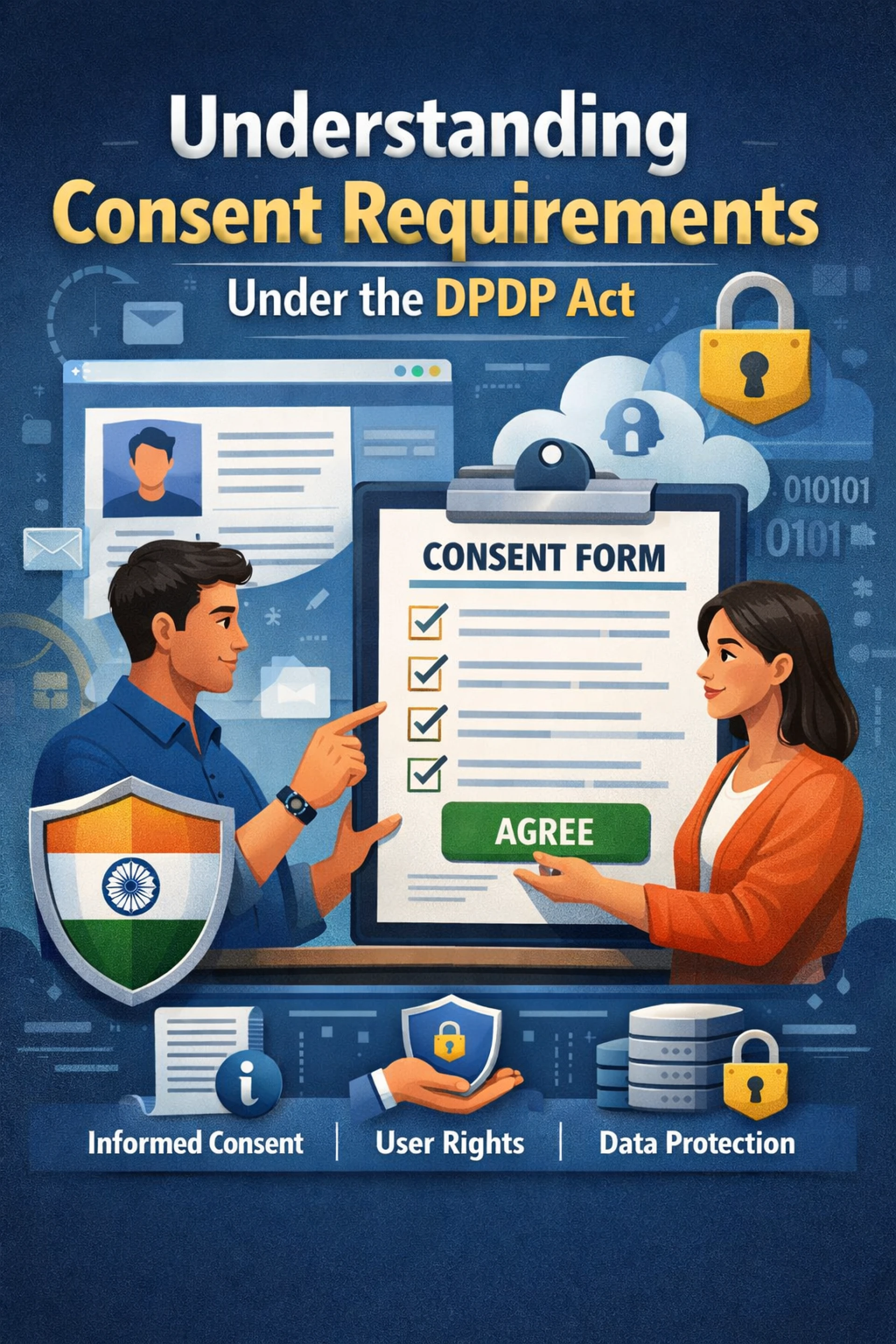
The Digital Personal Data Protection (DPDP) Act focuses on individuals' rights. It establishes an accountability structure for how companies will collect and process personal information of individuals in India. As organisations continue to transform their businesses digitally, leaders must consider how to position consent at the heart of lawful data handling, especially when dealing with children, where parental consent must be obtained. Consent will determine whether and how an organisation is compliant or exposed. Clear, informed, and verifiable consent will determine whether an organisation remains in compliance or faces liability.
What Consent Means Under the DPDP Act
Consent is defined as “the clear and explicit communication of a user’s approval (for proceeding with the processing of their personal data) after being provided with all the necessary information regarding the purpose of processing”.
Enterprises will be required to provide:
- A clear and precise explanation of the purpose for which personal data will be processed.
- The ability to withdraw consent with ease.
- The removal of any dark patterns, nudges, or deceptive interfaces that could affect an individual’s decision-making process.
- The request for consent must be written in plain language.
Organisations must obtain verifiable parental consent to process the personal data of minors.
Types of Consent You Must Manage
The DPDP Act covers two main types of explicit consent:
1. Explicit Consent (User gives explicit permission in response to an explicit request after they have had a chance to review the request in full). This would be relevant for sensitive processing or high-risk processing.
2. Obtaining Consent from the Parent for the Processing of Child Data (per the DPDP): The child data cannot be processed without prior proof of the parent signing for the child or determination of the legal guardian.
Compliance Tips for Enterprises
The following compliance tips can help companies implement DPDP-compliant consent management systems:
- Create a unified consent management process for all application, device & platform types.
- Automate workflows that validate the parent is giving consent.
- Allow parents to change their minds and revoke consent with ease.
- Maintain records for audit or compliance purposes.
- Implement zero trust as a form of data processing control.
- Use AI-based Data Privacy Solutions (such as Seqrite) for policy enforcement, risk assessment and data privacy compliance.
Conclusion and Call to Action:
Building a strong consent governance program develops confidence, minimises regulatory liabilities and creates a strong foundation for privacy. With India beginning its new era of data protection legislation, it’s time to upgrade your compliance system.
Contact one of our solution specialists today to deploy enterprise-grade, DPDP-compliant data protection and security measures.