The Seconds That Are Costing You Your Audience
Imagine hosting a live concert, a Q&A session, or an exclusive performance — and your audience is watching everything seven seconds behind reality.
They ask a question in the chat. You answer it. But by the time your response reaches them, the moment has already passed. The connection feels hollow. The magic disappears.
This is the hidden cost of high latency streaming — and in 2026, audiences have zero patience for it. The bar has been raised, and creators who have not upgraded their technical setup are quietly losing viewers to those who have.
The good news? The technology to fix this is no longer reserved for big broadcasters with enterprise budgets. It is accessible, affordable, and increasingly essential for anyone serious about live content.
Understanding Why Latency Matters So Much in Live Streaming
Latency in streaming refers to the delay between what happens in front of your camera and what your audience actually sees on their screen.
Standard streaming protocols have traditionally carried delays anywhere from 15 to 45 seconds. For pre-recorded content, that is completely irrelevant. But for live content — where real-time interaction is the entire point — that delay is devastating.
Ultra low latency video streaming reduces that gap to under two seconds, sometimes even sub-second delivery depending on the protocol and infrastructure being used. The result is a live experience that genuinely feels live — interactive, spontaneous, and human.
Where Low Latency Makes the Biggest Difference
Not every streaming use case is equally sensitive to delay. But these scenarios demand it without compromise:
- Live music performances where audience reactions, song requests, and real-time energy exchange matter deeply
- Sports broadcasts where scores, plays, and commentary need to reach viewers in real time
- Interactive webinars and virtual events where presenter-audience dialogue drives the entire value
- Live auctions and commerce streams where split-second decisions determine whether a sale happens
In each of these situations, lag does not just reduce quality — it fundamentally breaks the experience.
The Music Industry Is Leading the Live Streaming Shift
Of all the creative industries embracing live streaming in 2026, the music world is arguably moving the fastest — and the most intelligently.
Independent musicians, bands, and music educators have discovered something powerful: their most loyal fans do not just want to watch. They want to be part of something exclusive.
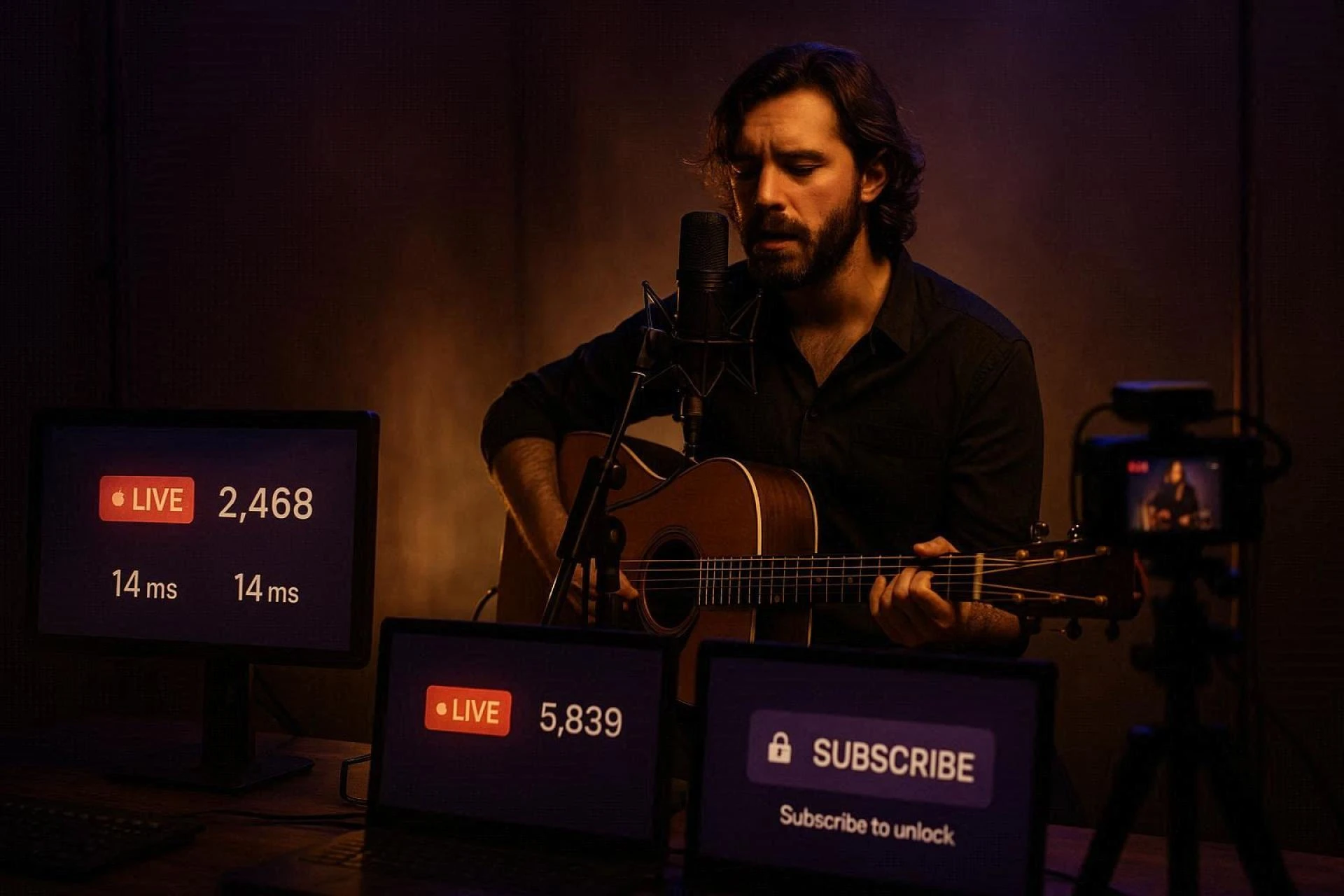
This is exactly where music live streaming with paywall has become a genuine game-changer. Rather than broadcasting free performances to a passive audience and hoping for tips or merchandise sales, artists are creating structured, ticketed live experiences that fans actively invest in.
Why Paywalled Music Streams Work So Well
The psychology behind it is straightforward. When someone pays to attend a live stream — even a small amount — their level of engagement increases dramatically. They show up on time. They stay for the full performance. They participate in chat. They come back for the next one.
Compare that to a free stream where viewers drop in and out casually, and the difference in audience quality becomes obvious very quickly.
What Smart Musicians Are Offering Behind the Paywall
The most successful paywalled music streams in 2026 are not just performances — they are experiences. Artists are packaging their live streams with:
- Exclusive setlists performed only for paying members
- Behind-the-scenes pre-show access that free viewers never see
- Direct artist interaction through dedicated chat or live Q&A segments
- Digital downloads or early releases bundled into the ticket price
- Tiered membership options that reward the most loyal fans with premium perks
When low latency streaming powers these experiences, the interaction feels genuine and immediate — which is exactly what turns a one-time viewer into a long-term paying fan.
Latency and Monetization Work Together — Not Separately
Here is a perspective that does not get discussed enough.
Low latency streaming and paywall monetization are not two separate decisions. They are deeply connected. When you charge your audience for access to a live experience, their expectations rise significantly. They are paying for quality — and that includes the technical quality of the stream itself.
A paywalled music concert that buffers constantly or runs eight seconds behind real time does not just disappoint viewers. It generates refund requests and destroys trust in your brand.
Getting the latency right is what makes your paid offering genuinely worth the price. The technical investment directly protects and enhances your monetization strategy.
What to Look for in a Low Latency Streaming Platform
As you evaluate your options heading into 2026, here are the technical and business features that actually matter:
- Sub-two-second latency with WebRTC or similar modern protocols
- Adaptive bitrate delivery that maintains quality across varying internet speeds
- Built-in paywall and access control tools without needing third-party integrations
- Scalable infrastructure that handles audience spikes without performance drops
- Analytics and viewer engagement data to help you improve every stream
Final Thoughts
The live streaming space in 2026 is competitive, fast-moving, and full of opportunity for creators who take it seriously.
Whether you are a musician building a global fan community, an educator running premium live workshops, or a sports broadcaster delivering real-time action — the technical foundation matters as much as the content itself.
Invest in ultra low latency infrastructure. Build a paywall around your most valuable live experiences. And create the kind of real-time connection that keeps your audience coming back — not because they have to, but because nothing else comes close.