India's logistics sector is changing fast. Manufacturing is expanding, e-commerce reaches smaller towns every year, and large infrastructure and renewable-energy projects are moving ahead across the country. Behind each of these is a logistics network that gets goods from where they are made to where they are needed, safely and on schedule.
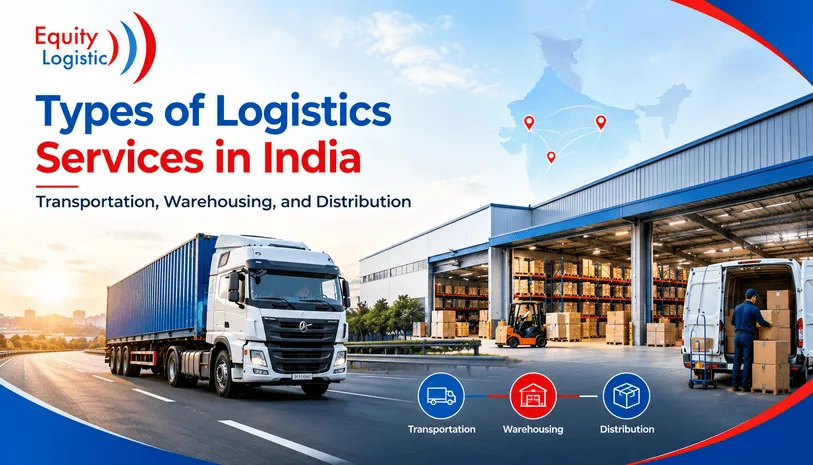
Whether you run a small manufacturing unit or manage a large EPC project, knowing the main types of logistics services in India helps you plan better, control costs and avoid delays. This guide covers the three pillars of logistics (transportation, warehousing and distribution), the specialised services built around them, and how to choose a reliable partner.
What Are Logistics Services?
Logistics services cover the planning, movement, storage and delivery of goods from the point of origin to the point of consumption. They include transport, packaging, handling, storage, inventory management, documentation and delivery. Good logistics keeps the right product in the right place at the right time without unnecessary cost.
In India this is harder than in many countries. The geography ranges from deserts and plains to high mountains and remote islands. Road conditions, permit requirements and weather change from state to state. This is why many businesses work with an experienced logistics company in India instead of managing every step themselves.
1. Transportation Services
Transportation is the backbone of logistics and usually the largest part of the cost. In India, cargo moves by road, rail, sea and air, and the right mode depends on the type of cargo, the distance, the budget and the deadline.
Road Transportation
Road transport carries most of India's domestic freight, and for good reason. It offers door-to-door delivery, flexible schedules and access to locations that rail and sea cannot reach. Options include:
- Full truck load (FTL): The whole vehicle is dedicated to one shipper. This suits large consignments and time-sensitive cargo.
- Part truck load (PTL) or less than truck load (LTL): Several shippers share one vehicle, which lowers cost for smaller consignments.
- Contract carriage: Dedicated vehicles are committed to a business on a long-term basis.
Businesses that want a dependable network for regular shipments can look at domestic transport services, which cover movement across states and regions. For nationwide industrial movement with tracking and a single point of responsibility, a transporter in India with a pan-India reach is the practical choice.
Rail Transportation
Rail is cost-effective for bulk commodities and long distances. Coal, cement, steel, food grains and containerised cargo all move by rail regularly. The limitation is that rail usually needs road transport at both ends, so it works best as part of a multimodal plan.
Sea Transportation
For coastal movement and island destinations, sea freight is often the only practical option, and it is economical for heavy cargo over long distances. Combining sea and road legs takes careful coordination of port handling, customs and onward delivery. You can read more about sea transportation and how it fits into a larger movement plan.
Air Freight
Air cargo is the fastest mode and is used for high-value, perishable or urgent goods. It costs more per kilogram, so it is usually reserved for shipments where speed matters more than price.
Heavy and Over-Dimension Cargo (ODC) Transportation
Not every cargo fits a standard truck. Transformers, turbines, industrial machinery, fabricated structures and large plant components often exceed normal size and weight limits. Moving them is a specialised job that involves:
- Route surveys to check bridges, turns, overhead clearances and road strength
- Permits and police or highway authority approvals
- Escort vehicles and movement windows
- Specialised multi-axle or hydraulic trailers
- Careful lashing, lifting and offloading
A mistake with oversized cargo can mean damaged equipment, blocked highways and heavy financial loss. That is why heavy cargo transportation needs engineering-led planning and not just a vehicle. If you are moving cargo of this kind, learn more about over-dimension consignments and how route surveys, permits and trailers are planned.
2. Warehousing Services
If transportation moves goods, warehousing holds them in the right place until they are needed. Modern warehousing is no longer just a storage space. It is an active part of the supply chain that supports inventory control, consolidation and order fulfilment.
Types of Warehousing
- Private warehouses: Owned and operated by a business for its own goods.
- Public warehouses: Space rented to multiple businesses, which gives flexibility without large capital investment.
- Bonded warehouses: Used for imported goods stored before customs duty is paid.
- Cold storage: Temperature-controlled facilities for pharmaceuticals, food and other perishables.
- Distribution centres: Facilities built for fast sorting and dispatch of goods.
What Good Warehousing Offers
A reliable warehouse partner provides secure storage, accurate inventory records, safe handling, consolidation of multiple consignments and phased release of goods. For project-based businesses, this is especially valuable. Materials often arrive from several suppliers at different times, but the site may need them in a specific sequence. Staging them in a warehouse and releasing them as the schedule requires avoids congestion at the site and reduces the risk of damage or theft.
To see how storage can be aligned with project schedules, explore warehousing services in India.
Benefits of Professional Warehousing
- Lower storage risk through secure facilities
- Better inventory visibility and fewer stock errors
- Flexibility to scale space up or down with demand
- Smoother coordination between suppliers, transport and delivery
- Reduced pressure on your own premises and manpower
3. Distribution Services
Distribution is the final and most customer-facing stage. It connects warehouses to dealers, retailers, project sites and end customers. Done well, it protects both your brand and your delivery timelines.
Primary and Secondary Distribution
- Primary distribution moves goods in bulk from factories or ports to warehouses and distribution hubs.
- Secondary distribution moves goods from those hubs to retailers, dealers and customers in smaller lots.
Last-Mile Delivery
The last mile is the final leg to the customer's door or project site, and it is often the most complicated and expensive. In India it can involve narrow lanes, remote villages or difficult terrain. A strong distribution network plans for this early, with the right vehicle size, delivery windows and handover documentation.
Pan-India Distribution
Companies selling nationwide need coverage that goes beyond metro cities. A pan-India logistics network gives consistent service across regions, which matters when delivery standards must stay the same from Delhi to the north-east.
Distribution to Difficult Destinations
Some of the most demanding deliveries in the country are to remote and logistically challenging regions. These include:
- Leh and Ladakh, where high altitude, narrow mountain roads and seasonal closures need careful planning
- Andaman and Nicobar Islands, which depend on combined sea and road movement
- Lakshadweep, where island logistics demands specialised coordination
Reaching these places takes planning, the right partners and experience, which most generalist carriers do not have.
Specialised Logistics Services in India
Beyond the three pillars, several specialised services have become essential as industries grow more complex.
Project Logistics
Large projects such as power plants, infrastructure builds and industrial installations involve many consignments arriving from different origins over several months. Project logistics sequences all of these movements around milestones and site readiness so that nothing arrives too early or too late. Learn more about project handling and how a full programme can be coordinated from origin to site.
Special Cargo Handling
Fragile, high-value and technically sensitive cargo needs controlled movement, specialised packing and careful supervision. Examples include sensitive electronics, defence-related equipment and precision machinery. Read about special cargo handling for more detail.
Solar Module Transportation
India's renewable-energy growth has created strong demand for safe solar logistics. Panels are fragile and valuable, and they must reach project sites on a strict schedule. Protected, insured and schedule-matched transport matters here, and you can explore solar module transportation to understand the requirements.
Telecom and Hydro Power Logistics
Telecom towers and hydro power equipment are often large, heavy and headed for remote locations. Dedicated services such as telecom tower transportation and hydro power project transportation address the specific route, equipment and handling needs of these sectors.
How to Choose the Right Logistics Partner in India
With so many options, choosing a partner can feel overwhelming. These factors help narrow it down:
- Match the service to the cargo. A provider that is excellent at parcel delivery may not be right for a 60-tonne transformer. Look for proven experience with your type of cargo.
- Check certifications and quality processes. Standards such as ISO 9001:2015 indicate disciplined, documented processes.
- Look for end-to-end accountability. When one team owns planning, transport, permits and delivery, there are fewer handover gaps and fewer disputes.
- Confirm tracking and visibility. GPS tracking and regular updates let you plan the next step with confidence.
- Ask about insurance and documentation. Transit insurance, condition reports and clean delivery records protect you if something goes wrong.
- Evaluate network reach. If you ship to remote or difficult regions, confirm the provider has actually delivered there before.
- Look beyond price. The cheapest quote can become the most expensive once delays, damage and rework are counted.
Read full original blog here- https://www.equitylogistic.com/blogs/details/types-of-logistics-services-in-india/