
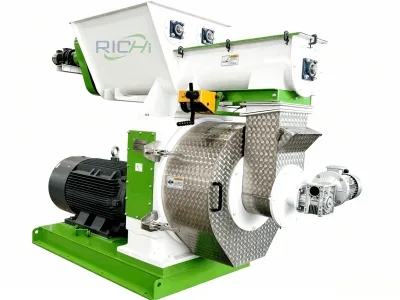
Waste paper is generated by printing facilities, packaging manufacturers, offices, and recycling centers. Much of this material can be reused, but paper that is difficult to recycle through conventional channels may also offer an opportunity for fuel production. With suitable preparation and processing, selected paper waste can be compressed into solid pellets for applications that accept this type of fuel.
For businesses considering this approach, a paper pellet machine for sale is only one part of the investment. Raw material condition, contamination, moisture, production capacity, and the intended use of the finished pellets all influence the equipment configuration.
Evaluate the Waste Paper Before Processing
Not all waste paper behaves the same during pellet production. Office paper, cardboard, newspaper, paper packaging, and production offcuts can differ in fiber structure, density, coatings, and moisture content.
Start by sorting the available materials. Remove plastic films, metal pieces, stones, and other unwanted contaminants. Paper with heavy coatings, chemical residues, or unknown composition should be assessed carefully before it enters the production process.
It is also important to check whether the material contains enough natural binding properties to form durable pellets. Different paper mixtures may require different particle sizes, moisture levels, and compression conditions.
A raw material test can help answer several practical questions:
- Can the paper be processed consistently?
- Does it require shredding or additional size reduction?
- Is drying necessary?
- What pellet diameter and density are suitable?
- Will the finished product meet the requirements of its intended application?
These checks help establish a realistic production plan instead of relying on assumptions about the raw material.
Understand the Main Processing Stages
A typical waste paper pellet process includes several stages. The exact configuration depends on the material and the required output.
1. Sorting and cleaning
Remove non-paper materials and separate different paper grades where necessary. Better sorting helps protect downstream machinery and improves finished-product consistency.
2. Shredding and size reduction
Large cardboard pieces, paper sheets, and packaging scraps need to be reduced to a more manageable size. A shredder or crusher can prepare the material for subsequent processing. The required particle size depends on the pellet mill and the paper's physical characteristics.
3. Moisture adjustment
Paper that is too wet may cause unstable feeding and poor pellet formation. Material that is too dry may also be difficult to compress, depending on its fiber composition. Moisture should therefore be tested and adjusted according to trial results.
4. Pelletizing
The prepared material enters the pelletizing section, where pressure forces it through die openings to form cylindrical pellets. Die specifications, compression conditions, and feeding stability all influence output and pellet quality.
5. Cooling and screening
Fresh pellets may be warm and relatively soft. Cooling allows them to stabilize before handling and packaging. Screening can remove excessive fines and return suitable material for reprocessing.
Select Equipment According to Material and Capacity
When comparing a wood chip pellet machine for sale, buyers can learn about common pelletizing equipment configurations used for biomass materials. However, paper waste has its own processing characteristics. The final equipment choice should be confirmed through material testing rather than assuming that a machine designed for wood will automatically deliver the required results with every paper mixture.
Capacity is another important consideration. A small recycling workshop may need a relatively simple system, while a commercial plant handling large volumes of paper waste may require automated feeding, continuous size reduction, drying, conveying, and centralized control.
The production target should be based on the amount of usable paper available each day, expected operating hours, and the actual output achieved during testing. It is better to choose a balanced line than to install a high-capacity pellet mill that cannot receive enough consistently prepared material.
Consider Storage, Handling, and End Use
Pellet quality does not end at the production outlet. Storage and transportation can affect the finished product, especially if pellets contain excessive moisture or lack sufficient durability.
Allow finished pellets to cool before packing. Keep them in a dry storage area and protect them from moisture during transportation. Packaging should suit the expected storage period and delivery method.
The intended fuel application must also be considered. Buyers should confirm that the pellets meet the receiving facility's requirements for heating value, moisture, ash, dimensions, and emissions. Paper composition can vary significantly, so environmental and regulatory requirements should be checked before commercial production.
Plan a Practical Recycling Project
A reliable paper pellet project starts with a clear understanding of the available waste paper and its potential market. Test representative samples, define the required output, and then select the shredding, drying, pelletizing, and cooling equipment accordingly.
An experienced manufacturer such as richimanufacture pellet equipment supplier can help assess raw materials, arrange equipment combinations, and plan the production layout. Ask for a process proposal that explains the equipment capacity, power requirements, material flow, and installation conditions.
Before making a final investment, request a trial using your actual paper waste. This provides a more dependable basis for evaluating pellet formation, output, and finished-product quality. To explore additional equipment information and project solutions, see this website.