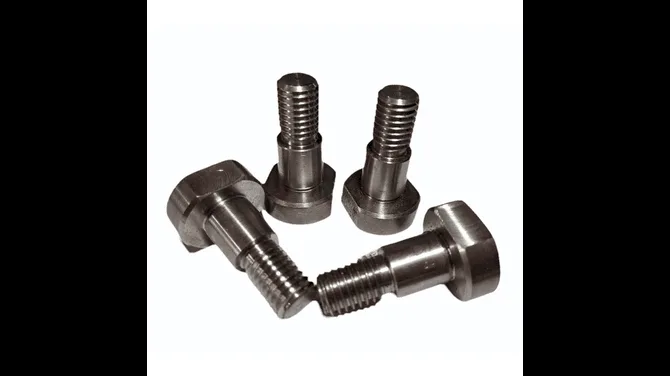
Fasteners are small components, but they play an important role in many machines, structures, and industrial products. They help join different parts securely and keep assemblies stable during operation.
Turned Fasteners are a special type of precision fastener made by machining metal on a turning machine. They are used when a component needs accurate dimensions, a specific shape, and a reliable fit.
They are commonly used in industries such as automotive, engineering, construction, machinery, electrical equipment, and manufacturing.
What Are Turned Fasteners?
Turned Fasteners are fastener components manufactured using a turning or CNC turning process.
During manufacturing, a metal bar or rod is placed in a turning machine. The material rotates while cutting tools remove small amounts of metal to create the required shape and dimensions.
Depending on the design, turned fasteners can include threaded sections, grooves, shoulders, holes, flats, or other machined features.
They are generally made when standard fasteners are not suitable for a particular application or when higher dimensional accuracy is required.
How Are Turned Fasteners Made?
The manufacturing process starts with selecting a suitable metal material according to the application.
Common steps include:
- Material Selection – A suitable metal bar or rod is selected.
- Cutting – The raw material is cut to the required length.
- Turning – The material is machined to achieve the required diameter and shape.
- Threading – Internal or external threads can be produced when required.
- Drilling or Grooving – Additional holes, grooves, or features are machined.
- Finishing – The component may be cleaned, polished, or surface-treated.
- Inspection – Dimensions and other requirements are checked before dispatch.
CNC turning machines can produce components with consistent dimensions, which is important when many identical parts are required.
Materials Used for Turned Fasteners
The material depends on the application, required strength, corrosion resistance, temperature, and environment.
Common materials include:
Stainless Steel
Stainless steel is widely used when corrosion resistance is important. Stainless steel turned fasteners are common in machinery, food-processing equipment, chemical equipment, and outdoor applications.
Carbon Steel
Carbon steel is often selected for applications that require good strength and economical production.
Alloy Steel
Alloy steel can be used when higher strength and mechanical performance are required.
Brass
Brass is useful for applications where good machinability, corrosion resistance, and electrical properties are required.
Aluminium
Aluminium is lightweight and can be used where reducing component weight is important.
Copper
Copper turned components can be used in electrical and specialized industrial applications where electrical conductivity is important.
Types of Turned Fasteners
Turned fasteners can be produced in many shapes according to the customer's drawing or application.
Some common examples include:
- Turned bolts
- Turned screws
- Turned studs
- Turned nuts
- Precision pins
- Special threaded components
- Shoulder fasteners
- Custom machined fasteners
- Special washers
- Spacers and bushes
The exact design depends on the equipment and assembly requirements.
Features of Turned Fasteners
Precise Dimensions
Turning allows manufacturers to produce components with controlled dimensions and tolerances.
Custom Designs
Turned fasteners can be manufactured according to specific drawings rather than only standard sizes.
Consistent Production
CNC machining can provide consistent results when producing large quantities of the same component.
Different Materials
Turned components can be made from different metals depending on the required properties.
Complex Shapes
Machining allows manufacturers to produce shapes and features that may not be practical with standard fasteners.
Applications of Turned Fasteners
Turned Fasteners are used in many industries because they can be manufactured for specific assembly requirements.
Automotive Industry
Automotive components often require fasteners with accurate dimensions and reliable performance.
Turned fasteners may be used in:
- Engine components
- Transmission systems
- Braking components
- Suspension systems
- Steering assemblies
- Automotive machinery
Engineering and Machinery
Industrial machines contain many components that need to be securely joined and accurately positioned.
Turned fasteners can be used in machine assemblies, equipment frames, shafts, housings, and other components.
Electrical Industry
Small precision components are often needed in electrical equipment and assemblies.
Depending on the material, turned fasteners can be used in electrical panels, equipment, connectors, and specialized components.
Construction Equipment
Heavy equipment used in construction requires strong and reliable fastening components.
Turned fasteners can be used in machinery and equipment where standard fasteners may not meet the required dimensions.
Manufacturing Industry
Manufacturing equipment often requires custom parts that match a specific machine design.
Turned fasteners can be produced according to technical drawings and production requirements.
Benefits of Turned Fasteners
High Dimensional Accuracy
One of the main benefits of turned fasteners is the ability to produce accurate dimensions. This helps components fit properly during assembly.
Suitable for Custom Applications
Manufacturers can produce fasteners with special dimensions, thread sizes, lengths, and shapes.
Good Repeatability
CNC turning can produce large quantities of similar components with consistent dimensions.
Reduced Assembly Problems
Accurate components can help reduce fitting problems during assembly.
Wide Material Choice
Different metals can be selected according to strength, corrosion resistance, weight, and other requirements.
Suitable for Small and Large Production Runs
Depending on the design and manufacturing process, turned fasteners can be produced in prototypes, small batches, or larger quantities.
Turned Fasteners vs. Standard Fasteners
Standard fasteners are manufactured according to commonly used dimensions and specifications. They are suitable for many general applications.
Turned fasteners are more useful when a component needs a special shape or tighter dimensional control.
FeatureStandard FastenersTurned FastenersDesignStandard sizesStandard or customManufacturingStandard production methodsTurning/CNC machiningCustom dimensionsLimitedHigh flexibilityComplex featuresLimitedPossibleDimensional controlDepends on standardCan be closely controlledTypical useGeneral assemblyPrecision and special applications
The right choice depends on the application and required specifications.
What Should You Consider When Buying Turned Fasteners?
Before ordering turned fasteners, several details should be clearly defined.
Material
Choose a material based on strength, corrosion resistance, temperature, weight, and working environment.
Dimensions
Provide accurate information about diameter, length, thread size, and other important dimensions.
Tolerance
If the component needs to fit precisely with another part, the required tolerances should be clearly specified.
Thread Type
For threaded components, specify the thread standard, pitch, size, and whether the thread is internal or external.
Surface Finish
Some applications require a specific surface finish or treatment.
Quantity
Production quantity can affect the most suitable manufacturing method and overall cost.
Drawing or Sample
For custom turned fasteners, a technical drawing or sample can help the manufacturer understand the exact requirements.
Surface Finishes for Turned Fasteners
Depending on the material and application, turned fasteners may receive additional surface treatments.
Common options include:
- Zinc plating
- Nickel plating
- Passivation
- Black oxide
- Polishing
- Electroplating
- Other protective coatings
The correct finish depends on the material, operating environment, and required corrosion protection.
Why Quality Matters
A turned fastener may be small, but an incorrectly manufactured component can affect the performance of a complete assembly.
Poor dimensions, incorrect threads, unsuitable material, or surface defects can create fitting and performance problems.
For this reason, manufacturers should check important dimensions and specifications during production. Quality inspection is particularly important for components used in safety-critical or high-performance applications.
Conclusion
Turned Fasteners are precision-machined components made using turning or CNC turning processes. They are useful when an application requires accurate dimensions, custom shapes, special threads, or specific machining features.
They can be manufactured from stainless steel, carbon steel, alloy steel, brass, aluminium, copper, and other suitable materials.
Turned Fasteners are used in automotive, engineering, machinery, electrical, construction equipment, and manufacturing applications.
For more details contact us-
[email protected]
Phone-+91-7977945282
Website-https://www.rajgranthfasteners.com/turned-fasteners-manufacturers-suppliers-exporters-stockists.html