Picture this, you're cruising down the highway, music just right, and then it happens. A clunk so loud it makes your stomach drop. Or maybe it's more subtle: a slow pull to the right you've been quietly correcting for so long it almost feels normal.
A buddy once spent $1,400 fixing damage that started as a $90 bushing. He ignored the squeak for four months. That's the suspension tax and almost every truck owner pays it eventually. It works so silently when healthy that people forget it exists. Until it doesn't. And by then, a simple fix has snowballed into something far more expensive.
Whether you haul equipment daily, hit trails on weekends, or just need a reliable driver, understanding your suspension is genuinely worth your time. Knowing when to handle things yourself and when to hand it off for proper truck suspension service? That's the difference between smart ownership and an avoidable repair bill.
Why Your Suspension Deserves More Respect
Most people treat suspension like a comfort feature. That's selling it short.
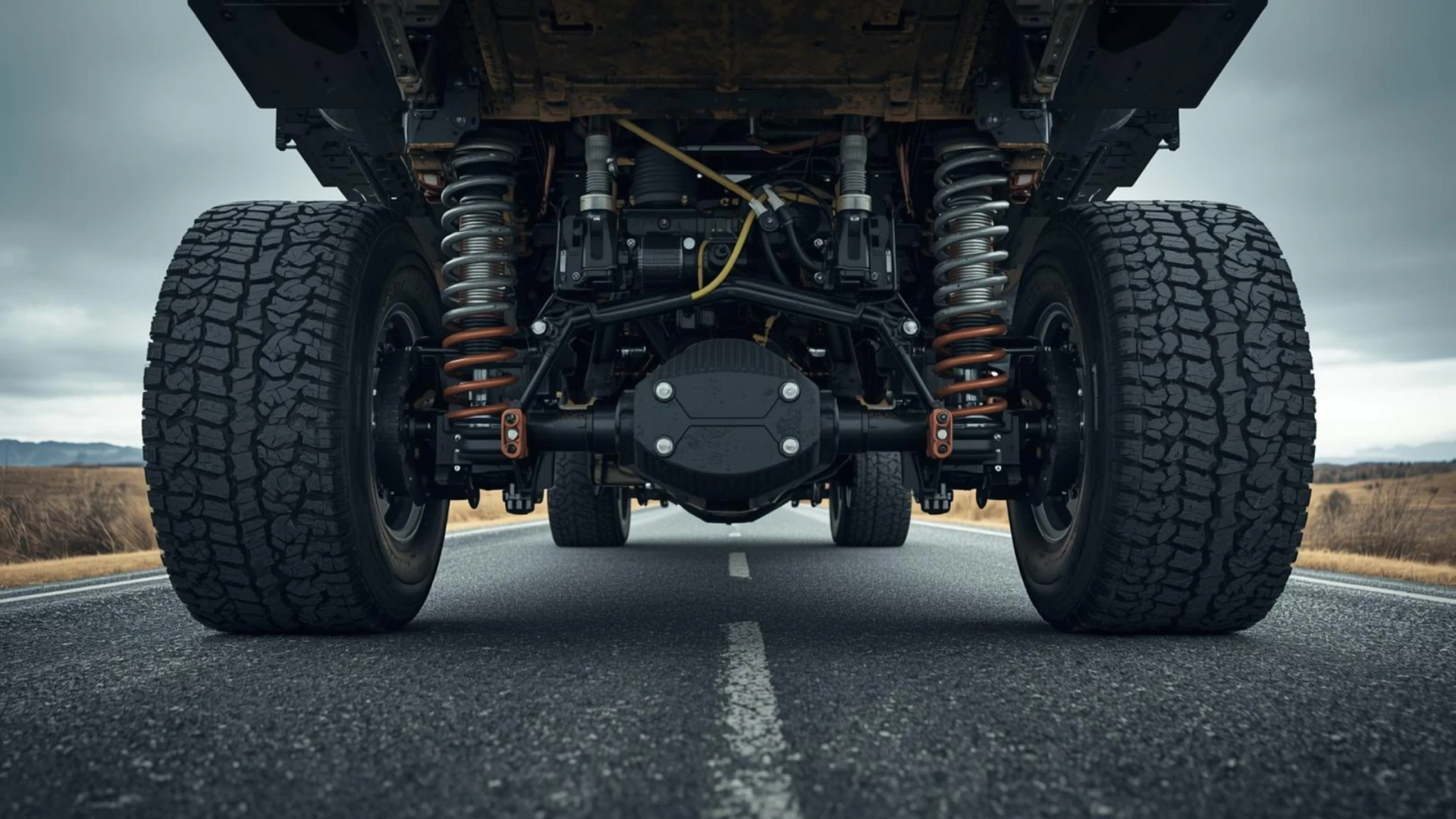
The suspension system keeps tires glued to the road during hard braking, distributes weight so corners feel predictable, and absorbs road energy that would otherwise rattle every bolt in the cab loose. Take any one of those jobs away and the whole truck suffers.
What makes suspension problems sneaky is how gradually they develop. A worn bushing here, a leaking shock there; nothing feels catastrophic at first. But left alone, those small issues start affecting tires, then brakes, then steering. Routine suspension system service is what breaks that chain before it turns expensive.
5 Signs Your Suspension Is Trying to Tell You Something
- Bouncing that won't quit — Still rocking a few seconds after a bump? Your shocks are losing the fight against your springs.
- Uneven tire wear — Cupped spots, bald patches on one side, or scalloped tread mean the suspension isn't holding tires flat against the road.
- The truck pulls to one side — If you're making constant subtle corrections on a straight road, that's a symptom, not a quirk.
- Strange noises underneath — Clunks mean worn ball joints. Squeaks point to dry bushings. Rattles mean something's come loose. None of these are sounds to turn the music up over.
- A corner sitting lower than the others — Park on flat ground and walk around. A visibly sagging corner means a spring is likely fatigued or broken.
Every one of these gets worse and pricier with time.
The Maintenance Nobody Does
Suspension maintenance isn't complicated. It just requires consistency instead of waiting for something to fail on the side of the road.
- Wash the undercarriage
Mud and road salt actively eat through bushings and metal components. A ten-minute pressure wash after muddy runs or winter driving adds months of life to suspension parts.
- Grease the joints
Many suspension joints have grease fittings,use them. Polyurethane bushings specifically need silicone-based grease to stay quiet and last. Rubber bushings need nothing; petroleum products actually break them down faster.
- Keep a simple inspection rhythm
Monthly visual checks for leaks and cracks, a quick undercarriage scan every oil change, and a proper professional inspection annually.
- Don't skip wheel alignment check.
A hard pothole can knock alignment out of spec without feeling dramatic. Over the following weeks, tires wear unevenly and suspension components work overtime. An alignment check after any significant impact is cheap insurance.
Suspension Upgrades: What Actually Matters
Walk into any truck forum and you'll find no shortage of opinions. Some advice is solid. A lot of it is marketing dressed as expertise. The only question that matters is: what does this truck actually need to do?
Leveling kits
It correct the factory rake most trucks come with rear sitting higher than the front creating a cleaner stance and more front wheel well clearance for bigger tires. Great bang for the buck. Just remember: any geometry change requires a professional alignment to follow.
Lift kits
These come in two very different forms. Body lifts raise the cab off the frame but do nothing for actual ground clearance. Suspension lifts move the axles further from the frame; that's where real capability comes from. Quality kits include geometry-correcting components like extended control arms. Budget kits skip that engineering and let owners discover the consequences through accelerating tire wear.
Lowering kits
These are the opposite approach popular with performance builds. A lower center of gravity sharpens cornering and improves highway stability. The trade-off is ground clearance, and even a modest drop can mean scraping on steep driveways. Quality kits paired with the right shocks keep the ride comfortable while delivering a noticeably more planted feel.
Shock Absorbers: Getting This Right Changes Everything
Shocks don't hold the truck up,springs do that. What shocks do is control how springs behave, managing how quickly they compress and rebound. Get them wrong and even perfectly good springs will make the ride feel chaotic.
- Hydraulic shocks are the standard factory option ; reliable for normal road use but prone to foaming under sustained towing or off-road stress
- Gas-charged shocks add nitrogen to prevent that foaming, delivering more consistent performance under pressure
- Adjustable shocks let drivers tune stiffness to match conditions firm when hauling, softer for daily commuting
- Remote reservoir shocks use an external fluid canister to manage heat during long, demanding off-road runs; built for trucks that actually get pushed hard
Budget Kits vs. Premium: The Real Math
The appeal of budget kits is obvious. The problem shows up later; faster wear, drifting alignment that destroys tires, and extra stress on CV joints that reveals itself in repair bills nobody planned for.
Poorly engineered geometry doesn't announce itself on installation day. It shows up over the next 10,000 miles. Premium kits use better materials and geometry-correcting hardware that protects the entire drivetrain. For light street use, a solid mid-tier kit is perfectly reasonable. For regular towing, off-road use, or high daily mileage, the premium investment earns itself back.
Bushings: Small Parts, Big Consequences
Suspension bushings are small rubber or polyurethane cylinders between metal components which absorb vibration and prevent metal-to-metal contact. Nobody puts them on their build wish list. They're almost always the first thing to quietly fail.
Worn bushings show up as squeaks over speed bumps, clunks through potholes, and a vague drifty quality in the steering that's hard to pinpoint until it suddenly makes sense. Once they're gone, geometry shifts and tire wear accelerates fast.
Rubber bushings are quieter and better for street use. Polyurethane lasts longer and handles off-road abuse better but passes more vibration into the cabin. Neither is universally better, it depends on how the truck actually gets used.
Stay Ahead of Repairs with Professional Truck Suspension Service
No system on a truck has more influence over how it actually feels, handles, and holds together over years of real use. Stay ahead of wear, address what the truck is telling you, and match upgrades to genuine needs rather than what looks good in photos.
And remember suspension health never lives in isolation. Truck body and truck tires service go hand in hand with keeping everything working as intended. A well-aligned suspension protects tires from premature wear. A solid, maintained body keeps suspension geometry doing exactly what it was designed to do.
Take care of the suspension and it quietly takes care of everything else; your tires last longer, your brakes perform better, and honestly, every drive just feels more like it should. That's not a small thing."