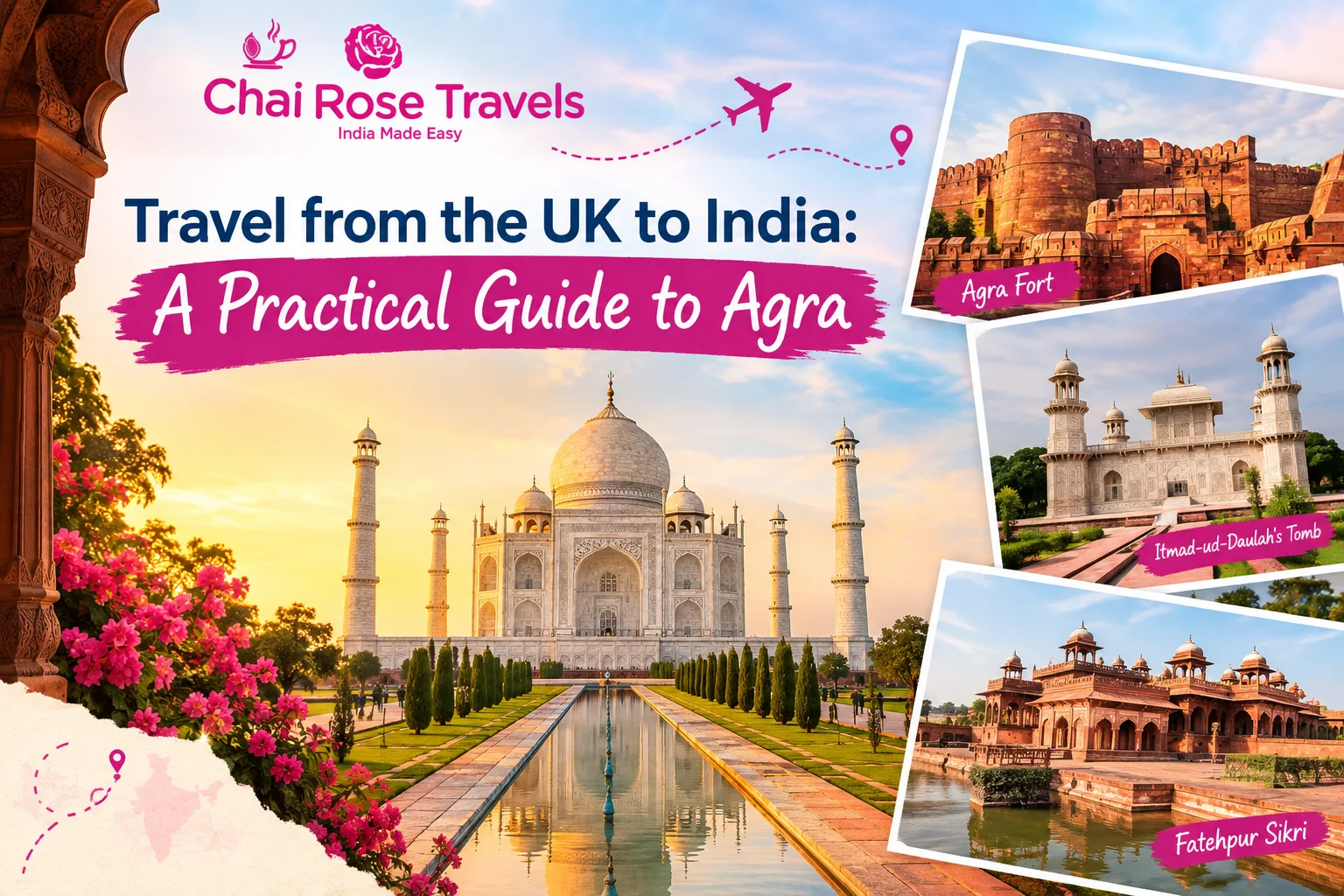
Agra holiday packages can make it easier for UK travellers to plan a well-organised trip to one of India's most famous cultural cities. Home to the Taj Mahal, Agra offers far more than a single landmark, with historic forts, Mughal architecture, local food and easy connections to other parts of northern India.
Why Agra Is Worth Visiting
Agra is one of the best places to experience India's Mughal history. The city is best known for the Taj Mahal, but spending a little more time here reveals a wider mix of architecture, markets, gardens and everyday local life.
The city works especially well as part of a wider northern India itinerary. Many travellers combine Agra with Delhi and Jaipur, creating the popular Golden Triangle route.
What Makes Agra Different?
Agra gives visitors the chance to see some of India's most important heritage sites within a relatively short stay.
Key attractions include:
- Taj Mahal
- Agra Fort
- Mehtab Bagh
- Itmad-ud-Daulah's Tomb
- Akbar's Tomb in Sikandra
- Fatehpur Sikri, located outside the city
The Taj Mahal is the obvious highlight, but visiting several sites gives you a better understanding of Agra's history.
Planning an Agra Trip From the UK
Travelling from the UK to India takes more planning than a short European break. Flight connections, entry requirements, weather, local transport and sightseeing hours should all be considered before booking.
Most UK travellers will fly to a major Indian airport such as Delhi and then continue to Agra by road or train. Delhi is particularly useful because it has frequent international connections from the UK and good onward transport options.
Before travelling, check the latest Indian visa requirements and entry rules for British citizens. Requirements can change, so use official government sources rather than relying only on old travel blogs or social media posts.
Choosing the Best Time to Visit Agra
The weather can make a big difference to your experience. Agra has hot summers, a monsoon period and cooler winters.
October to March
This is generally the most comfortable period for sightseeing. Days are often more suitable for walking around historic sites, although winter mornings can be cool and fog may affect visibility at times.
December and January can be especially busy around major attractions, so early starts are useful.
April to June
Temperatures can become extremely high. If you travel during these months, plan outdoor sightseeing for early morning or later in the afternoon and carry plenty of water.
July to September
The monsoon season can bring rain and high humidity. The weather does not necessarily make travel impossible, but you should allow extra flexibility for outdoor plans.
How Many Days Do You Need in Agra?
One full day can cover the main attractions, but staying overnight can make the experience less rushed.
A simple two-day plan could look like this:
Day 1:
Arrive in Agra, visit Agra Fort and explore the surrounding area. If time allows, visit Mehtab Bagh around sunset.
Day 2:
Visit the Taj Mahal early in the morning, followed by Itmad-ud-Daulah and other local sights before continuing your journey.
An early Taj Mahal visit is particularly useful because it can help you avoid some of the daytime heat and larger crowds.
Getting From Delhi to Agra
Delhi and Agra are well connected, making Agra easy to add to a wider India holiday.
By Train
Train travel can be a practical choice for travellers who want to save road time. Several services connect Delhi and Agra, although schedules and journey times vary.
Book through reliable sources and check the departure station carefully. Delhi has several major railway stations, so assuming every train leaves from the same place can cause unnecessary stress.
By Road
Private transfers and taxis offer more flexibility, especially for families or travellers carrying several bags. Road travel also allows you to stop at places of interest along the route.
If you're hiring a driver, confirm the total journey arrangements before leaving Delhi, including pickup location and what is included.
What to See Beyond the Taj Mahal
The Taj Mahal deserves most of the attention it receives, but Agra becomes more interesting when you look beyond it.
Agra Fort
Agra Fort is a major Mughal-era complex with impressive courtyards, halls and views towards the Taj Mahal. Allow enough time to explore rather than treating it as a quick photo stop.
Mehtab Bagh
Located across the Yamuna River, Mehtab Bagh provides a different perspective towards the Taj Mahal. It can be a pleasant place to visit later in the day.
Itmad-ud-Daulah's Tomb
Often associated with the development of Mughal decorative design, this smaller monument offers detailed stonework and gardens without the scale of the Taj Mahal.
Fatehpur Sikri
If your schedule allows, consider adding Fatehpur Sikri to your route. The historic complex outside Agra provides another look at Mughal architecture and can work well as part of a wider sightseeing plan.
Food to Try in Agra
Food is an important part of travelling through northern India. Agra is particularly known for petha, a sweet made from ash gourd and available in different flavours.
You may also find Mughlai dishes, kebabs, breads and rich curries on local menus.
For a more comfortable first experience, choose busy restaurants with good hygiene standards. Drink sealed bottled water if you are unsure about local water quality, and be cautious with raw food from places where hygiene is unclear.
Where Should UK Travellers Stay?
Your accommodation choice depends on how you plan to explore.
Staying closer to the main sightseeing areas can reduce travel time. Some travellers prefer a quieter property away from the busiest streets, particularly if they are staying for more than one night.
When comparing accommodation, look beyond the room itself. Check:
- Location
- Recent guest reviews
- Breakfast options
- Transport arrangements
- Check-in and check-out times
- Distance from major attractions
Chai Rose Travels can be considered as a reference when researching India travel ideas, but travellers should compare their itinerary, accommodation and transport needs before making a booking.
Smart Planning Tips for Your India Holiday
A good itinerary does not need to be packed from morning until night. Leave some space between major activities because traffic, queues and unexpected delays can change your schedule.
A few practical habits can make the trip easier:
- Keep digital and printed copies of important travel documents.
- Carry some Indian rupees for small purchases.
- Use reputable transport providers.
- Wear comfortable footwear for sightseeing.
- Carry sun protection and a reusable water bottle.
- Keep valuables secure in crowded areas.
- Start sightseeing early when possible.
- Check attraction opening days before travelling.
If you're travelling with children or older family members, reduce the number of attractions planned for one day. A slower itinerary is often more enjoyable.
Common Mistakes to Avoid
First-time visitors sometimes try to see too much in too little time. Agra can be combined with other cities, but rushing between Delhi, Agra and Jaipur can leave little time to actually enjoy each destination.
Another mistake is visiting the Taj Mahal without checking current visiting information. Opening days, entry arrangements and visitor rules should be confirmed before you go.
Avoid booking every part of your trip around a fixed timetable. India's roads and transport networks can be busy, so a little flexibility can prevent one delay from affecting your entire holiday.
How to Build Agra Into a Longer India Trip
Agra works particularly well as one stop on a broader journey.
A first-time itinerary might include:
Delhi → Agra → Jaipur
You can spend time exploring Delhi's historic and modern attractions before travelling to Agra. From there, continue towards Jaipur to experience Rajasthan's forts, palaces and markets.
Travellers with more time could extend the journey towards places such as Udaipur, Jodhpur, Varanasi or other destinations depending on their interests and available travel days.
Couples may prefer a slower cultural itinerary, while families may benefit from fewer hotel changes and shorter travel days.
Final Planning Advice
Travelling from the UK to India is easier when you plan the important details but leave room for the unexpected. Choose your travel season carefully, check current entry requirements, allow enough time for major sights and avoid packing too many destinations into a short holiday. For travellers comparing agra holidays, combining the Taj Mahal with Agra Fort, local food and a wider Delhi-Jaipur itinerary can create a much richer experience than treating Agra as just a quick photo stop.
FAQs About Travelling to Agra
Is Agra suitable for a first trip to India?
Yes. Agra is a strong choice for first-time visitors because its major attractions are well known and it connects easily with Delhi and Jaipur.
How long should UK travellers stay in Agra?
One full day is enough for the main highlights, but one or two nights can provide a more relaxed experience and allow time for additional monuments.
Can Agra be visited as a day trip from Delhi?
Yes. A day trip is possible by train or road, although an overnight stay gives you more flexibility and reduces the pressure of fitting everything into one day.
What should I wear when visiting Agra?
Choose light, comfortable clothing suited to the weather. Comfortable walking shoes are important, and modest clothing is a sensible choice when visiting religious or historic sites.
Is Agra suitable for families?
Yes, although families should plan around the weather, walking distances and children's needs. Starting sightseeing early can make hot days much easier to manage.