This new era of remote work has changed how companies train, upskill, and engage their employees and clients. Employees are acclimating to the digital world, where traditional classroom training and in-person workshops are not suitable for a distributed workforce. Companies are looking for training solutions that are flexible, accessible, and effective. This shift has caused a major transformation for Corporate Learning Services.
How Remote Work Has Redefined Corporate Learning Services
While remote work offers freedom and flexibility in the workplace, it has also created a new group of problems with employee learning. Previously, a learning session was easy to plan since everyone was learning in the same place and at the same time. Now, each individual has moved to different cities or even different countries, with different work schedules.
The Shift to Remote First Learning Culture
The new remote work situation allows companies to establish a different learning model: these models are technology-enabled, engaged, and personalised. Companies are looking beyond "one size fits all" models and realising that personalised, data-backed models are the best way to meet the individual learning needs of their groups.
Most Modern Corporate Learning Services have the tools to help organisations develop and implement interactive work structures that keep employees trained, engaged, connected, and productive, even at a distance of thousands of miles or more.
Combining Flexibility and Personalisation
Every learner is different: some prefer video-based learning; others prefer reading or engaging with quizzes. In a remote environment, the need for personalisation is even more pronounced as employees are not learning in the same environment, and some employees are learning at a faster pace than others employees.
Today, some of the best Corporate Learning Services feature a blend of flexibility and personalisation to individuals - for example, a sales team would get short - "Bite-sized" - training modules in the workflow where the technical staff would engage in depth in a virtual lab, coding exercise, etc.. AI tools could recommend courses based on the employee's role, skills, and career aspirations. This personalisation improves learning and will contribute to employee satisfaction and retention.
Why Collaboration and Community Learning are Important?
Even in a remote setting, collaboration is an essential element of productive learning experiences. Whether through virtual classrooms, peer-based projects, or group-learning environments, employees still interact naturally and throw ideas off each other, providing learning experiences based in community connections.
Current Corporate Learning Services employ social-learning tools, such as discussion forums, online cohorts and mentorship programs, to develop a social connection. These environments encourage teamwork, knowledge sharing and problem solving that can cross departmental and location boundaries. When employees learn together, they learn and grow together, developing a sense of belonging and creating an environment of supportive organization culture.
Creating a Mindset for Continuous Learning
Given the dynamic nature of business, learning is not completed when employees finish onboarding. Employers want to see employees willing to adapt their skills to meet the challenges of an ever-changing world, particularly in a remote work situation where there are continuous advancements in technology.
In fact, this has created a culture of continuous learning and on-the-job learning, which is available as part of the daily grind.. Modern Corporate Learning Services can help organisations design and implement "always-on" learning ecosystems.
Leadership Alignment with Learning
In order for corporate learning to truly be effective, leadership must play an important role in promoting it. Employees working remotely want to know that learning is not just a box they tick, but rather a priority of the company. Even if a leader doesn't promote learning, but participates in it, their behaviour will create a “trickle down” effect throughout the organisation.
Overcoming Common Challenges
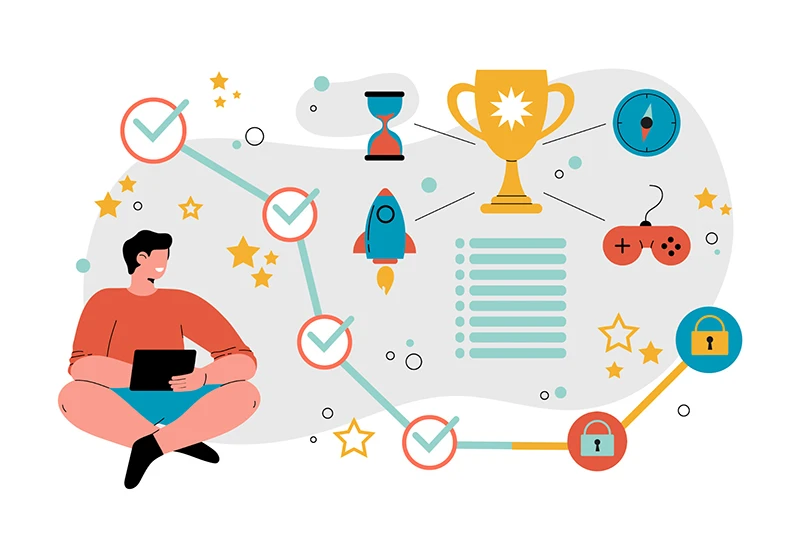
In the present day. It is all about developing learning experiences that are short, engaging and relevant. Microlearning breaks content into small, bite-sized learning that people can absorb in short lessons during the workday. Gamified modules create fun, competitive learning. Regular check-ins and feedback loops also help learners feel accountable and engaged. With a little creativity and the appropriate mix of tools and learning modalities, Corporate Learning Services can find success in overcoming these challenges, while also making remote learning effective and enjoyable.
In Conclusion,
The evolution of corporate learning goes beyond transferring training modalities to the web. It’s about brainstorming a new concept of learning. In an environment where remote work is the rule instead of the exception, learning has to be flexible, equitable, and connected to actual business objectives.
By using exceptional Corporate Learning Services, companies can unleash their absolute potential for their workforce, so their employees will shift to thrive and flourish when the environment is changing rapidly. Learning smarter means companies will get smarter too. The future of corporate learning isn't far away; the future of corporate learning is happening now, one video lesson at a time.