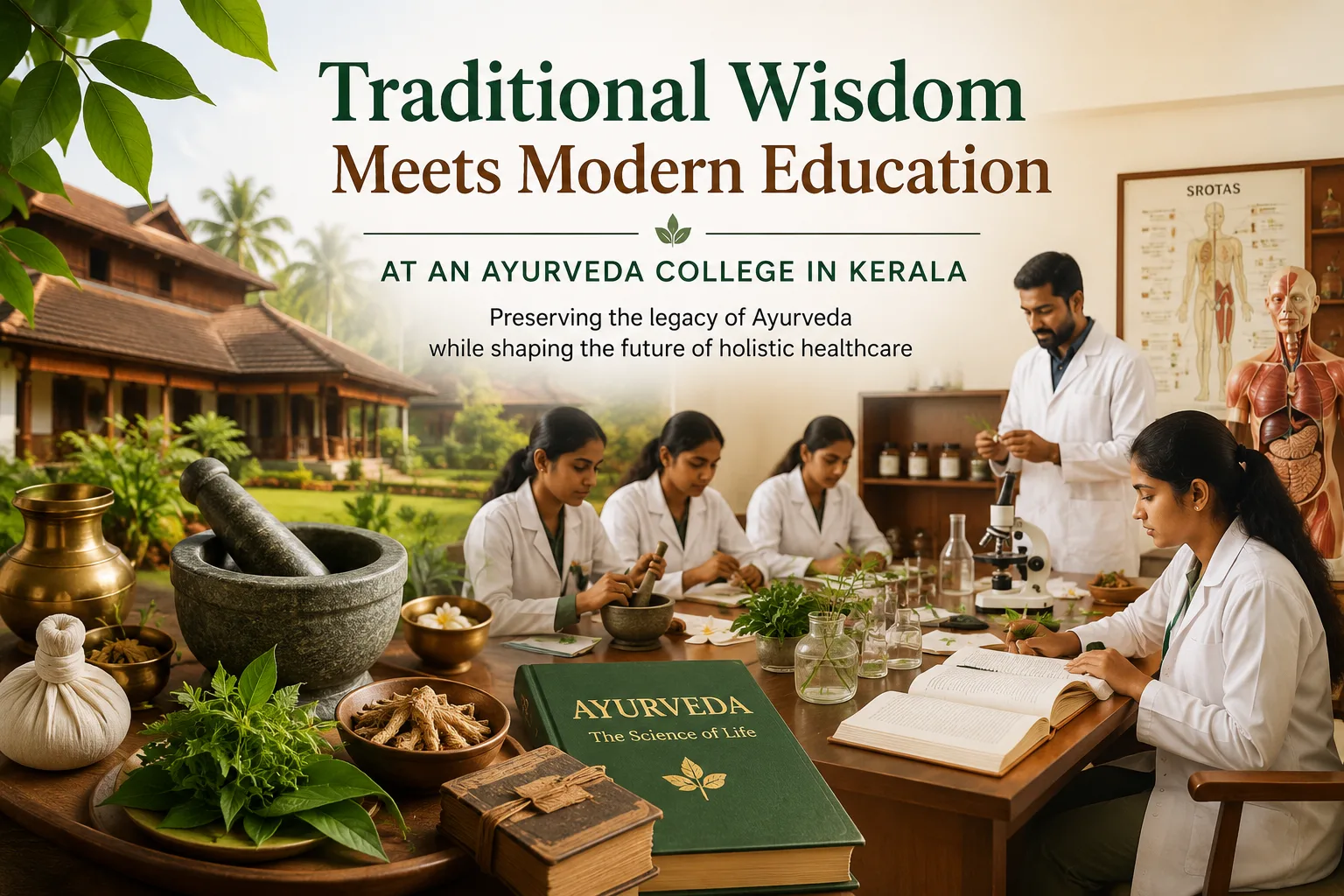
Kerala has long been regarded as the cradle of authentic Ayurveda, a traditional system of medicine that has been practiced for over 5,000 years. In recent years, the state has also emerged as a global hub for structured Ayurvedic education, where ancient healing wisdom is carefully integrated with modern academic standards. An Ayurveda College in Kerala represents this unique blend of tradition and innovation, offering students a comprehensive learning experience that prepares them for both clinical practice and global healthcare opportunities.
This integration of traditional wisdom with modern education is one of the key reasons why Kerala continues to attract students from across India and around the world. The approach ensures that Ayurveda remains scientifically relevant while preserving its holistic philosophy.
The Foundation of Ayurveda: Ancient Wisdom from Kerala
Ayurveda is deeply rooted in Indian philosophy, emphasizing balance between the body, mind, and spirit. Kerala, with its rich herbal biodiversity and centuries-old healing traditions, has preserved this knowledge in its purest form. Classical texts such as the Charaka Samhita and Sushruta Samhita form the foundation of Ayurvedic education, and students at an Ayurveda College in Kerala are introduced to these ancient scriptures as part of their curriculum.
The traditional system focuses on key principles such as:
- The concept of Tridosha (Vata, Pitta, Kapha)
- The importance of Agni (digestive fire)
- The role of Dhatus (body tissues)
- Holistic diagnosis based on physical and mental constitution (Prakriti)
By studying these principles in depth, students gain a strong theoretical foundation that helps them understand the root causes of diseases rather than just treating symptoms.
Modern Education System in Ayurveda Colleges
While traditional knowledge forms the backbone of Ayurveda, modern education techniques ensure that students receive structured, standardized, and globally relevant training. An Ayurveda College in Kerala follows a curriculum approved by recognized health education bodies, combining classical teachings with contemporary scientific understanding.
Modern Ayurvedic education includes:
- Structured classroom learning with experienced faculty
- Laboratory-based anatomy and physiology studies
- Digital learning tools and multimedia resources
- Clinical training in affiliated hospitals and wellness centers
- Research methodology and evidence-based practice
This structured approach helps students bridge the gap between ancient healing practices and modern healthcare systems.
Clinical Training and Hands-On Experience
One of the most important aspects of studying at an Ayurveda College in Kerala is the emphasis on practical training. Students are not limited to theoretical knowledge; they actively participate in clinical practice under expert supervision.
Clinical exposure includes:
- Patient diagnosis and consultation techniques
- Observation of Panchakarma therapies
- Herbal medicine preparation and formulation
- Case study analysis and treatment planning
- Exposure to various chronic and lifestyle-related conditions
This hands-on experience ensures that graduates are well-prepared to handle real-world medical situations with confidence and competence.
Integration of Panchakarma and Therapeutic Practices
Panchakarma, the cornerstone of Ayurvedic detoxification therapy, is an essential part of the curriculum. Students learn not only the theoretical aspects but also the practical application of these therapies.
At an Ayurveda College in Kerala, Panchakarma training includes:
- Understanding detoxification principles
- Learning five major cleansing procedures
- Administering oil therapies and massage techniques
- Studying patient suitability and safety protocols
This integration of therapy training ensures that students develop a deep understanding of holistic healing methods that are widely used in Ayurvedic hospitals and wellness centers worldwide.
Scientific Approach and Research in Ayurveda
Modern Ayurvedic education emphasizes the importance of research and evidence-based practice. An Ayurveda College in Kerala encourages students to explore the scientific aspects of traditional medicine, helping validate ancient practices through modern research methodologies.
Key areas of focus include:
- Clinical research in herbal medicine
- Pharmacological studies of Ayurvedic formulations
- Integration of Ayurveda with modern diagnostics
- Publication of research papers and case studies
This scientific approach enhances the credibility of Ayurveda and strengthens its acceptance in global healthcare systems.
Role of Experienced Faculty and Traditional Gurus
One of the strongest pillars of Ayurveda education in Kerala is the presence of highly experienced faculty members and traditional practitioners. Many educators combine academic qualifications with decades of clinical experience, offering students invaluable insights into real-world practice.
In some institutions, traditional guru-shishya (mentor-disciple) learning methods are still followed alongside modern teaching techniques. This ensures that students receive personalized guidance and deep understanding of Ayurvedic principles.
Global Recognition and Career Opportunities
Graduating from an Ayurveda College in Kerala opens doors to a wide range of career opportunities. As global interest in natural and holistic healthcare continues to grow, Ayurvedic professionals are in high demand.
Career paths include:
- Ayurvedic physician or consultant
- Wellness and spa therapist
- Research scientist in herbal medicine
- Ayurvedic product development specialist
- Academic and teaching roles
- International wellness consultant
Many graduates also establish their own clinics or work in wellness resorts, both in India and abroad.
Why Kerala Is the Ideal Destination for Ayurvedic Education
Kerala is uniquely positioned as a global center for Ayurveda due to its natural resources, traditional practices, and institutional excellence. The availability of medicinal plants, experienced practitioners, and government-supported Ayurveda infrastructure makes it the ideal environment for learning.
Students benefit from:
- Authentic Ayurvedic treatment environments
- Exposure to traditional Kerala therapies
- High-quality academic institutions
- Cultural immersion in Ayurvedic lifestyle practices
This combination creates a rich and immersive learning experience that cannot be easily replicated elsewhere.
Conclusion
An Ayurveda College in Kerala represents the perfect harmony between traditional wisdom and modern education. By combining ancient healing principles with structured academic learning, these institutions prepare students for successful careers in holistic healthcare.
The integration of theoretical knowledge, clinical training, research exposure, and practical experience ensures that graduates are not only skilled practitioners but also ambassadors of Ayurveda worldwide.
As the demand for natural and integrative healthcare continues to rise, Ayurveda colleges in Kerala will remain at the forefront of shaping the future of global wellness, preserving ancient wisdom while embracing modern innovation.