Total Cost of Ownership: Calculating OPEX for Explosion proof Fixed Type Cameras in UK Manufacturing
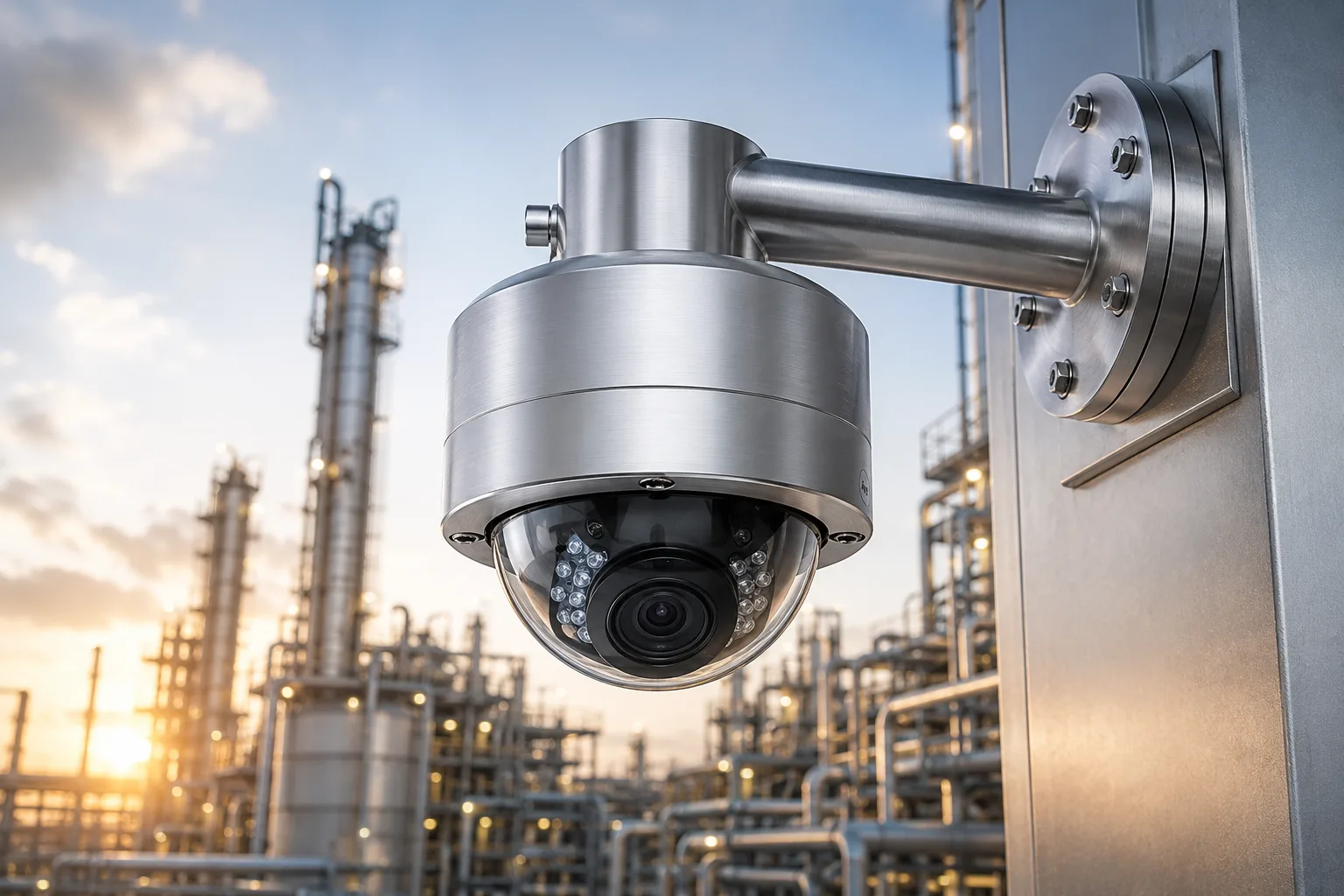
A camera that costs less on day one can cost substantially more over its lifetime. That reality catches many UK manufacturers by surprise when procurement decisions focus almost entirely on purchase price rather than operational expenditure. Whether you manage an automotive production line in the West Midlands, a chemical processing facility on Teesside, or an offshore support operation serving the North Sea, every equipment decision affects long-term budgets. Choosing the right Explosion proof Fixed Type Camera means looking beyond the initial invoice and understanding the complete ownership lifecycle. When you calculate total cost of ownership (TCO) properly, you gain a clearer picture of reliability, compliance, maintenance demands and financial performance throughout the asset's service life.

Understanding the True Cost Beyond Purchase Price
The purchase cost represents only one part of the financial equation. Your operational budget is influenced by several factors that continue throughout the camera's working life. Selecting an Explosion proof fixed camera for hazardous areas should therefore involve a structured review of both capital expenditure (CapEx) and operational expenditure (OpEx).
Typical cost categories include:
- Equipment purchase and accessories
- Installation, commissioning and system integration
- Routine inspections required under HSE guidance
- Replacement components and spare parts
- Calibration and performance verification
- Software updates where applicable
- Planned preventive maintenance
- End-of-life replacement or disposal
Facilities operating under DSEAR, the ATEX Directive and PUWER cannot simply install equipment and forget about it. Regular inspections and documented maintenance form part of ongoing compliance responsibilities. A lower-priced camera that requires frequent servicing or replacement components can ultimately become the more expensive investment.
Lifespan, Depreciation and Compliance Planning
An ATEX certified Explosion proof Fixed Camera is designed for demanding industrial environments where safety and durability are essential. Depending on operating conditions, installation quality and maintenance practices, many certified systems deliver service lives of eight to fifteen years.
From a financial perspective, depreciation should align with realistic asset performance rather than optimistic assumptions. Procurement teams should evaluate manufacturer support, spare-part availability and warranty coverage before approving long-term investments.
Environmental conditions also influence lifespan. Facilities operating in Aberdeen's offshore energy sector, Liverpool's maritime terminals or South Wales steel manufacturing plants expose equipment to vibration, salt spray, temperature fluctuations or corrosive atmospheres. These conditions affect maintenance schedules and replacement planning.
You should also account for regulatory inspections required to demonstrate continued compliance with hazardous area standards. Maintaining detailed service records simplifies HSE audits while reducing operational risk.
Hidden Operational Costs That Shape Total Ownership
Unexpected costs often have a greater impact than scheduled maintenance. Camera failure inside hazardous zones rarely involves a simple replacement.
When an Explosion proof Fixed Type Camera for oil and gas requires repair, your facility may experience production delays, permit requirements and restricted access procedures before maintenance can even begin. Every hour of downtime may interrupt monitoring, reduce operational visibility or delay maintenance activities.
Travel expenses also vary significantly across the United Kingdom. Sending specialist engineers to remote Scottish installations, offshore platforms or manufacturing sites in Cornwall costs considerably more than servicing facilities within the Midlands industrial corridor. Labour rates, accommodation and transport all contribute to operational expenditure.
Procurement teams should estimate:
- Average annual inspection costs.
- Emergency call-out frequency.
- Engineer travel expenses by region.
- Production losses during equipment failure.
- Inventory costs for critical spare parts.
Including these variables creates a far more accurate ownership model than purchase price comparisons alone.
Procurement Strategies and Practical TCO Assessment
Procurement contracts directly influence lifetime ownership costs. Fixed-price maintenance agreements provide predictable annual budgeting and often include scheduled inspections, labour and replacement components. These contracts suit facilities seeking stable operating expenses and simplified financial planning.
Time-and-materials agreements may appear less expensive initially but expose your organisation to variable repair costs, especially if equipment failures increase as assets age. This model can create budget uncertainty across multiple manufacturing sites.
An effective evaluation worksheet for a hazardous area ATEX Explosion proof Fixed Type Camera should include:
Cost ElementYear 1Annual Ongoing CostEquipment purchase✓—Installation✓—Compliance inspections✓✓Preventive maintenance—✓Spare parts—✓Calibration—✓Downtime risk estimate—✓Travel and engineer attendance—✓Asset replacement reserve—✓This structured approach enables procurement leads to compare competing suppliers using measurable financial data instead of headline pricing alone.

SharpEagle ATEX certified Explosion proof Fixed Type Camera
Selecting a reliable supplier contributes just as much to TCO reduction as selecting the right equipment. The SharpEagle hazardous area camera portfolio has been developed for demanding industrial environments where operational continuity and regulatory compliance matter.
The SharpEagle industrial explosion proof fixed camera supplier Uk offers robust surveillance solutions engineered for hazardous locations, supporting industries including warehousing, industrial manufacturing, automotive, maritime and oil and gas.
The company's ATEX-certified camera delivers high-definition imaging, corrosion-resistant construction, dependable performance in harsh environments and compatibility with industrial monitoring systems. These features help reduce maintenance frequency, improve operational visibility and support long-term compliance objectives.
To learn more about the product specifications and applications, visit the ATEX certified Explosion proof Fixed Type Camera: https://www.sharpeagle.uk/product/explosion-proof-fixed-type-camera.
ConclusionCalculating total cost of ownership gives you a stronger foundation for procurement decisions than purchase price alone. By considering depreciation, maintenance, compliance obligations, travel costs, downtime risk and contract structure, you can identify equipment that delivers lasting operational value across your facility. A disciplined TCO assessment not only supports safer hazardous area operations but also strengthens long-term financial planning. For expert guidance on selecting dependable hazardous area camera solutions, contact SharpEagle Technology.