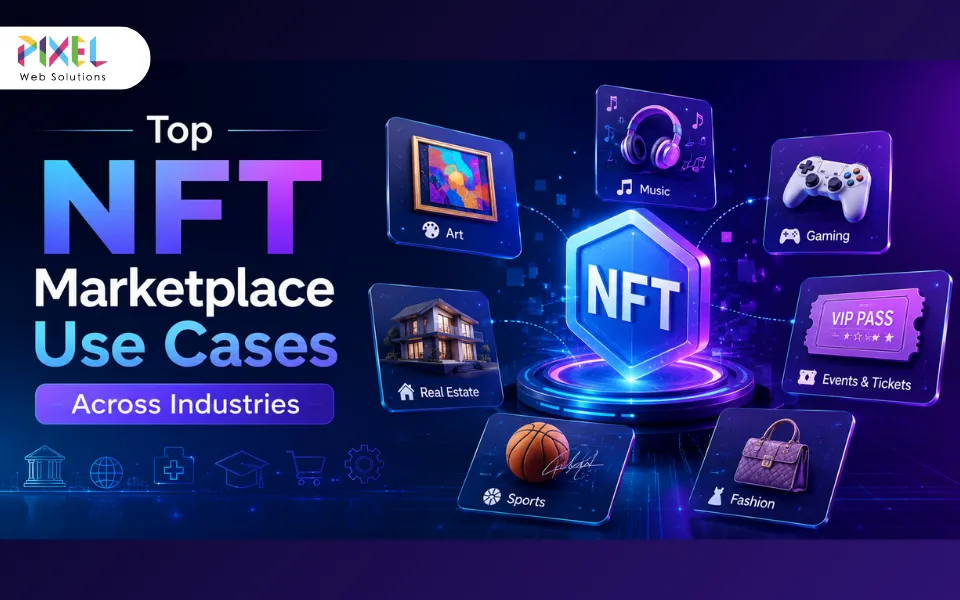
NFT marketplaces are expanding their services to include more than digital art and collectibles. NFT platforms today enable industries such as gaming, real estate, music, fashion, and sports to develop new revenue streams while enhancing customer interaction.
Businesses are developing NFT marketplaces because they need to create secure and scalable digital ecosystems that will support their Web3 expansion efforts. NFT marketplaces today function as essential components that enable users to control digital assets while executing blockchain transactions and trading virtual assets.
In this blog, let’s explore the top NFT marketplace use cases across industries and how they are transforming modern businesses.
What Is an NFT Marketplace?
An NFT marketplace is a blockchain-based platform where users can create, buy, sell, and trade NFTs. These platforms support digital assets like artwork, gaming items, music, virtual land, and collectibles.
Common features of NFT marketplaces include:
- NFT minting
- Wallet integration
- Smart contracts
- Auctions and bidding
- Secure blockchain transactions
NFT marketplaces provide transparent ownership and help creators and businesses monetize digital assets efficiently.
Top NFT Marketplace Use Cases Across Industries
1. Gaming Industry
The gaming industry is one of the biggest adopters of NFT marketplaces. NFTs are used for in-game assets such as characters, skins, weapons, and virtual land.
Players can securely trade or sell their digital assets while maintaining true ownership. Play-to-earn gaming models have also increased demand for blockchain gaming platforms.
Many gaming businesses work with an experienced NFT Marketplace Development company to build scalable NFT ecosystems with advanced blockchain features.
2. Digital Art & Collectibles
Digital art and collectibles made NFT marketplaces popular among online users. Artists can create digital tokens of their artwork and sell them to customers around the world without needing any middlemen.
Creators receive royalty payments through smart contracts whenever their NFTs are sold to new owners. Digital content creators can generate recurring income through this system.
The sector experiences growth because of celebrity NFT collections and exclusive collectible items.
3. Real Estate Industry
The real estate sector is exploring NFT marketplaces for property tokenization and fractional ownership.
NFTs can represent ownership rights to properties, making transactions more transparent and efficient. Investors can buy fractional shares of real estate assets through blockchain platforms.
NFT marketplaces also simplify cross-border real estate investments by reducing paperwork and intermediaries.
4. Music & Entertainment
NFT marketplaces are transforming the music and entertainment industry. Artists can create music albums, exclusive content, and event tickets through NFT launches.
The platform enables creators to generate revenue through content creation while providing fans with distinct experiences. NFT ticketing systems provide security improvements and protection against fraud.
5. Fashion & Luxury Brands
Fashion brands are using NFT marketplaces to launch digital collectibles and virtual wearables for metaverse platforms.
Luxury companies also use NFTs to verify product authenticity and reduce counterfeit products. Exclusive NFT drops help brands improve customer engagement and build stronger digital communities.
6. Sports Industry
Sports organizations are adopting NFT marketplaces for digital collectibles, fan tokens, and exclusive athlete content.
Fans can own trading cards, memorable sports moments, and digital memorabilia securely through blockchain technology.
NFTs also help sports brands increase fan engagement and create new monetization opportunities.
7. Metaverse Platforms
Metaverse ecosystems depend on NFT marketplaces for their virtual economic systems. Users can buy and sell virtual land, avatar accessories, and digital assets as NFTs.
The marketplaces provide users with secure ownership rights that allow them to trade assets openly in virtual environments. The rising usage of metaverse platforms will increase the need for NFT marketplace systems.
Key Benefits of NFT Marketplaces
NFT marketplaces offer several advantages across industries:
- Secure digital ownership
- Better monetization opportunities
- Transparent blockchain transactions
- Improved customer engagement
- Global accessibility
These benefits make NFT marketplaces valuable for businesses entering the Web3 ecosystem.
Future of NFT Marketplaces
The future of NFT marketplaces looks promising as more industries adopt blockchain technology. Multi-chain support, utility-driven NFTs, and metaverse integration are expected to shape the next phase of growth.
Businesses are increasingly exploring scalable and user-friendly NFT solutions to stay competitive in the evolving digital economy.
Conclusion
NFT marketplaces now enable different industries to develop their business operations beyond digital art and digital collectibles. Business operations across gaming, real estate, fashion, and sports industries use NFTs to enhance customer engagement while creating new ownership models and revenue generation methods.
The future of digital commerce and blockchain ecosystems will depend on NFT marketplaces because Web3 adoption continues to expand.