Motorcycle riding is a skill-intensive activity that requires mastery of balance, control, and risk management. For beginners, understanding core riding strategies is essential to develop competence and confidence while minimizing the risk of accidents. This article delivers a detailed, fact-driven examination of fundamental motorcycle riding strategies, integrating real-world application, industry terminology, and practical insight. The guidance is suitable for new riders preparing for road use, training programs, and self-guided improvement.
Reinforcement of the importance of strategy and gear
Motorcycle riding strategy encompasses the systematic methods riders employ to operate a motorcycle both safely and efficiently. It involves the integration of physical control techniques, mental preparedness, hazard anticipation, and the selection of appropriate protective gear. Given the inherent vulnerability of motorcyclists compared to occupants of enclosed vehicles, the development of well-structured riding strategies is essential for minimizing injury risk and optimizing overall performance.
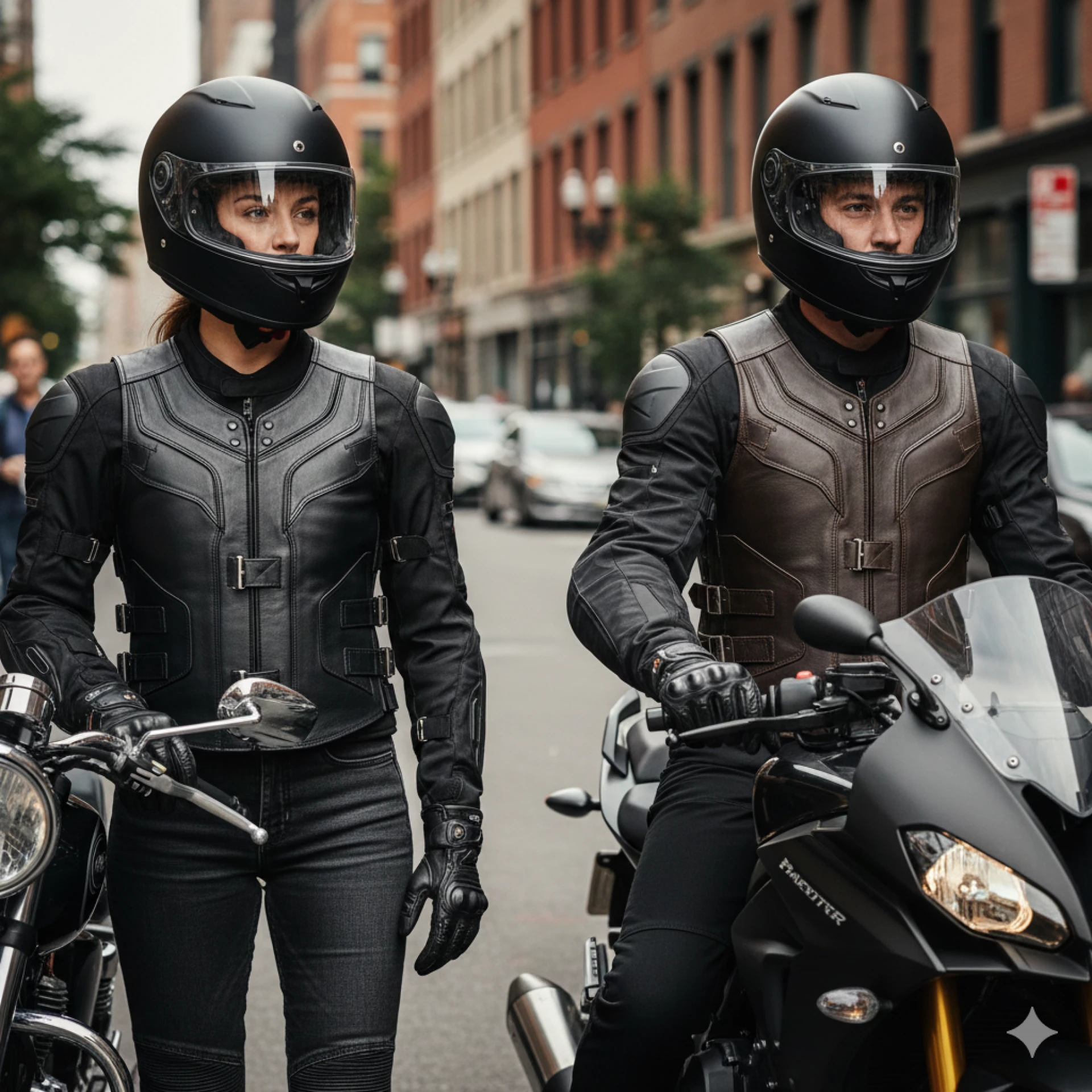
This guide provides a structured framework covering essential riding techniques, common error prevention, expert-recommended best practices, and answers to frequently asked questions by novice riders. In addition to functionality, motorcycle apparel often reflects cultural identity or group affiliation. For instance, an outlaw biker leather vest for men offers both protective features and stylistic expression. Likewise, an outlaw biker leather vest for women combines aesthetic appeal with functional protection.
Understanding Motorcycle Dynamics
Motorcycle Mechanics and Control
A motorcycle’s operation relies on the rider’s input through three primary controls. The throttle regulates engine power and speed, allowing the rider to accelerate or maintain momentum. Brakes, typically located on the front and rear wheels, are used to slow or stop the motorcycle, with the front brake providing the majority of stopping force. The clutch and gears manage power delivery and enable smooth modulation of speed across different riding conditions.
Maintaining balance is a critical component of motorcycle control and is achieved through countersteering, a technique in which the rider initiates a lean by gently pressing the handlebar on the side opposite the intended turn direction. This principle, which is essential for safe and precise maneuvering, is explained in detail on authoritative motorcycle resources such as Wikipedia’s Motorcycle entry.
Posture and Ergonomics
Proper rider posture enhances control and reduces fatigue:
- Neutral Spine Alignment – prevents strain and maintains vision alignment.
- Relaxed Grip – avoids oversteering and reduces muscle tension.
- Feet Positioning – ball of the foot on footpegs for precise control.
Core Riding Strategies for Beginners
1. Pre-Ride Inspection (T-CLOCS Framework)
Professional rider training programs emphasize the importance of pre-ride inspections, often guided by a standardized mnemonic such as T‑CLOCS. This framework ensures comprehensive safety checks before every ride: Tires are examined for tread depth and proper pressure; Controls, including levers and cables, are inspected for functionality; Lights, such as indicators, brake lights, and headlamps, are tested; Oil and Fluids are checked for proper levels and leaks; the Chassis, including the frame and suspension, is assessed for integrity; and Stands are evaluated to ensure stability when parked. Conducting systematic inspections using T‑CLOCS significantly reduces the risk of mechanical failures that could compromise rider safety.
2. Controlled Braking Techniques
Beginners often misapply brakes, which can lead to wheel lock, skidding, or loss of stability. To maintain control, experts recommend progressive braking, gradually increasing brake pressure to match the tires’ traction limits, and maintaining a front-to-rear balance, using the front brake for most of the stopping power while employing the rear brake to stabilize the motorcycle. Industry research demonstrates that proper braking techniques not only shorten stopping distances but also enhance overall rider control, reducing the likelihood of accidents and improving confidence in a variety of riding conditions.
3. Vision and Line Selection
Experienced riders are trained to “ride where they look,” a principle that emphasizes using vision to guide motorcycle control and decision-making. Key aspects include target fixation avoidance, which involves focusing on the intended path rather than on potential hazards, and corner line optimization, the practice of selecting a trajectory that maximizes visibility while minimizing lean angle risk. Maintaining a broad field of vision allows riders to detect hazards earlier and react more effectively, enhancing both safety and overall riding performance.
4. Speed and Spacing Management
Maintaining appropriate speed relative to conditions is a core strategy. Guidelines include:
- Adhering to Posted Limits – recommended maximums under ideal conditions.
- Space Cushioning – maintaining a buffer zone from other vehicles to permit maneuvering room.
Expert Insights & Accepted Best Practices
Instructional Progressions
Professional rider courses offered by accredited safety organizations employ a tiered training approach to systematically develop riding competence. The basic handling stage focuses on slow-speed maneuvers and balance exercises, building foundational control skills. The intermediate control phase introduces emergency braking and avoidance swerves, enabling riders to respond effectively to sudden hazards. Finally, the advanced strategy level addresses complex traffic scenarios and high-speed dynamics, preparing riders for real-world conditions. Experts emphasize that repetition and scenario variation are critical for reinforcing neural pathways, allowing riders to respond instinctively and safely under diverse riding circumstances.
Protective Gear Integration
Incorporating appropriate gear is not cosmetic—it is safety-critical:
- Helmet Certification – DOT, ECE, or similar approvals.
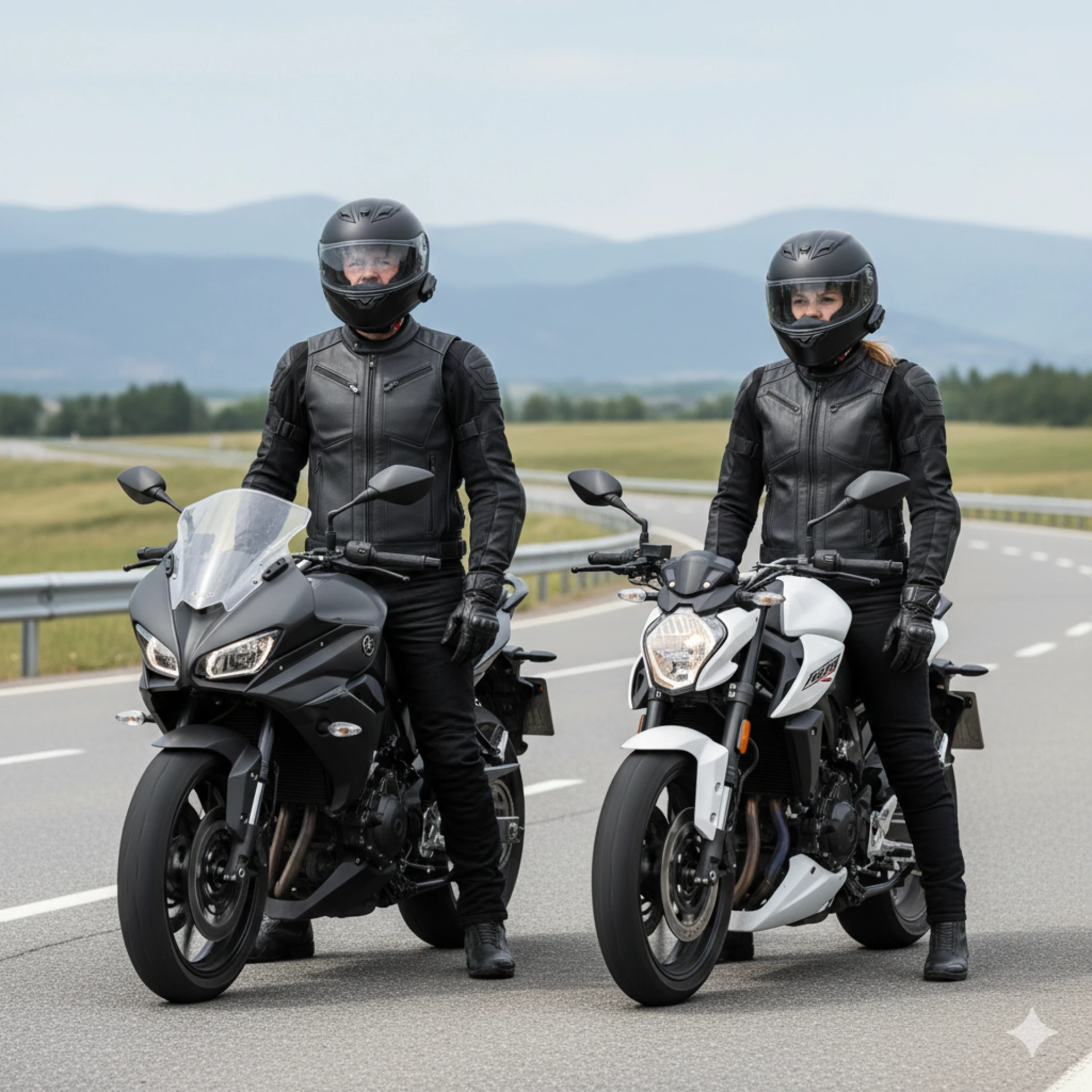
- Protective Apparel – jackets, gloves, boots with abrasion resistance and impact protection.
Cultural motorcycle apparel such as an outlaw biker leather vest for men or an outlaw biker leather vest for women often adds abrasion resistance while allowing personalization. These garments can be layered over protective jackets for integrated coverage.
Common Mistakes and Misconceptions
Overreliance on Road Positioning
Beginners may assume lane center positioning is always safest. However:
- Adaptive Positioning – shifts based on traffic, surface conditions, and visibility enhances safety.
Underestimating Surface Hazards
Water, gravel, and oil slicks reduce traction. Misconceptions include:
- “Smooth road equals safe ride.” Reality: even smooth surfaces can hide hazards like shadows or debris.
Misapplication of Countersteering
Some novices perceive countersteering as intuitive turning. Experts teach deliberate initial input to initiate lean, which is essential at higher speeds.
Conclusion
Mastering motorcycle riding strategies is a structured process that integrates technical skill, risk awareness, physical control, and gear selection. Beginners benefit from systematic training, adherence to proven techniques, and understanding both cognitive and mechanical aspects of riding. Protective attire—ranging from certified helmets to culturally styled garments like an outlaw biker leather vest for men and an outlaw biker leather vest for women—serves functional and experiential roles in the rider journey. By applying the strategies detailed above, novice motorcyclists establish a foundation for safer, more confident, and more competent riding performance.
FAQs
1. What is the best way to begin learning motorcycle riding as a complete novice?
A structured rider training course with certified instructors provides incremental skill development, supervised practice, and feedback mechanisms critical for safe progression.
2. How does countersteering work at practical levels?
Countersteering initiates a lean: pushing the right handlebar turns the bike right. At lower speeds, riders may not perceive this input clearly, yet it remains the foundational turning technique above approximately 15 mph.
3. How important is gear choice in early riding?
Appropriate gear mitigates injury and enhances rider confidence. Certified helmets, abrasion-resistant jackets, gloves, and boots form a basic protective suite.
4. Can rider posture affect motorcycle control?
Yes. Correct posture maintains balance, improves control inputs, and reduces fatigue, enabling better overall motorcycle handling.
5. What are practical tips for braking on varied surfaces?
Engage brakes progressively and adjust modulation based on surface traction. Sliding or locking wheels indicate excessive force for given traction conditions.
6. Why is vision strategy critical for beginners?
Effective vision strategy prevents target fixation and enhances early hazard detection, enabling smoother, safer decision-making.
7. What common errors do new riders make in curves?
Entering curves too fast and misjudging entry angles are frequent mistakes. Slowing before turns and maintaining a consistent line through the curve improves safety.