As businesses continue to expand into global markets, the need to translate English to Arabic has grown exponentially - especially in regions like the UAE, Saudi Arabia, and Egypt, where Arabic is the dominant language of communication. But translating for business isn't just about converting words - it's about conveying meaning, tone, and cultural nuance accurately.
Poor translation can lead to miscommunication, reputational damage, and even legal implications. At EZ Works, we’ve supported businesses across industries with precise, culturally appropriate translation. In this article, we explore the most common mistakes made during English-Arabic translation and how to avoid them with the help of language translation experts.
What Common Errors Occur During English-Arabic Translation?
Arabic and English differ significantly in structure, syntax, and cultural context. While some translation tools can manage basic phrases, business communication demands a higher level of expertise. Here are the top mistakes often made when attempting to translate English to Arabic :-
- Literal Translation – One of the most common errors is translating word-for-word, which often results in awkward or incorrect phrasing. For instance, idioms like “kick off the project” or “ballpark figure” don’t have direct equivalents in Arabic and require contextual rephrasing.
- Ignoring Sentence Structure – Arabic is a right-to-left language with a different grammatical flow. English sentence patterns often don’t align with Arabic syntax, leading to confusion or a loss of meaning if not adapted properly.
- Neglecting Formality Levels – Arabic has multiple levels of formality, and the wrong tone can come across as disrespectful or too casual in business communication. Choosing between Modern Standard Arabic (MSA) and regional dialects also plays a vital role.
- Mistranslating Technical Terms – Industries like healthcare, legal, or finance require accurate translation of technical jargon. Mistranslations in such fields can have serious consequences - ranging from loss of credibility to regulatory issues.
- Design/Layout Issues – Since Arabic is read right-to-left, website layouts, document formats, and UI design must be adapted accordingly. Failing to localize these elements often leads to visual inconsistencies or usability issues.
- Overlooking Audio/Visual Elements – For businesses using videos, podcasts, or webinars, failing to properly handle audio transcription services or transcription and subtitling services can result in misinterpretation of tone or context.
Why is Context Critical in Arabic Language Translation?
In any translation task, context is everything - but it’s especially vital when working with Arabic. Here's why:
- Words with Multiple Meanings – Arabic words often have several meanings depending on the context. For example, the word "عين" can mean eye, spring, or spy. Only context can determine the intended use.
- Cultural Sensitivities – Religious, political, and cultural references must be handled with care. A word or phrase that's acceptable in English may be considered inappropriate or offensive in Arabic if not properly localized.
- Business Etiquette – Arabic business culture places a high value on respect, hierarchy, and relationship-building. Misinterpreting or mistranslating language used in proposals, emails, or presentations can undermine these values.
- Regional Dialects vs. MSA – While MSA is widely used for official purposes, certain markets prefer local dialects for marketing or internal communications. Choosing the right form of Arabic based on the message and audience is key.
This is why relying on automated translation tools or inexperienced translators can do more harm than good. Professional language translation services consider linguistic, cultural, and business contexts to ensure your message lands correctly.
How Does EZ Prevent Translation Mistakes?
At EZ, we don’t see translation as a mechanical task - we treat it as a craft. Our multilingual team of language translation experts combines cultural intelligence with linguistic precision to deliver clear, accurate, and locally relevant translations.
Here’s how we ensure quality at every step: -
- Native Translators with Industry Expertise – Our team consists of native Arabic speakers with deep understanding of specific sectors like law, healthcare, finance, and technology. This ensures that technical terms are translated accurately and naturally.
- Rigorous QA and Editing – Every project undergoes multiple layers of review - translation, editing, and proofreading - to catch errors, inconsistencies, or contextual misalignments before final delivery.
- Cultural and Contextual Adaptation – We tailor content not just linguistically but also culturally - choosing words, tone, and idioms that align with the local audience while preserving brand voice.
- Right-to-Left Design Adaptation – We support end-to-end localization by adjusting layouts, UI, and design elements to suit Arabic reading patterns - especially for marketing materials, apps, and websites.
- Integrated Transcription & Subtitling Services – For businesses relying on video, we offer transcription and subtitling services in Arabic to ensure audio-visual content resonates and complies with local norms. From pitch decks to contracts, e-learning modules to product manuals, our goal is simple: to make your message meaningful in every language.
When Should You Hire a Professional Language Translation Service?
Many businesses try to cut corners by using online translation tools or in-house staff with limited language skills. While this might suffice for informal conversations, it's rarely effective for formal or public-facing content.
Here are scenarios where hiring a language translation services provider like EZ is essential:-
- Entering a New Market – Launching in an Arabic-speaking region? Your product descriptions, website, and marketing materials need to be professionally localized to resonate with local consumers.
- Legal & Compliance Documents – Contracts, privacy policies, or regulatory documents demand linguistic precision. A single mistranslation can lead to misinterpretation or legal disputes.
- Business Proposals & Presentations – When high-stakes opportunities are on the line, your content must communicate clearly and confidently. Professional translators help you avoid costly misunderstandings.
- Employee Training & HR Materials – Training modules, safety guidelines, and onboarding documents must be accessible to a diverse, multilingual workforce.
- Video & Audio Content – If you're using webinars, online courses, or promotional videos, combining audio transcription services with accurate subtitling ensures your message is inclusive and compliant.
Final Thoughts –
In today’s global business environment, the ability to translate English to Arabic accurately and contextually is a competitive advantage. It’s not just about language - it’s about understanding, respect, and connection. One misused word can weaken your message, but the right translation can strengthen your brand and open new doors.
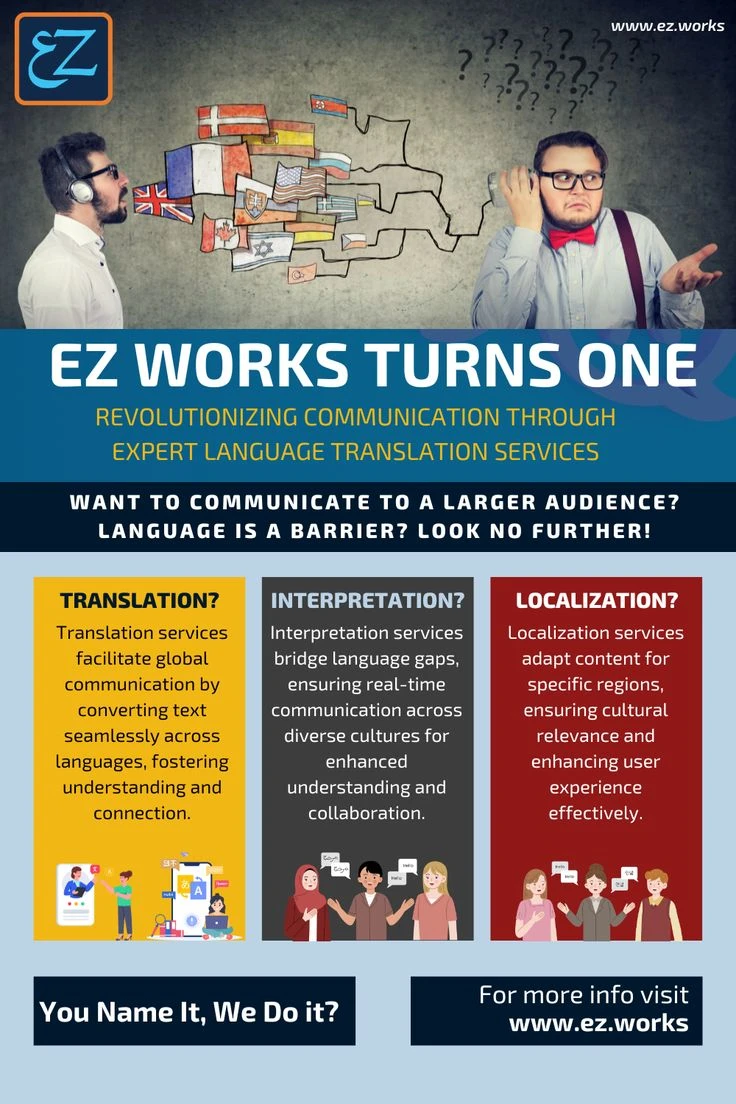
At EZ Works, we combine linguistic mastery, cultural sensitivity, and technical precision to help businesses speak confidently to Arabic-speaking audiences. Whether you need legal documentation, digital content, or full-scale localization, our experts ensure that your message is not just translated - but truly understood.