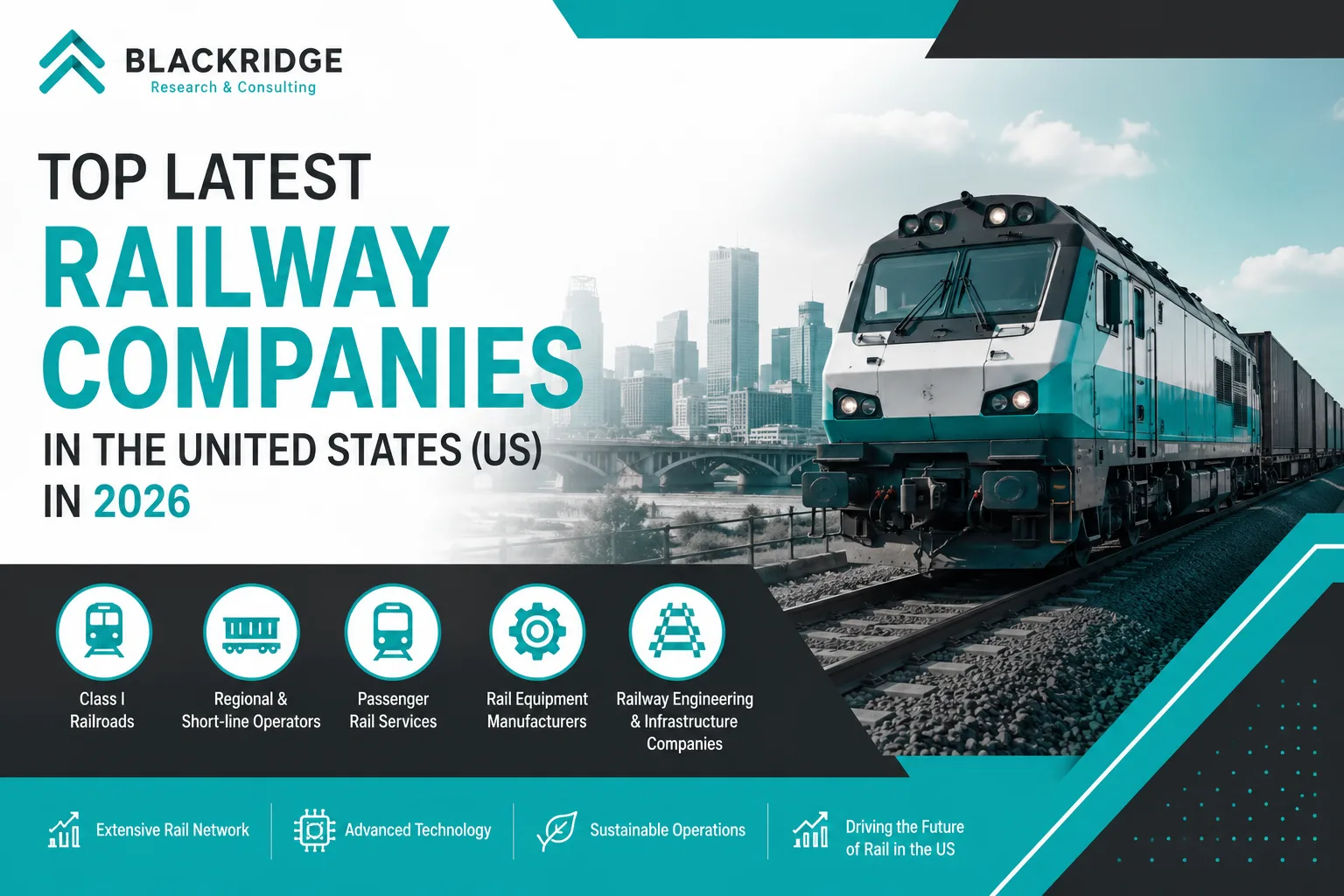
The United States has one of the world's largest and most sophisticated railway networks, supporting freight transportation, passenger mobility, industrial logistics, and economic growth. As infrastructure investments accelerate and sustainability becomes a priority, leading railway companies are expanding their networks, modernizing operations, and investing in digital technologies.
According to Blackridge Research, ongoing federal infrastructure spending, freight demand, and high-speed rail developments are expected to drive significant growth across the U.S. railway sector over the coming years. Organizations tracking infrastructure investments and transportation projects increasingly rely on market intelligence to understand upcoming opportunities and industry trends.
As global supply chains become increasingly complex and industries seek cost-effective, reliable, and lower-emission logistics solutions, the U.S. railway sector continues to strengthen its strategic importance. From connecting major ports and manufacturing hubs to supporting agricultural exports, energy distribution, and cross-border trade, these world’s leading railways today are investing in automation, artificial intelligence, predictive maintenance, advanced signaling, and intermodal infrastructure to improve operational efficiency and network resilience. The investments also serve to position rail as a key enabler of sustainable freight transport and long-term economic competitiveness.
Overview of the U.S. Railway Industry
The U.S. railway industry consists of:
- Class, I freight railroads
- Regional and short-line rail operators
- Passenger rail services
- Rail equipment manufacturers
- Railway engineering and infrastructure companies
Today, the U.S. rail network includes over 140,000 route miles of track and transports approximately 40% of the nation's long-distance freight, making it one of the most efficient freight rail systems globally.
Top Railway Companies in the United States
1. Union Pacific Railroad (UP)
Founded: 1862
Headquarters: Omaha, Nebraska
Union Pacific operates one of North America's largest freight rail networks, connecting major ports on the West Coast with the Midwest and Gulf Coast. The company serves sectors including:
- Agriculture
- Automotive
- Chemicals
- Energy
- Consumer goods
- Industrial products
Key Highlights
- Over 32,000 route miles
- Operates across 23 states
- Strong investments in automation and fuel efficiency
Major intermodal transportation provider
2. BNSF Railway
Founded: 1995 (through merger)
Headquarters: Fort Worth, Texas
BNSF Railway is among the largest freight rail operators in North America and plays a critical role in transporting agricultural products, consumer goods, industrial materials, and energy resources.
Key Highlights
- More than 32,500 route miles
- Serves 28 U.S. states
- Extensive intermodal network
- Significant investments in digital rail operations
3. Norfolk Southern Corporation
Headquarters: Atlanta, Georgia
Norfolk Southern serves the eastern United States through an extensive freight rail network connecting ports, manufacturing centers, and distribution hubs.
Core Services
- Intermodal transportation
- Automotive logistics
- Coal transportation
- Agricultural freight
- Industrial products
The company continues investing in predictive maintenance, AI-powered monitoring systems, and network modernization.
4. CSX Corporation
Headquarters: Jacksonville, Florida
CSX provides freight transportation across the Eastern United States through an integrated rail network serving manufacturers, retailers, utilities, and exporters.
Major Markets
- Chemicals
- Forest products
- Metals
- Automotive
- Energy
- Agriculture
CSX is actively expanding terminal capacity while improving operational efficiency through advanced analytics.
5. Kansas City Southern (Now Part of CPKC)
Canadian Pacific Kansas City (CPKC) became the first single-line railway connecting Canada, the United States, and Mexico following the acquisition of Kansas City Southern.
Advantages
- Cross-border freight transportation
- Growing North American supply chain integration
- Automotive manufacturing logistics
- Agricultural exports
The merger has strengthened rail connectivity across North America.
6. Amtrak
Headquarters: Washington, D.C.
Amtrak is the nation's primary intercity passenger rail operator.
Operations
- Serves more than 500 destinations
- Operates across 46 states
- Northeast Corridor high-speed services
- Long-distance passenger routes
Federal investments are supporting fleet modernization and corridor expansion under recent infrastructure programs.
7. Genesee & Wyoming Inc.
Genesee & Wyoming operates one of the world's largest short-line and regional rail networks.
Operations
- More than 100 railroads globally
- Industrial switching
- Regional freight
- Port rail services
The company plays an important role in first-mile and last-mile freight transportation.
8. Watco Companies
Watco specializes in transportation and supply chain solutions.
Services
- Short-line railroads
- Industrial rail services
- Ports
- Warehousing
- Logistics
Watco continues expanding through acquisitions and infrastructure investments.
9. Iowa Interstate Railroad
Iowa Interstate connects the Midwest with major freight corridors, supporting agriculture, manufacturing, and industrial transportation.
Its strategic position makes it an important regional railroad for connecting rural industries to national markets.
10. Florida East Coast Railway (FEC)
Florida East Coast Railway provides freight transportation along Florida's Atlantic coast.
Key Strengths
- Port connectivity
- Intermodal terminals
- Automotive logistics
- Consumer goods transportation
Its strategic location supports growing trade through Florida's major seaports.
Emerging Trends in the U.S. Railway Industry
Several trends are reshaping the U.S. rail sector:
- Digital railway management systems
- AI-powered predictive maintenance
- Automated inspection technologies
- Electrification initiatives
- Hydrogen-powered locomotives
- Smart freight terminals
- Rail infrastructure modernization
- Expansion of intermodal transportation
- High-speed passenger rail investments
These developments are improving operational efficiency while supporting sustainability goals.
Infrastructure Investments Driving Growth
Federal infrastructure funding, private sector investments, and state transportation programs are accelerating railway expansion across the United States. Major initiatives include:
- Rail corridor upgrades
- Bridge rehabilitation
- Terminal modernization
- Double-track expansion
- Positive Train Control (PTC) enhancements
- Freight capacity improvements
- Passenger rail expansion
Companies involved in rail construction, engineering, signaling, and rolling stock manufacturing are expected to benefit from these investments.
Market Intelligence and Railway Project Tracking
For investors, contractors, EPC firms, equipment manufacturers, and infrastructure developers, access to reliable market intelligence is essential for identifying upcoming railway opportunities.
Blackridge Research provides comprehensive coverage of infrastructure markets through its transportation and construction research services, helping businesses monitor investment trends, project developments, and procurement activities.
Businesses tracking upcoming transportation infrastructure opportunities can also benefit from Blackridge Research's project intelligence, which covers major investments across railways, roads, energy, industrial facilities, and construction markets.
Key Insights from the U.S. Railway Industry
The nation’s leading railroads are guiding the future of freight transportation with ongoing investments, operational improvements, and network growth. These railroads together:
- Operate more than 140,000 route miles across North America.
- Generate over USD 90 billion in combined annual revenue.
- Invest more than USD 20 billion annually in infrastructure, technology, and safety.
- Transport a significant share of the nation's agricultural products, energy commodities, consumer goods, automotive shipments, and intermodal freight.
- Play a central role in improving supply chain resilience and supporting economic competitiveness.
As demand for efficient, low-carbon transport grows, rail is expected to remain one of the most strategic components of North America’s logistics ecosystem.
Conclusion
The U.S. railway industry remains one of the world's most critical transportation networks, supporting freight movement, passenger travel, and economic development. Companies such as Union Pacific, BNSF Railway, Norfolk Southern, CSX, and CPKC continue investing in technology, infrastructure, and sustainability to improve network performance.
As infrastructure spending accelerates in 2026 and beyond, organizations that leverage reliable market intelligence and project tracking platforms will be better positioned to identify new business opportunities, monitor industry developments, and make informed strategic decisions.
Track U.S. Railway Projects with Blackridge Research
Want access to the latest railway infrastructure projects, freight rail expansions, passenger rail modernization programs, high-speed rail developments, tender notices, contract awards, and investment opportunities across the United States?
The Global Project Tracking (GPT) platform by Blackridge Research & Consulting helps you identify and monitor railway projects throughout their lifecycle—from strategic planning and feasibility studies to environmental approvals, procurement, construction, commissioning, and operational readiness.