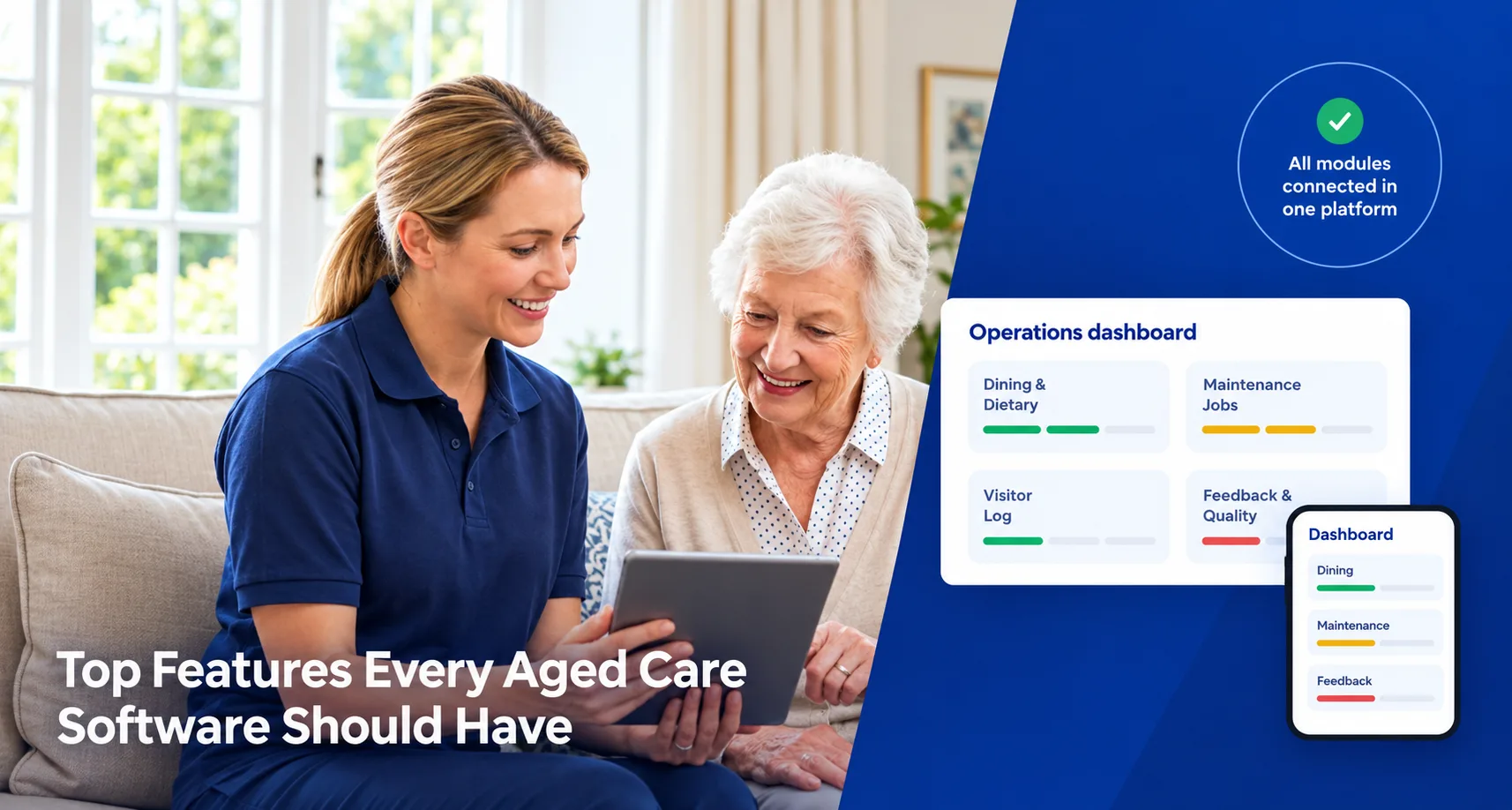
Many facility managers start the day checking several systems just to understand what happened overnight. Maintenance requests sit in one system, resident notes in another, family emails in a shared inbox, and visitor records in a paper book at reception. Without connected aged care software, piecing all of this together can take up a large part of the morning before the real work even begins.
This is a common problem in Australian aged care. The issue is not that any one system fails. It is that the systems do not connect, and that gap creates extra work. Aged care software, used well, brings these pieces together so managers can see what is happening across the facility.
Choosing aged care software is not about adding more technology. It is about selecting features that genuinely support staff, residents and families.
Why choosing the right aged care software matters
Aged care providers manage growing administrative responsibilities. Reporting requirements have increased, families expect regular updates, and teams need to coordinate across catering, maintenance, lifestyle and care.
When operations rely on paper forms, spreadsheets and separate apps, visibility becomes harder to maintain. Software cannot solve every operational challenge on its own, but the right system reduces guesswork and gives staff more time for resident care.
Resident and family communication
Families often contact the facility for general updates about a resident. Answering these calls takes staff away from other tasks, sometimes several times a day.
Aged care software with communication tools allows facilities to share updates, photos and announcements that families can check at any time. This does not replace personal phone calls when needed, but it reduces the number of routine enquiries staff need to handle individually.
Lifestyle and activity management
Activity programs are often managed through paper calendars that are updated by hand and distributed across different areas of a facility. When a session changes, printed copies quickly become outdated.
A digital activity calendar keeps this information consistent for staff and families. Coordinators can record participation, note resident preferences and share upcoming activities in one place, giving management clearer visibility of how programs are used.
Dining and dietary management
Before meals are prepared, catering staff often need to check several sources for allergy information, dietary requirements and personal preferences. This process is time-consuming and increases the risk of a missed update.
Dining features within aged care management software store dietary requirements, allergens and preferences in one place, accessible to both catering and care teams. Many platforms also support online meal ordering and simple feedback, helping providers adjust menus based on resident preferences.
Read More About Top Features Every Aged Care Software Should Have Here :https://centrimlife.com.au/blog/top-features-every-aged-care-software-should-have/
Top Aged Care Software Features | Centrim Life
Not sure what to look for in aged care software? This guide explains the features that genuinely help residents, families and staff.