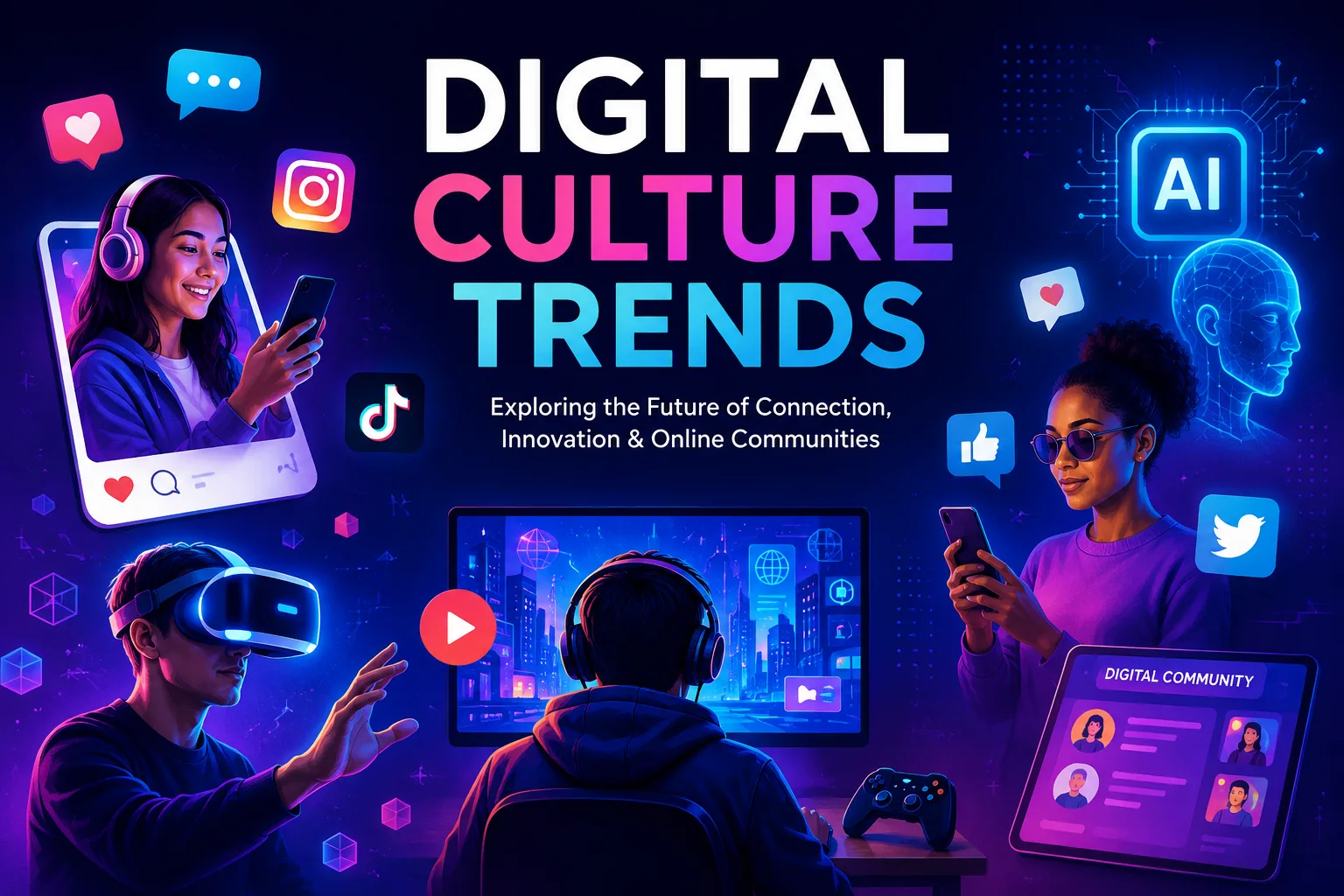
The digital world is evolving at an unprecedented pace, reshaping the way people communicate, work, shop, and consume content. As technology continues to advance, businesses and individuals must adapt to emerging changes that influence online behavior and engagement. Understanding Digital Culture Trends has become essential for anyone looking to stay ahead in an increasingly connected world.
In 2026, digital transformation is no longer just about adopting new technologies. It is about understanding how technology affects human behavior, social interactions, and the way information is shared across online platforms. From artificial intelligence and immersive experiences to creator-driven economies and changing consumer expectations, several major shifts are defining the future of the internet.
The Rise of AI-Powered Content Creation
Artificial intelligence continues to revolutionize digital experiences. Content creators, marketers, and businesses are increasingly using AI tools to generate ideas, streamline workflows, and create personalized experiences for users.
AI-powered platforms can now assist with content writing, video editing, graphic design, customer support, and data analysis. These advancements enable brands to produce high-quality content faster while maintaining consistency across multiple channels.
As AI becomes more accessible, businesses that leverage intelligent automation can improve efficiency and deliver more relevant experiences to their audiences.
Short-Form Video Remains King
The popularity of short-form video content continues to dominate online engagement. Audiences prefer quick, informative, and entertaining content that delivers value within seconds.
Social media platforms are constantly optimizing their algorithms to promote engaging video content, making short-form videos a critical component of modern digital marketing strategies.
Brands are investing heavily in video storytelling because it helps capture attention, increase engagement rates, and improve audience retention. In 2026, video-first strategies are becoming a necessity rather than an option.
The Expansion of the Creator Economy
The creator economy has evolved beyond influencers posting sponsored content. Today, creators are building personal brands, launching products, offering memberships, and creating exclusive communities.
Consumers increasingly trust authentic voices over traditional advertising. This shift has encouraged businesses to collaborate with creators who have strong relationships with niche audiences.
The creator economy empowers individuals to monetize their expertise while providing audiences with valuable, community-driven content experiences.
Personalized User Experiences Are Becoming Standard
Modern internet users expect highly personalized experiences across websites, applications, and digital platforms.
Advanced data analytics and machine learning technologies allow businesses to understand customer preferences and deliver customized recommendations. Personalized content improves user satisfaction and increases engagement by presenting information that aligns with individual interests.
Whether it involves shopping recommendations, personalized email campaigns, or tailored content feeds, personalization is becoming a defining characteristic of successful digital strategies.
The Growth of Virtual and Immersive Experiences
Immersive technologies such as augmented reality (AR) and virtual reality (VR) are creating new opportunities for digital interaction.
Businesses are exploring innovative ways to integrate immersive experiences into their marketing and customer engagement efforts. Virtual showrooms, interactive product demonstrations, and digital events are becoming increasingly popular.
As technology improves and becomes more affordable, immersive experiences are expected to play a larger role in education, entertainment, and e-commerce.
Community-Driven Platforms Are Gaining Influence
Online communities continue to shape purchasing decisions, cultural conversations, and brand perceptions.
People increasingly seek meaningful interactions through niche communities where they can share interests, exchange ideas, and build relationships. Businesses that actively participate in these communities can gain valuable insights and establish stronger connections with their audiences.
Successful brands focus on fostering engagement rather than simply broadcasting promotional messages.
Privacy and Digital Trust Matter More Than Ever
As digital ecosystems expand, concerns regarding privacy and data security continue to grow.
Users are becoming more conscious of how their personal information is collected, stored, and used. Businesses that prioritize transparency and ethical data practices can build stronger trust with their audiences.
Organizations that demonstrate accountability and commitment to protecting user information are more likely to earn long-term customer loyalty.
Voice and Conversational Technology Continue to Grow
Voice search and conversational interfaces are transforming how people access information online.
Smart assistants and AI-powered chatbots provide users with quick and convenient ways to interact with technology. Businesses are optimizing content for natural language queries to improve visibility in voice search results.
This shift requires marketers to create content that answers user questions directly and naturally.
Social Commerce Is Reshaping Online Shopping
Social media platforms are increasingly becoming shopping destinations rather than just communication channels.
Consumers can now discover products, read reviews, and complete purchases without leaving their favorite platforms. This seamless shopping experience reduces friction and improves conversion rates.
Brands that integrate commerce into their social media strategies can capitalize on growing consumer demand for convenience and instant purchasing opportunities.
Why Businesses Must Adapt to These Changes
Organizations that fail to adapt to emerging digital shifts risk falling behind competitors. Consumer expectations continue to evolve alongside technological advancements, making flexibility and innovation essential for long-term success.
Businesses should focus on:
- Businesses should focus on:
- Embracing new technologies strategically.
Creating valuable and engaging content.
Building authentic relationships with audiences.
Prioritizing customer experience and personalization.
Maintaining transparency and digital trust. - Companies that successfully navigate these changes will be better positioned to thrive in the rapidly evolving digital landscape.
Looking Ahead
The digital environment of 2026 is defined by innovation, connectivity, and changing user expectations. Artificial intelligence, immersive technologies, creator-led ecosystems, and personalized experiences are shaping the future of online engagement.
For businesses, marketers, and content creators, staying informed about these developments is essential for maintaining relevance and achieving sustainable growth. Those who embrace innovation while focusing on genuine audience connections will be best equipped to succeed in the years ahead.
To stay informed about the latest developments in technology, online culture, and innovation, visit https://highatbuzz.com/ for fresh insights and industry updates.