In 2026, educational institutions are rapidly embracing cloud-based technologies to stay competitive, agile, and student-centric. From admissions to alumni engagement, the need for connected, data-driven systems has never been greater. This shift has led to a growing demand for the best crm for educational institutions, enabling schools, colleges, and universities to streamline processes, improve communication, and deliver personalized experiences at scale.
As digital transformation accelerates, institutions are moving away from legacy systems and adopting cloud CRM platforms that offer flexibility, automation, and real-time insights. Whether it’s managing student inquiries, optimizing recruitment funnels, or enhancing engagement, choosing the right CRM has become a strategic priority.

Key Takeaways
- Cloud-based CRM platforms help institutions streamline admissions and communication
- The best crm for educational institutions improves student engagement and conversion rates
- Integration with SIS and LMS is essential for seamless operations
- AI and automation are redefining modern CRM capabilities
- Choosing the right platform depends on scalability, usability, and institutional needs
Why CRM Platforms Matter in Modern Education
Educational institutions today face increasing competition, rising student expectations, and complex administrative workflows. Managing inquiries manually or using disconnected tools often leads to missed opportunities and inefficiencies.
This is where CRM platforms play a critical role. They centralize student data, automate communication, and provide a structured approach to managing the entire student lifecycle.
The best crm for educational institutions goes beyond basic contact management. It enables institutions to nurture leads, track engagement, and build meaningful relationships with students and parents.
Key Challenges Institutions Face Without a CRM
Many institutions still rely on spreadsheets or outdated systems, which create several challenges.
Lack of centralized data leads to duplication and errors. Communication gaps result in delayed responses to student inquiries. Admissions teams often struggle to track leads effectively, impacting conversion rates.
Without a CRM, institutions also lack visibility into performance metrics, making it difficult to optimize recruitment strategies.
Essential Features of Cloud-Based CRM Platforms
When evaluating CRM platforms, institutions should look for features that align with their operational needs.
Lead and inquiry management allows institutions to capture and track student interactions across multiple channels.
Automation enables follow-ups, reminders, and workflows without manual intervention, saving time and improving efficiency.
Integration capabilities ensure seamless data flow between CRM, SIS, and LMS systems.
Analytics and reporting provide insights into enrollment trends, campaign performance, and student behavior.
Mobile and cloud accessibility allow teams to work from anywhere, ensuring flexibility and scalability.
Top CRM Platforms for Educational Institutions
1. Classe365
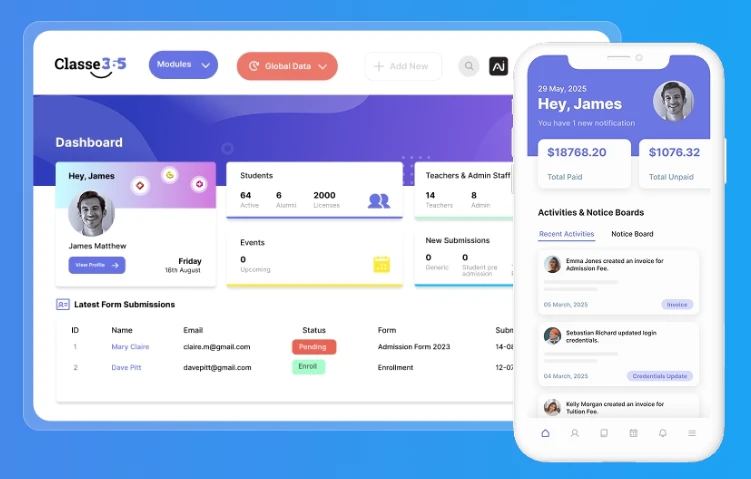
An all-in-one platform designed specifically for educational institutions, offering CRM, SIS, LMS, and financial tools in a unified system.
2. Salesforce Education Cloud
A powerful and customizable CRM platform widely used by universities for advanced automation and analytics.
3. HubSpot CRM for Education
Known for its user-friendly interface and marketing automation capabilities, ideal for institutions focusing on inbound strategies.
4. Zoho CRM for Education
A cost-effective solution with strong automation and integration features for small to mid-sized institutions.
5. Ellucian CRM
Designed for higher education, offering robust recruitment and engagement tools.
Each of these platforms offers unique strengths, but selecting the best crm for educational institutions depends on specific goals, budget, and scalability requirements.
Benefits of Using Cloud-Based CRM in Education
Cloud CRM platforms provide several advantages that directly impact institutional growth.
They improve efficiency by automating repetitive tasks and reducing manual workload.
They enhance student engagement through personalized and timely communication.
They increase enrollment rates by enabling effective lead nurturing and follow-ups.
They provide real-time insights, helping institutions make data-driven decisions.
How to Choose the Right CRM Platform
Selecting the right CRM requires a strategic approach.
Start by identifying your institution’s key challenges and objectives. Evaluate platforms based on ease of use, scalability, and customization options.
Ensure the CRM integrates seamlessly with your existing systems. Consider vendor support, training, and long-term costs.
Testing demos and trial versions can help you make an informed decision.
Best Practices for CRM Implementation
Successful implementation goes beyond choosing the right platform.
Train your team to ensure proper adoption. Clean and migrate data carefully to avoid inconsistencies.
Define workflows and automation rules aligned with your processes. Continuously monitor performance and optimize strategies.
Institutions that follow these practices can maximize the value of their CRM investment.
The Future of CRM in Education
The future of CRM platforms lies in AI, automation, and predictive analytics.
AI-powered tools can analyze student behavior, predict enrollment trends, and personalize communication.
Automation will continue to reduce administrative workload, allowing institutions to focus on strategy and engagement.
As technology evolves, the best crm for educational institutions will be those that offer intelligent, integrated, and scalable solutions.
FAQs
What is a CRM for educational institutions?
A CRM for educational institutions is a platform that helps manage student interactions, admissions processes, and communication throughout the student lifecycle.
Why do schools need CRM software?
CRM software helps schools streamline operations, improve communication, and increase enrollment through better lead management.
What features should I look for in a CRM?
Look for automation, analytics, integration capabilities, ease of use, and scalability.
Is cloud-based CRM better than on-premise?
Yes, cloud-based CRM offers flexibility, lower maintenance, and real-time access to data from anywhere.
Which is the best crm for educational institutions?
The best CRM depends on your institution’s needs, but platforms like Classe365, Salesforce, and HubSpot are popular choices.
Start Transforming Your Institution with the Right CRM
Adopting a modern CRM platform is no longer optional it’s essential for institutions aiming to grow and compete in the digital era. The right solution can streamline operations, enhance engagement, and drive better outcomes.
Platforms like Classe365 are leading the way by offering innovative, all-in-one solutions tailored for educational institutions, helping them achieve efficiency, scalability, and long-term success.