
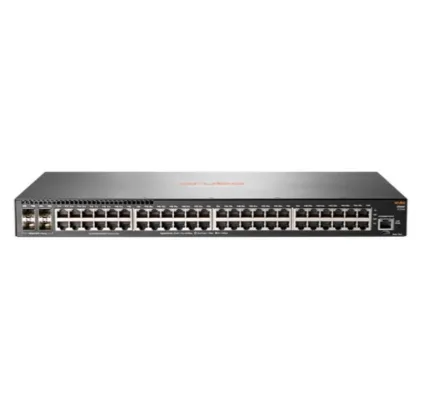
Choosing the right network switch is essential for building a fast, reliable, and scalable business network. With different specifications, port configurations, management options, and performance levels available, selecting between various Aruba Network Switch Models can sometimes be challenging. Aruba switches are designed to support organizations ranging from small businesses to large enterprises, providing flexible networking solutions for different requirements.
Whether you need a switch for connecting computers and printers or supporting access points, IP phones, security cameras, and other network devices, understanding the key differences between Aruba switch models can help you make an informed choice.
What Are Aruba Network Switch Models?
Aruba Network Switch Models are networking devices developed by Aruba, a Hewlett Packard Enterprise company, to connect devices within wired networks. Depending on the model, Aruba switches can provide different numbers of Ethernet ports, uplink capabilities, power options, management features, and network performance.
Common Aruba switch categories include access switches designed for edge connectivity, aggregation switches for larger networks, and models equipped with Power over Ethernet (PoE) capabilities.
The right model depends on your organization's network size, number of connected devices, bandwidth requirements, and future expansion plans.
Key Features to Consider When Choosing an Aruba Switch
Before selecting an Aruba network switch, consider several important specifications.
1. Number and Type of Ports
Start by determining how many devices you need to connect. Aruba switches are available with different port configurations, allowing businesses to select a model according to their network requirements.
Gigabit Ethernet ports are suitable for many standard business applications, while higher-speed uplinks can be useful for connecting switches to servers, core networking equipment, or other high-bandwidth infrastructure.
2. Power over Ethernet (PoE)
If your network uses wireless access points, IP phones, surveillance cameras, or other PoE-compatible devices, choosing a PoE-enabled switch can simplify installation.
Instead of using separate power adapters for compatible devices, PoE technology allows both power and network connectivity to be delivered through Ethernet cabling.
3. Network Performance
Bandwidth is another important consideration when comparing Aruba Network Switch Models. Consider your current network traffic as well as expected future requirements.
Businesses handling cloud applications, video conferencing, large file transfers, virtualization, or data-intensive workloads may benefit from switches offering higher-speed connectivity and appropriate uplink options.
4. Management Capabilities
Managed switches provide greater control over network configuration and monitoring. Depending on the model and platform, administrators can configure network policies, VLANs, security settings, traffic management, and other features.
For businesses that require centralized network administration, selecting a switch with suitable management capabilities can make network operations easier.
HPE Aruba JL558A Network Switch
One option businesses can consider is the HPE Aruba JL558A network switch. This type of Aruba networking solution can be suitable for organizations looking for enterprise-oriented wired network connectivity.
When evaluating the JL558A or any other Aruba model, businesses should review the exact port configuration, switching capacity, uplink capabilities, power requirements, management features, and compatibility with their existing network infrastructure.
You can explore the product details here:
HPE Aruba JL558A Network Switch
How to Choose the Right Aruba Network Switch Model
The best way to select an Aruba switch is to match its specifications with your actual networking requirements.
For a small office, a compact switch with the required number of ports may be sufficient. A growing organization may need additional ports and higher-speed uplinks to accommodate expansion.
For environments using wireless access points, IP phones, or cameras, PoE can be an important feature. Meanwhile, businesses with demanding applications should pay close attention to switching capacity and uplink speeds.
It is also important to consider scalability. Buying a switch that meets today's requirements but has limited room for expansion may require another hardware upgrade sooner than expected.
Why Choose Aruba Network Switches?
Aruba networking solutions are widely used in business and enterprise environments because they offer a broad selection of networking hardware for different infrastructure requirements.
Aruba Network Switch Models can provide options for wired connectivity, network management, PoE deployment, and high-speed network expansion. By selecting the appropriate model, organizations can build a network infrastructure that supports current users while allowing room for future growth.
Final Thoughts
Selecting among different Aruba Network Switch Models requires more than simply comparing prices. Port count, Ethernet speeds, PoE support, uplink requirements, management capabilities, scalability, and compatibility should all be considered before making a purchase.
The HPE Aruba JL558A is one model worth evaluating when planning an enterprise networking setup. Review its technical specifications and compare them with your infrastructure requirements to determine whether it fits your network.
FAQs
1. What are Aruba Network Switch Models?
Aruba Network Switch Models are networking switches designed to provide wired connectivity between computers, servers, access points, IP phones, cameras, and other network devices.
2. How do I choose the right Aruba switch?
Consider the required number of ports, network speeds, PoE requirements, uplink capacity, management features, and expected future growth before selecting a model.
3. What is PoE in an Aruba network switch?
Power over Ethernet (PoE) allows compatible devices such as IP phones, cameras, and wireless access points to receive power and network connectivity through Ethernet cables.
4. Is the HPE Aruba JL558A suitable for business networks?
The JL558A is an Aruba network switch model intended for business networking environments. Its suitability depends on your required ports, performance, uplinks, management features, and overall infrastructure.
5. Why are uplink speeds important?
Uplinks connect switches to other networking equipment. Higher-speed uplinks can help accommodate traffic between access switches, servers, and the wider network.
6. Should I consider future network expansion?
Yes. Selecting a switch with sufficient ports, performance, and appropriate uplink capabilities can help accommodate future users and devices without requiring an immediate hardware replacement.
visit our site please : https://edgehybrid.com/product/hpe-aruba-jl558a-network-switch/